










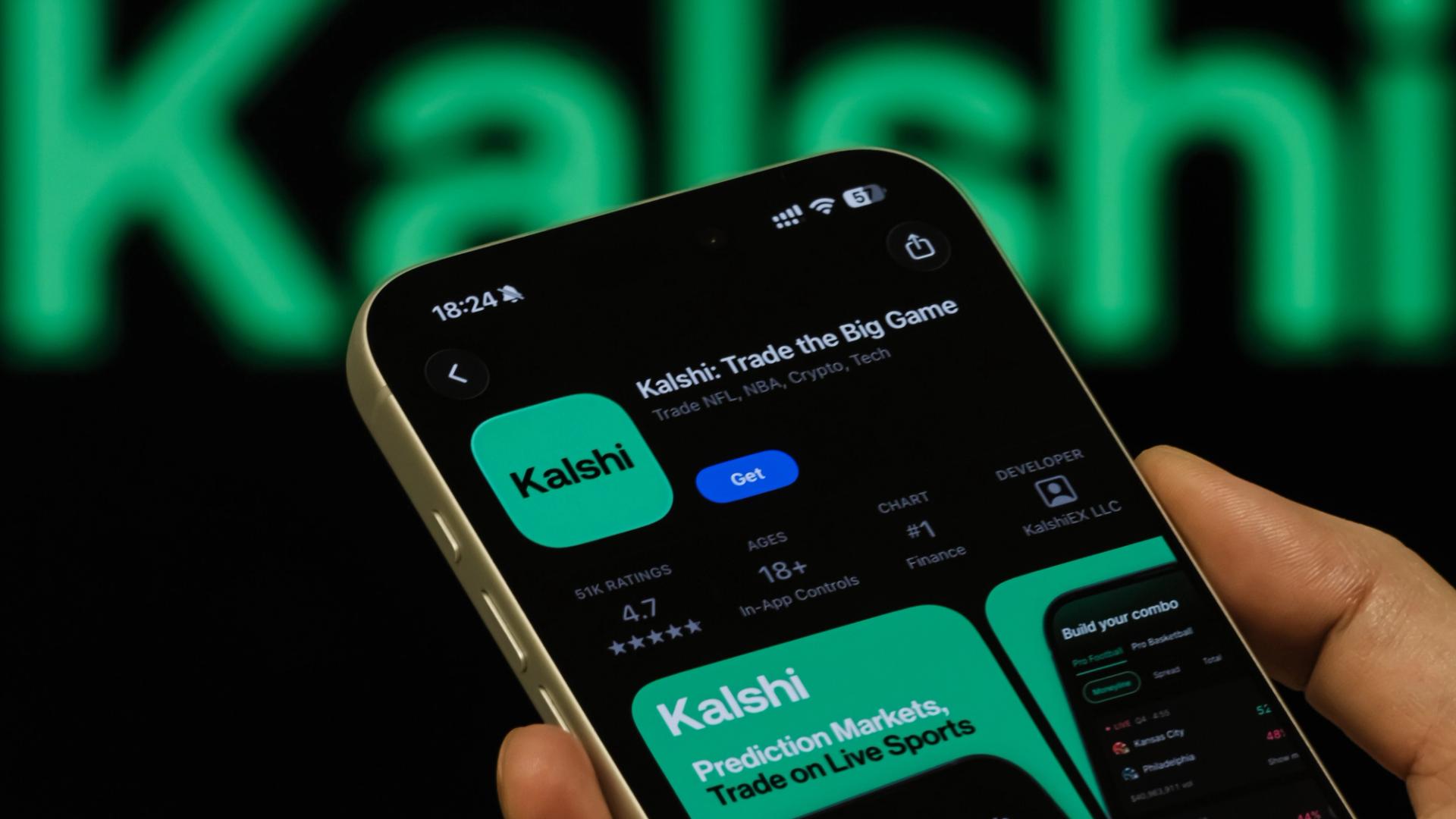
A detailed analysis of public trade records from the U.S. derivatives exchange Kalshi has uncovered a curious trend: the vast majority of volume in its bitcoin and ether perpetual-futures markets appears to be driven by highly specific, repetitive trade sizes. The findings, which suggest the heavy influence of automated trading programs, raise questions about the true nature of liquidity and market participation on the platform, which is regulated by the Commodity Futures Trading Commission (CFTC).
In a four-day window between September 17 and September 20, 2026, CoinDesk analyzed millions of dollars in transaction data from the exchange. The results were stark. On the ether perpetual market, trades valued within a $2 margin of $5,499 accounted for a staggering $7.7 million—or 57%—of the total $13.5 million in analyzed volume. The bitcoin market showed a similarly concentrated pattern, where recurring trade sizes of approximately $2,500 and $5,000 represented 54% of the $8.5 million in sampled volume.
For institutional and retail traders alike, volume is often the primary yardstick used to gauge a market’s health. High volume typically implies robust liquidity, suggesting that participants can enter or exit significant positions without causing excessive price slippage. It is also a psychological signal; when a new product launches, consistent volume is often interpreted as evidence of organic adoption and a thriving ecosystem. However, when that volume is dominated by a narrow set of recurring, mechanical trade sizes, it complicates the narrative, prompting market observers to ask whether these figures represent a diverse range of independent traders or, conversely, a concentrated effort by one or a few automated entities.

The phenomenon is not a recent development. An extended review of 46 one-hour samples collected between June 19 and September 20 reveals that ether trades have frequently clustered around specific dollar targets. In 43 of those 46 samples, this pattern held firm, with the prevailing trade size accounting for roughly 45% of total value. On 15 separate dates during that period, this single, recurring trade size accounted for more than half of the total volume.
The mechanics of these trades are particularly telling. As the price of ether fluctuated between June and September—moving from roughly $1,700 to $2,500—the number of contracts involved in each trade adjusted in real-time. Crucially, while the number of contracts changed to accommodate the shifting price, the dollar value of the trades remained remarkably fixed. This behavior is a hallmark of "clips," a common term among quantitative traders for automated algorithms programmed to execute trades at a predetermined notional value. By maintaining a constant dollar exposure, these bots can hedge against adverse price action while systematically managing risk across the order book.
Kalshi, which gained prominence as a prediction market platform, introduced its crypto perpetual futures in late May of 2026. The exchange’s architecture breaks down exposure into small, modular contracts; as of the latest data, these contracts were trading for roughly $2.70 each. CoinDesk’s analysis of 3,450 ether-perpetual trades during the mid-September sample found that 1,406 of them landed within the narrow $2 window of the $5,499 target.
The history of these targets suggests a strategic evolution. In late June, for instance, trades were found to cluster around the $4,999 mark. By late June 28, trades near $9,999 accounted for 72% of the sampled value. As the summer progressed, the targets shifted again: a $3,999 target emerged on August 10, followed by $4,499 on August 18, and finally the $5,499 cluster that dominated the September sample. This progression indicates that whoever is behind these trades is not merely running a static program but is periodically updating the notional-size parameters of their strategy.
The bitcoin market, while distinct in its currency, mirrors this algorithmic precision. CoinDesk observed two recurring trade sizes that moved in perfect lockstep with the price of bitcoin. The larger trade size was almost exactly twice the size of the smaller one. In 9 of the 22 samples containing both, the math was precise; in the remaining 13, the larger trade was merely one contract off from double the smaller, a discrepancy easily explained by standard rounding conventions. For example, when bitcoin traded near $76,300, the algorithm executed trades of 327 and 655 contracts; when the price shifted, the numbers adjusted accordingly to maintain the fixed dollar ratio.
Beyond the repetition of trade sizes, the sheer turnover on Kalshi’s ether perpetual market stands out. A snapshot taken on Monday showed 93 million contracts in 24-hour volume against just 1.5 million in open interest—the number of active, outstanding positions. This yields a volume-to-open interest ratio of 61, meaning that for every single contract held by a trader, 61 contracts changed hands throughout the day. Among the 20 perpetual markets on Kalshi with open interest, this was the second-highest ratio, far exceeding the median of roughly eight. While high turnover is not inherently evidence of malfeasance, it is an unusual metric for a nascent market and suggests that the vast majority of the exchange’s activity is speculative or algorithmic rather than position-based.
The implications of such concentrated activity have not gone unnoticed by the broader trading community. Over the past weekend, a pseudonymous trader known as "Beni" publicly challenged the legitimacy of the volume on Kalshi, alleging on social media that the exchange was inflating its crypto statistics. Beni specifically pointed to the prevalence of identical $5,500-range trades as proof of artificial activity.
In response, a representative for Kalshi’s crypto division, posting under the handle "IcoBeast," pushed back against the accusations. He argued that the charts cited by critics were focused on prediction markets rather than perpetual futures, where the mechanics of volume and liquidity naturally differ. He further emphasized that Kalshi does not offer rebates on its crypto prediction markets and that any incentives provided on its regulated exchange must be publicly filed with the CFTC.
It is worth noting that a new fee and rebate structure for the exchange did take effect on September 16, which significantly lowered costs for firms settling transactions directly with Kalshi. While this program could theoretically incentivize high-frequency, small-margin strategies, the recurring trade patterns observed by CoinDesk were already well-established nearly a month before this policy change was implemented. Consequently, the rebate program serves more as a potential economic catalyst for the current activity rather than an explanation for its origin.
Despite the scrutiny, the fundamental question remains: who is behind these trades? Automated strategies that scale positions to hit fixed dollar targets are well-documented in quantitative finance, such as in the research of Cartea, Jaimungal, and Ricci on high-frequency trading, and the Avellaneda-Stoikov model for limit order books. These models allow bots to provide liquidity while strictly controlling the "size" of their market presence.
When queried regarding the findings, Kalshi did not provide specific details on whether the recurring trades were the result of a single participant, multiple entities, or market-making arrangements. The exchange also did not comment on whether it had conducted internal reviews for self-matching or common ownership among the accounts involved. For now, the repetitive nature of these trades remains a defining characteristic of the platform’s crypto perpetual markets, serving as a reminder of how algorithmic execution can fundamentally alter the look and feel of public market data.