







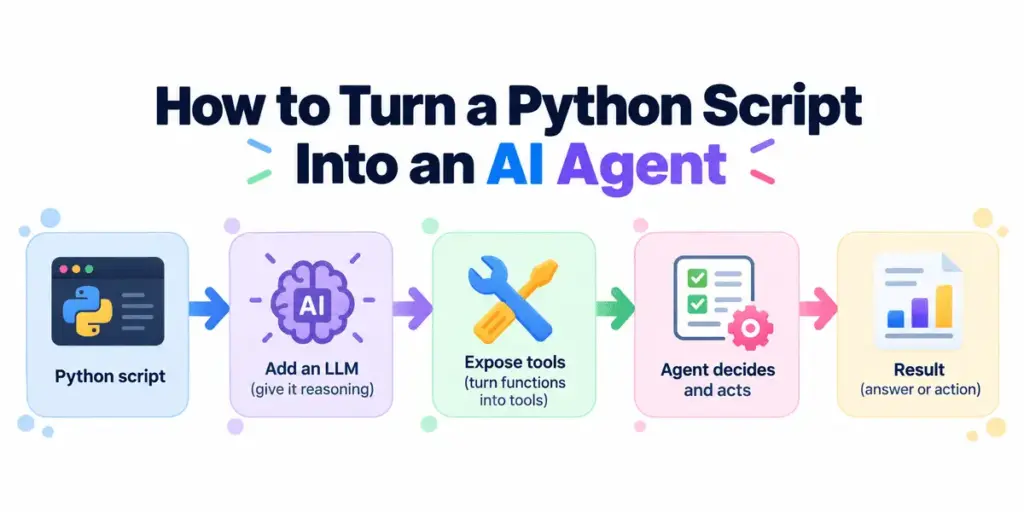
The boundary between traditional software automation and artificial intelligence continues to blur as developers discover they can upgrade existing Python applications into autonomous AI agents without rewriting their core codebase. According to recent technical insights shared by data science professional Abid Ali Awan, developers no longer need to overhaul legacy scripts to leverage modern language models. Instead, standard functional logic can be exposed directly to large language models as operational tools, allowing intelligent systems to dynamically determine when to execute specific routines, how to structure necessary arguments, and how to interpret the resulting outputs.
This approach transforms the fundamental design of software workflows. Traditional applications rely on rigid, pre-programmed execution sequences where every branching decision, loop, and conditional check must be explicitly written by a software engineer. However, by integrating frameworks such as the OpenAI Agents SDK, developers can replace hardcoded logic with goal-oriented orchestration. The underlying language model takes charge of the execution path, assessing user requests in natural language and deploying available programming functions on the fly.
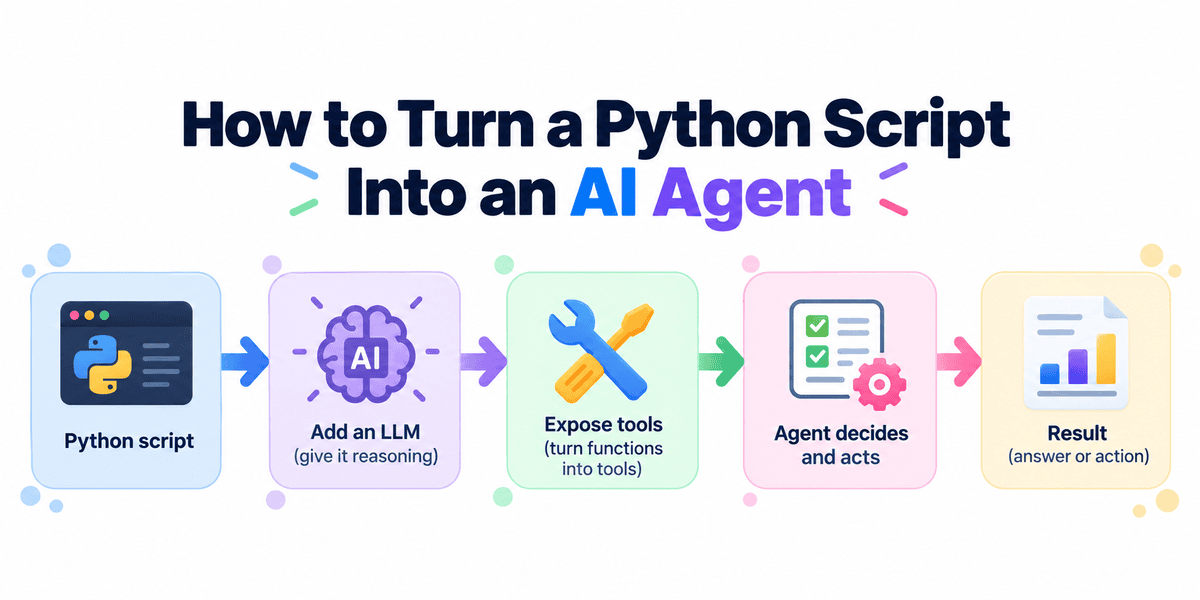
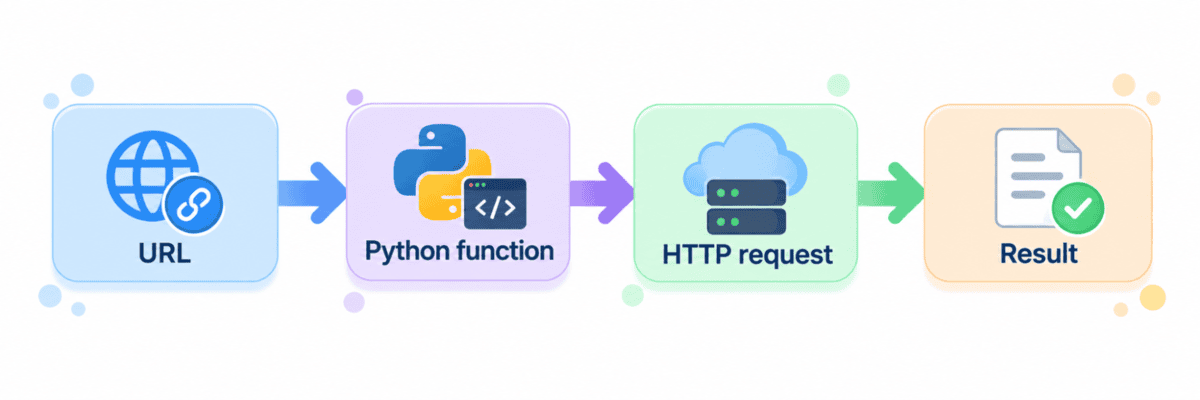
To illustrate this architectural shift, software architects often look at straightforward automation tasks, such as website monitoring. A conventional Python script designed to verify whether a target web server is responding properly typically utilizes libraries like requests and performance counters to calculate response times. While effective, a standard script performs only the exact tasks defined within its linear code path. If an operator wants to evaluate multiple domains, cross-reference response times, or flag performance degradations across a portfolio of websites, they must manually author the surrounding control flow logic.
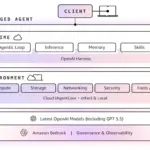
Introducing an AI agent changes this dynamic entirely. By wrapping a standard website-checking function with specific decorators provided by the OpenAI Agents SDK, the function is automatically transformed into a callable tool. The software development kit handles the complex task of converting standard Python function signatures into the precise JSON schemas required by advanced language models. Furthermore, the framework automatically parses function names and docstrings to generate descriptive metadata, enabling the AI to comprehend the tool’s purpose without requiring manual schema definitions from the developer.
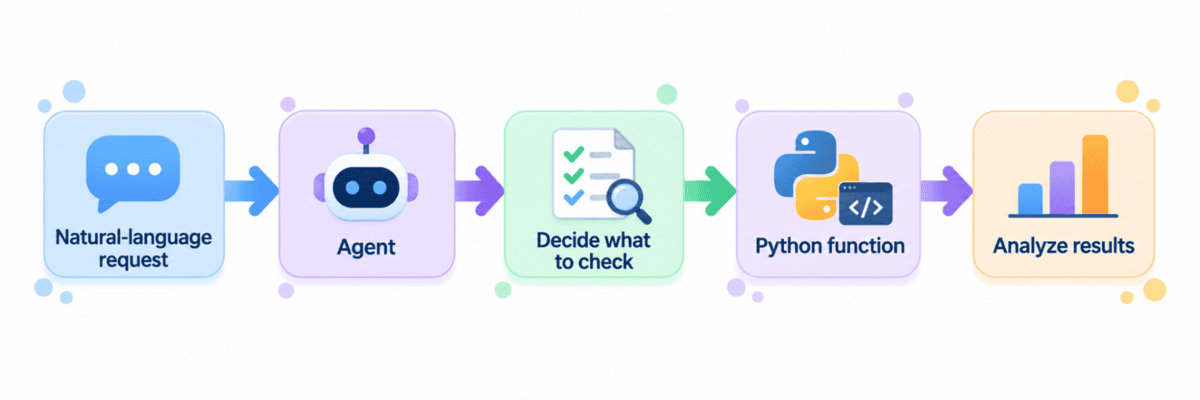
Once the underlying function is exposed as a tool, developers instantiate an agent object, define its operational instructions, and supply the function to the agent’s toolset. When a user submits a complex prompt—such as requesting an evaluation of several major domains to identify the slowest responder—the model intercepts the natural language query, deduces that it requires live metric collection, and autonomously invokes the monitoring function multiple times with different parameters. The model then synthesizes the returned status codes and latency measurements into a coherent, comparative summary.
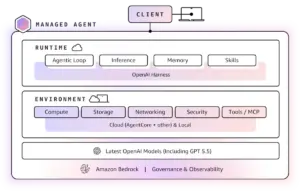
Behind this automated decision-making lies a continuous interaction loop managed by a runtime runner. Rather than following a static procedural script, the model evaluates incoming data step-by-step. If a tool output reveals an unexpected error or indicates that further investigation is necessary, the model can initiate subsequent tool calls. This iterative cycle continues until the agent has gathered sufficient information to fulfill the user’s objective, realizing a genuinely agentic workflow built entirely on top of ordinary programming logic.
Industry experts note that this design pattern extends far beyond simple infrastructure monitoring. Virtually any standard Python automation script—ranging from data parsing utilities and file management tools to database querying routines—can be adapted using the same methodology. The core philosophy of agentic application development hinges on a simple division of labor: the deterministic Python code performs the heavy lifting and precise execution, while the AI layer introduces natural language comprehension, intelligent tool selection, and flexible orchestration.
The broader adoption of this methodology is being accelerated by the arrival of increasingly efficient and cost-effective language models, such as advanced iterations in the GPT series. Lower inference costs make it economically viable for engineering teams to deploy tool-using single agents and complex multi-agent systems at scale. By bridging the gap between deterministic code and probabilistic reasoning, developers can modernize legacy pipelines, minimize boilerplate orchestration code, and build more adaptable software systems that respond dynamically to real-world operational needs.