










UK sole traders and landlords navigating the government’s Making Tax Digital (MTD) for Income Tax framework are currently managing a crucial sequence of quarterly reporting obligations. Following the passage of the initial filing deadline for the 2026-27 tax year on August 7, taxpayers and software developers are turning their attention toward the upcoming November 7 deadline. The process, which requires regular summaries of income and expenses submitted directly through application programming interfaces (APIs) to Her Majesty’s Revenue and Customs (HMRC), has placed a significant technical focus on how developers build and maintain these vital software integrations.
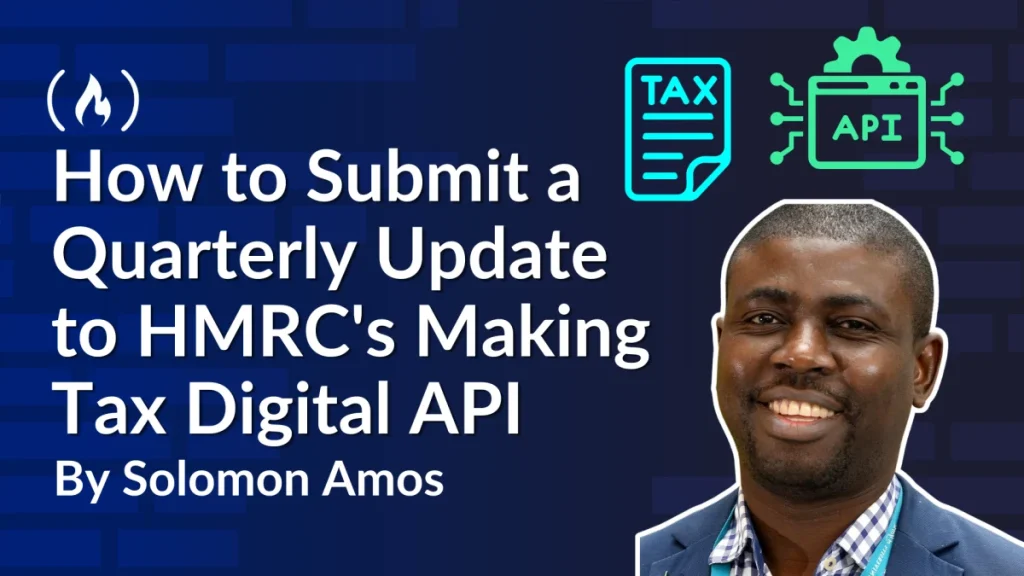
Solomon Amos, founder of the UK-based Making Tax Digital application TapTax and a former technical architect on HMRC modernization programs, has outlined the core engineering requirements needed to ensure seamless compliance. Drawing from extensive technical deployments within the digital tax sector, industry experts emphasize that understanding the cumulative nature of these filings is essential for preventing common reporting errors. Unlike traditional annual tax returns, quarterly updates operate on running totals that track financial performance from the official start of the tax year rather than isolated three-month blocks.
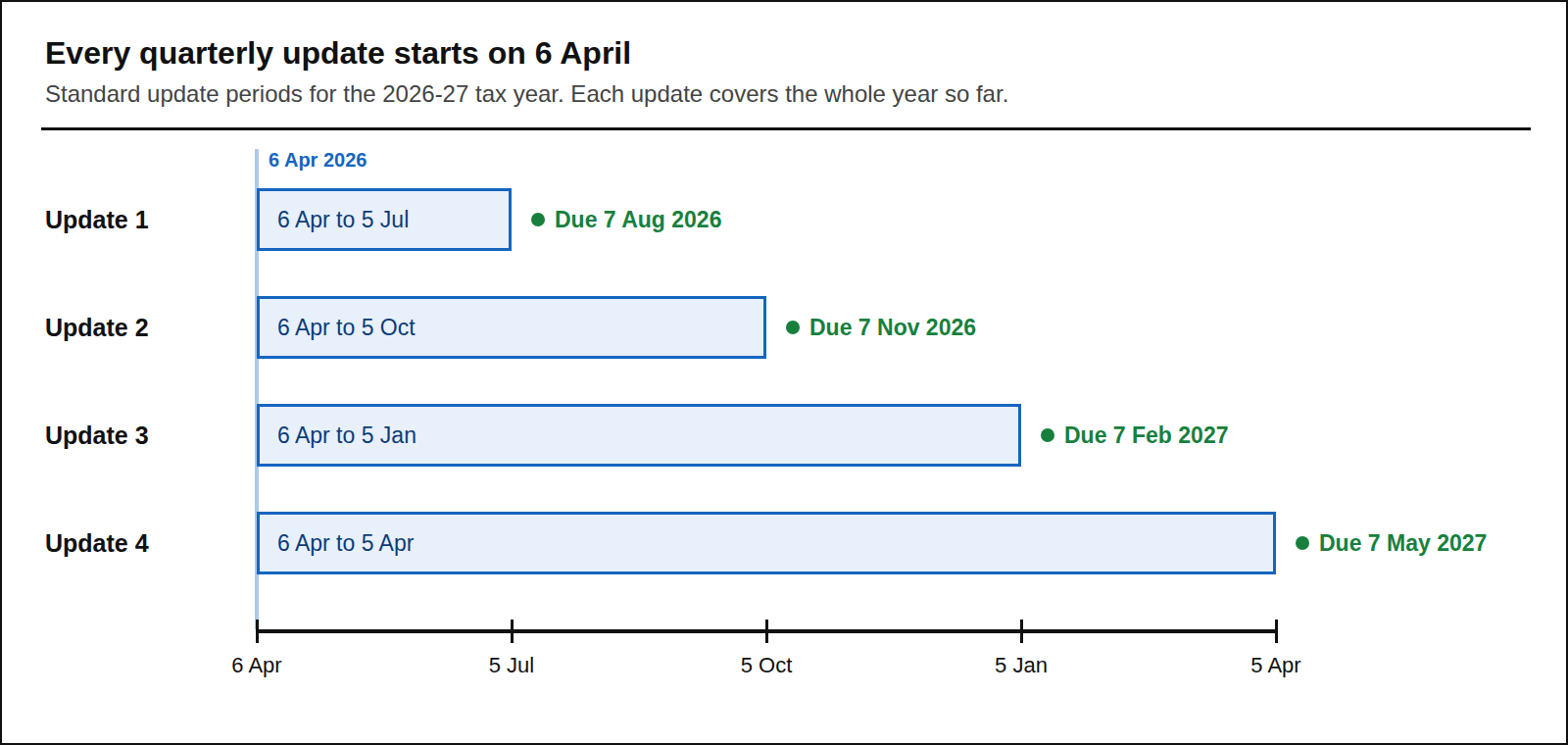
Under the current guidance established by GOV.UK, the reporting schedule demands precise adherence to established dates. The standard periods run from April 6 to July 5 with a corresponding August 7 deadline, April 6 to October 5 with a November 7 deadline, April 6 to January 5 with a February 7 deadline, and the final period spanning the full tax year through April 5 with a final submission window closing on May 7 of the following year. While businesses utilizing an alternative accounting year running from April 1 can opt for calendar-aligned periods, the underlying mechanic remains consistent: every single submission is entirely cumulative.

This cumulative framework introduces both operational efficiencies and unique engineering challenges. Because each report covers the entire financial year up to the end of the respective quarter, any historical inaccuracies identified in a previous filing are automatically corrected in the subsequent submission. HMRC service guidelines specify that each new update effectively supersedes its predecessor. However, this design also means that software implementations must carefully manage data states to avoid accidentally overwriting or erasing previously established figures during the transmission process.
To successfully interface with HMRC’s digital infrastructure, developers must establish a secure connection utilizing the official sandbox and production environments. This foundational architecture requires a registered application, an active OAuth 2.0 access token, and specific fraud prevention headers derived from incoming user requests. Furthermore, maintaining strict compatibility with HMRC’s API versioning is critical, as utilizing an incorrect version identifier in the HTTP request headers results in an immediate rejection by the gateway.
The submission workflow itself requires a coordinated series of API interactions. First, applications must query the Business Details service using the customer’s National Insurance number to retrieve the correct business identifier associated with each income source. Following this, developers must interrogate the Obligations service to identify active reporting periods and confirm precise due dates. Rather than relying on hardcoded date logic within software code, developers are strongly advised to utilize the dynamic dates returned directly by the API to maintain synchronization with official policy updates.
Once the active reporting period is established, software systems must compile the appropriate financial payload. The Self Employment Business API requires structured data encompassing period dates, income components, and expense totals. Taxpayers whose annual turnover remains beneath the ninety thousand pound threshold are permitted to submit a single consolidated expense figure. However, once turnover reaches or exceeds this specific financial threshold, the system enforces an itemized reporting structure that mirrors traditional Self Assessment categories, such as administrative costs, travel expenses, and professional fees. Any attempt to combine consolidated figures with itemized categories results in an immediate validation error from the tax authority.
Following the successful transmission of a cumulative summary—which returns a confirmation status indicating that no content was returned—taxpayers frequently seek immediate insight into their projected tax liability. To address this, developers can interface with the Individual Calculations API to trigger an in-year tax calculation. Because this computation occurs asynchronously on HMRC’s servers, software applications must implement a bounded polling mechanism, typically waiting at least five seconds before retrieving the results to account for processing delays.
The resulting calculation provides a headline figure detailing estimated income tax and national insurance liabilities based on the data received up to that specific point in the tax year. Industry standards mandate that any display of these in-year figures must be accompanied by appropriate explanatory disclaimers, making it clear to the user that the output represents an estimate subject to change as further financial data is processed throughout the remainder of the tax cycle.
Despite the established documentation provided through developer portals, engineering teams frequently encounter specific operational hurdles during integration. Default sandbox environments often supply static data from outdated tax years unless developers explicitly configure testing scenarios to generate dynamic, current-year obligations. Additionally, because the submission endpoint relies on a replacement model rather than an incremental patch, applications must be engineered to prefill forms with comprehensive year-to-date totals rather than isolated quarterly inputs.
Further complexities arise around submission timing constraints and data validation rules. HMRC systems reject submissions attempted more than ten days before a period officially closes, as well as any transmission that attempts to move reporting end dates backward. Furthermore, administrative processing times mean that fulfilled reporting obligations may occasionally appear active in the system for up to an hour following a successful transmission, requiring client-facing applications to manage user expectations accordingly.
As digital integration continues to evolve across the financial sector, developers and sole traders alike must remain vigilant regarding platform updates and policy shifts. While the sandbox environment remains continuously available for testing and architectural refinement, industry participants continue to monitor official guidance channels for updates regarding production credential allocations and long-term modernization milestones across the broader tax administration landscape.