








In a significant leap forward for database interoperability and operational efficiency, Amazon Web Services (AWS) has announced a powerful new capability for Amazon Aurora PostgreSQL. This update allows users to directly query operational data stored within their Aurora databases alongside massive datasets residing in data lakes—specifically those formatted in Apache Iceberg and Apache Parquet. By integrating the high-performance analytical engine of DuckDB directly into the Aurora PostgreSQL environment, AWS is effectively removing the traditional, often cumbersome, requirement to perform Extract, Transform, and Load (ETL) operations to move data between analytical and operational stores.
This development addresses a long-standing pain point for engineers and data architects: the architectural complexity of maintaining synchronized pipelines between real-time transactional databases and historical data archives. Previously, businesses seeking to combine recent transaction logs with years of historical records stored in Amazon S3 were forced to build and maintain reverse ETL pipelines. These systems were not only costly and complex to manage, but they also introduced latency and the constant risk of data drift, where the "source of truth" could diverge between the operational database and the data lake.
The integration of DuckDB, the open-source analytical database engine developed by the team now part of Amazon, represents a strategic move to optimize query performance without compromising the integrity of the primary database. By embedding the engine directly into the Aurora architecture, AWS has enabled users to run complex analytical queries that span both live, uncommitted writes in Aurora and massive historical archives in S3 or Iceberg tables, all within a single, unified PostgreSQL interface. Because the processing occurs within the Aurora environment itself, there are no additional network hops, nor is there any need to duplicate or move data to achieve a comprehensive view of the information landscape.
Eliminating the ETL Burden
For organizations heavily invested in AI-driven applications, this advancement is particularly timely. Modern AI agents require access to vast amounts of context to reason effectively—a mix of current, transactional data and long-term historical records. Predicting exactly which datasets an agent might need at any given moment is often impossible, and pre-replicating every possible permutation of data into an operational store is fundamentally impractical. By providing a bridge between the operational database and the data lake, Aurora PostgreSQL now empowers developers to feed these agents a unified, real-time picture of their data without the bottleneck of pre-processing.

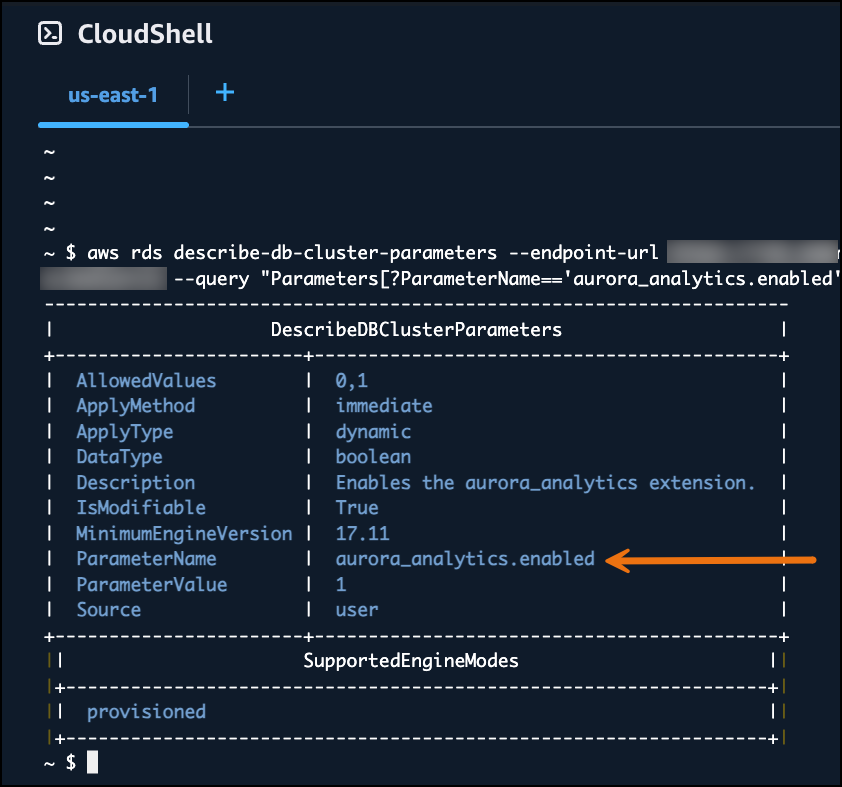
This capability is supported on Aurora PostgreSQL versions 17 (starting with 17.11) and 18 (starting with 18.6). The implementation is designed to be seamless for existing users, requiring only the activation of the aurora_analytics extension and the configuration of an Identity and Access Management (IAM) role with the AuroraAnalytics feature. This role grants the database cluster the necessary permissions to interface with the AWS Glue Data Catalog and retrieve data directly from Amazon S3. Once configured, developers can interact with external data lakes using the same SQL syntax they use for their standard tables, treating S3-resident files as foreign tables.
Architecture and Performance Optimizations
The technical architecture of this feature is built for high-performance retrieval. Aurora employs sophisticated optimization techniques, such as predicate pushdown and column pruning, to ensure that queries remain performant even as the volume of data in the lake expands. By reading only the necessary data from the S3 storage layer, the system minimizes I/O overhead and reduces costs. Furthermore, frequently accessed data is automatically cached within the Aurora instance, ensuring that subsequent queries against the same historical datasets are executed with significantly lower latency.
For users who require granular insight into their query performance, the aurora_analytics_stat_statements() function provides detailed metrics, including the number of rows scanned, the total volume of bytes read from Amazon S3, and cache hit ratios. This transparency allows database administrators to tune their queries and monitor the efficiency of their analytical workloads in real-time, ensuring that the system remains cost-effective as it scales.
The integration also supports Iceberg REST Catalog (IRC)-compatible catalogs, which means organizations are not restricted to a single ecosystem. By registering external catalogs with the AWS Glue Data Catalog, users can join data stored in Aurora with Iceberg tables across multiple sources in a single query. This creates a virtualized layer of data access that protects existing investments in various analytics tools while providing a simplified interface for end-users and applications.

Practical Implementation
The process of setting up these foreign tables is intentionally straightforward. Users can opt for individual table creation or, for larger deployments, utilize the IMPORT FOREIGN SCHEMA statement to perform bulk imports. This command automatically infers schemas from the Parquet file metadata or the Iceberg catalog, eliminating the manual effort of defining table structures.
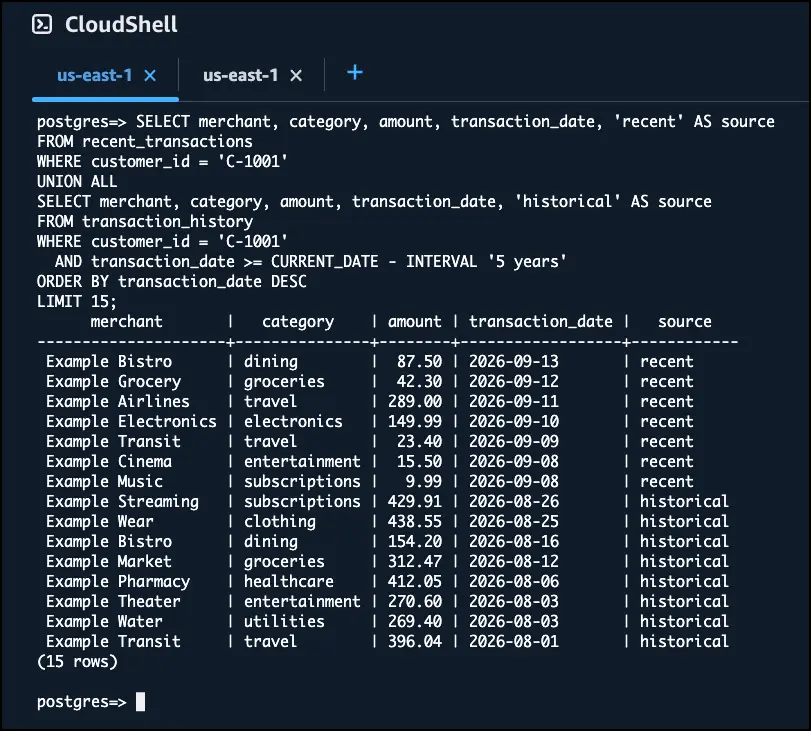
Consider a financial services application that tracks customer behavior. An engineer might maintain a recent_transactions table in Aurora containing the last week of activity, while five years of historical data reside in Parquet files in S3. By creating a foreign table pointing to the historical data, a single SQL query using a UNION ALL operator can seamlessly merge these two disparate sources. The database engine intelligently handles the division of labor: Aurora manages the operational query for recent transactions, while the embedded DuckDB engine performs the high-speed scan of the historical Parquet data. The result is returned to the application as a single, unified dataset, providing a complete history of customer interactions without the developer ever having to manage a pipeline between S3 and the database.
In scenarios where even higher performance is required—such as applications demanding sub-millisecond latency for analytical lookups—developers retain the flexibility to materialize the data lake information directly into a native Aurora table. Commands such as CREATE TABLE AS SELECT or INSERT INTO ... SELECT allow for the persistence of specific historical data sets directly into the primary cluster. Once materialized, this data is queried with the same speed as any native PostgreSQL table, and the analytical workload can be offloaded to read replicas, ensuring that the primary writer instance remains dedicated to critical transactional tasks.
Future-Proofing Analytics on AWS
By building this analytical capability directly into the core of Aurora PostgreSQL, AWS has established a foundation for continuous improvement. As the open-source DuckDB engine evolves, the benefits of its performance enhancements and new functionalities will be passed on to Aurora users through future updates. This strategic alignment between the database service and open-source innovation reflects a broader trend of integrating powerful, specialized analytical engines into general-purpose operational databases to solve the modern challenges of data gravity and operational complexity.
The feature is available immediately across all commercial AWS Regions and AWS GovCloud (US) Regions at no additional charge. Users incur only the standard costs associated with the incremental compute resources consumed during query execution and the S3 request fees for accessing files within the data lake. For organizations looking to modernize their data architecture, the integration of DuckDB into Amazon Aurora PostgreSQL offers a compelling path toward simplified, high-performance data access that bridges the divide between real-time operations and long-term historical analysis. Developers and database architects are encouraged to review the updated Aurora documentation and experiment with these new capabilities via the Amazon RDS console to begin streamlining their data workflows.