










The announcement comes as the software engineering community experiences a rapid shift toward autonomous agents, complex context window management, and sophisticated tool integration. As organizations increasingly adopt generative artificial intelligence models to streamline development pipelines, developers face a growing demand to prove their competency with advanced language models. Anthropic’s Claude has emerged as a primary driver for many engineering teams, making official certification a valuable credential for professionals looking to validate their expertise in modern AI architectures.
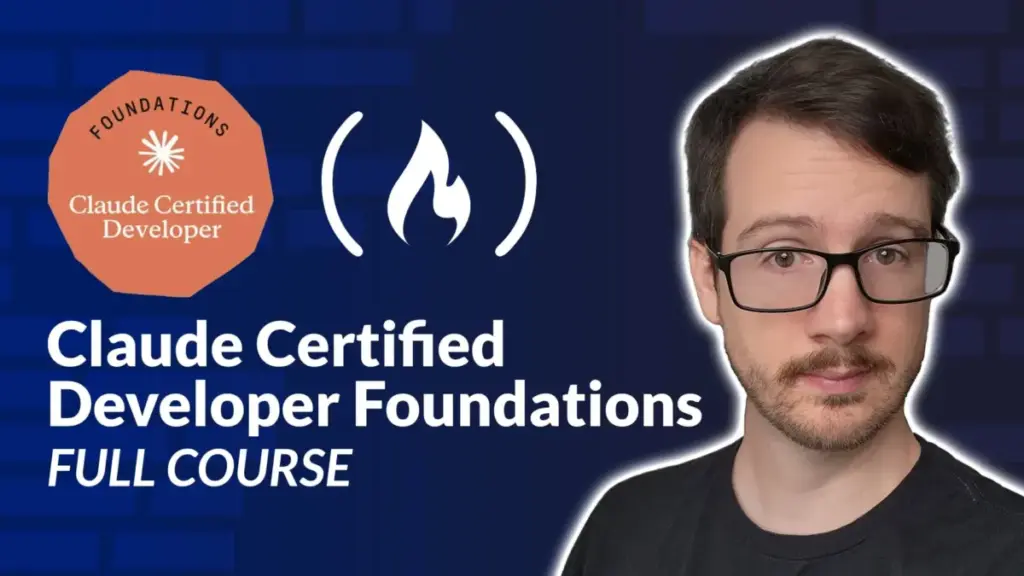
The newly published course is tailored specifically for developers who want to adopt Anthropic’s ecosystem as the backbone of their software applications. Whether engineers are looking to deploy autonomous multi-agent systems, handle large and intricate context windows efficiently, or integrate external tools and APIs safely into their machine learning pipelines, the curriculum aims to bridge the gap between theoretical understanding and practical implementation. Brown walks students through the core concepts required not only to pass the CCDV-F examination but also to build resilient, scalable systems that can operate reliably in production environments.
The release underscores freeCodeCamp’s ongoing commitment to making high-tech, cutting-edge education accessible to a global audience at no cost. For years, the open-source learning platform has expanded its catalog beyond traditional web development and computer science fundamentals to include emerging technologies such as cloud computing, machine learning, and artificial intelligence. By collaborating with experienced instructors like Andrew Brown, the organization continues to provide structured pathways for developers seeking to upskill and remain competitive in a fast-evolving job market.
The eight-hour runtime of the course reflects the deep and comprehensive nature of the material required for the Claude Certified Developer Foundations exam. Rather than offering a superficial overview of chat interfaces or basic prompting techniques, the curriculum delves deeply into the architectural patterns needed for modern AI engineering. Students are guided through hands-on scenarios that mirror real-world engineering challenges, ensuring they gain practical familiarity with the nuances of Anthropic’s API, security best practices, and agentic design loops.
Industry observers note that certifications focused on specific foundation model ecosystems are becoming increasingly significant as enterprises move past the experimentation phase of artificial intelligence adoption. Companies are no longer satisfied with simple proofs of concept; they require robust applications built by engineers who understand how to optimize latency, manage token usage effectively, control costs, and maintain output reliability. The CCDV-F certification provides a standardized benchmark for these skills, and the freeCodeCamp course offers a clear, accessible route for engineers to prepare for the assessment.
The inclusion of this course on the freeCodeCamp YouTube channel aligns with the platform’s broader mission to lower barriers to entry in technology education. While specialized developer bootcamps and enterprise training programs often cost thousands of dollars, open-access resources ensure that talented individuals from all economic backgrounds can gain the skills needed to enter high-demand sectors of the tech industry. Over four decades, or rather since its inception, freeCodeCamp’s open-source curriculum and video library have helped tens of thousands of individuals secure professional roles as software developers, and initiatives focusing on generative artificial intelligence are expected to play a critical role in the next wave of career transitions.
Software engineers and technology enthusiasts interested in pursuing the certification can access the full eight-hour video course immediately on the official freeCodeCamp.org YouTube channel. Alongside the video content, the platform continues to offer its foundational open-source curriculum, providing a continuous learning ecosystem for developers at every stage of their professional journeys, from absolute beginners to experienced engineers mastering the latest advancements in artificial intelligence.