









The atmosphere in New York City this mid-September carries a distinct, palpable energy. As the summer humidity fades, replaced by the crisp, cooling temperatures of the approaching autumn, the city finds its rhythm again. It is a time of transition, marked by the return of bustling crowds and the quickening pace of professional life. Much like the city itself, the Amazon Web Services (AWS) development calendar has hit a high-speed stride. This week, the intersection of seasonal change and technological progress has yielded significant updates, most notably the arrival of a transformative frontier model on Amazon Bedrock, alongside fresh tooling for the Amazon Quick ecosystem. More than just a list of feature releases, these developments serve as a potent reminder that the developers currently achieving the most substantial breakthroughs with AI agents are not simply adopting more powerful tools; they are fundamentally rethinking their operational workflows and the way they approach problem-solving in the modern digital enterprise.
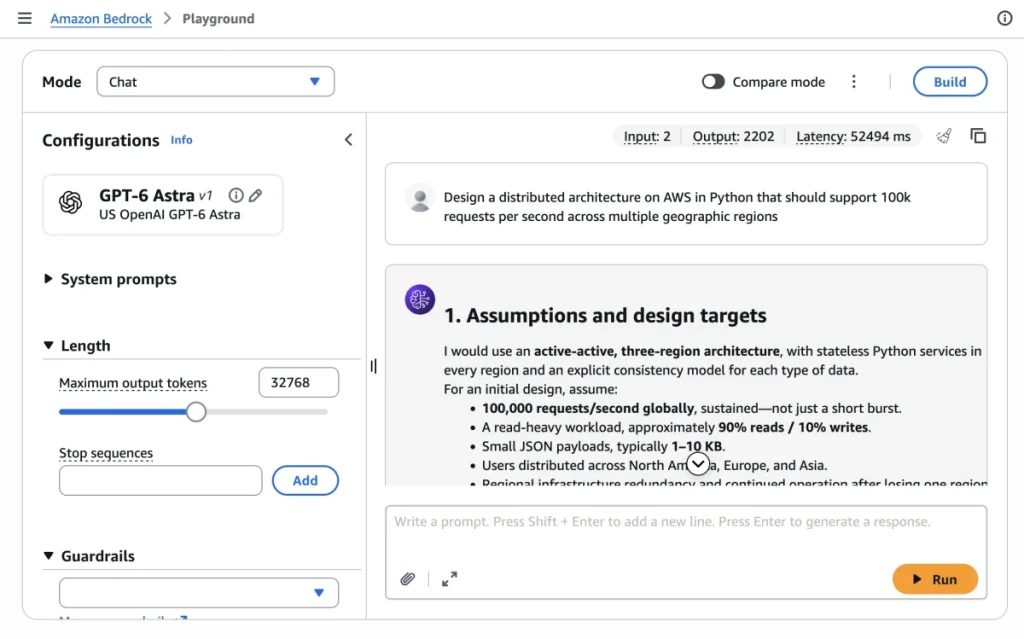
The headline announcement of the week is undoubtedly the general availability of OpenAI’s GPT-6 Astra on Amazon Bedrock. Representing OpenAI’s most sophisticated and capable model to date, GPT-6 Astra is now accessible to the broad AWS developer community. This release is a major milestone for businesses seeking to integrate high-level reasoning and nuanced judgment into their existing technology stacks. As organizations move beyond simple text generation, the demand for models that can handle professional-quality design, complex writing tasks, and autonomous computer usage has reached an all-time high. GPT-6 Astra is designed to meet these demanding requirements, offering a significant leap forward in capability.
One of the most critical features of this release is the support for a massive context window of up to 1 million input tokens. For developers and enterprise architects, this capability is a game-changer. It allows for the ingestion and analysis of entire codebases, multi-hundred-page legal contracts, or vast, disparate document collections. By providing the model with such a large, holistic view of the data, users can ask it to reconcile competing inputs, identify inconsistencies across massive sets of information, and synthesize complex findings in ways that were previously impractical. The ability to maintain a comprehensive context—rather than relying on fragmented, smaller queries—enables a deeper level of reasoning that is vital for strategic business decision-making.
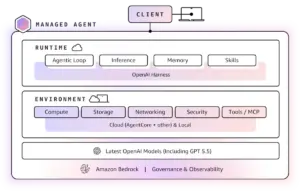
Integration with the existing AWS ecosystem is designed to be seamless. Developers can access GPT-6 Astra through standard Amazon Bedrock APIs, ensuring that it fits into existing infrastructure without the need for radical architectural overhauls. Furthermore, users can configure ChatGPT Work and Codex to leverage the model directly within the Bedrock environment. To complement the model’s core capabilities, OpenAI is also rolling out new enterprise plugins for ChatGPT Work. These plugins are specifically engineered to extend Astra’s browser-use capabilities across a wide array of common business applications, effectively turning the model into an agent that can interact with the software tools that employees use daily.
Security and governance remain central to this deployment. As with all services on Amazon Bedrock, AWS has implemented robust controls that allow businesses to secure their workloads, govern access to sensitive data, and maintain comprehensive audit trails of all model invocation activities. Perhaps most importantly for enterprise clients, inference data processed through Amazon Bedrock is not used for the training of OpenAI’s base models, providing the privacy assurances required by organizations operating in highly regulated industries. This commitment to security, combined with the raw power of the GPT-6 Astra model, positions Amazon Bedrock as a primary hub for companies looking to move from experimental AI projects to large-scale, production-ready enterprise applications.
The rapid pace of these updates highlights a broader trend in the software development industry. It is becoming increasingly clear that the competitive advantage in the age of generative AI does not lie solely in the models themselves, but in how those models are deployed and managed within a secure, scalable ecosystem. The shift toward "AI agents"—models that can not only generate content but also perform actions within browsers and business software—requires a infrastructure that can provide reliability, auditability, and governance. AWS is clearly positioning itself to be the bedrock (pun intended) of this transition, ensuring that as models grow more intelligent, the frameworks supporting them remain stable and enterprise-ready.
Beyond the major model releases, the past week has been characterized by a steady stream of incremental improvements and service updates across the AWS landscape. Keeping track of these changes is essential for any developer or IT professional aiming to maintain an efficient and cost-effective cloud environment. The “What’s New with AWS” portal remains the most reliable source for these updates, and it is recommended that teams set up monitoring to catch these announcements as they arrive. These small, often overlooked updates frequently contain the keys to optimizing performance, reducing latency, or simplifying the management of cloud resources in ways that can have a compounding impact on a business’s bottom line.
Similarly, the breadth of the AWS Blog ecosystem continues to provide deep dives into how these technologies are being applied in real-world scenarios. By exploring the various posts and technical resources shared by the AWS team, developers can gain a better understanding of best practices, architectural patterns, and the creative ways that peers are solving complex engineering challenges. Whether it is a new storage feature, an update to a database service, or a change to identity and access management policies, the information shared on these channels is vital for those who wish to stay ahead of the curve in a rapidly evolving technological landscape.

As we look toward the future, the role of community engagement becomes even more critical. Platforms like the AWS Builder Center provide a vital space for developers to connect, share their solutions, and access content that is specifically designed to support the development of complex cloud applications. In an era where AI is rapidly changing the nature of work, the ability to learn from others, share experiences, and troubleshoot collectively is one of the most valuable resources a builder can have. AWS continues to host a variety of in-person and virtual events designed to foster this community, and participating in these gatherings is an excellent way to gain firsthand knowledge and network with the individuals who are shaping the future of cloud computing.
The transition to mid-September serves as a fitting backdrop for these advancements. Just as the city of New York prepares for the challenges and opportunities of the new season, so too are developers and enterprises preparing for the next phase of the AI revolution. With tools like GPT-6 Astra now integrated into the bedrock of cloud infrastructure, the barriers to entry for high-level AI deployment are lower than ever before. However, the true success of these technologies will depend on the ingenuity, ethical rigor, and strategic vision of the people who build with them. As we continue to navigate this dynamic landscape, the importance of staying informed, engaging with the builder community, and focusing on practical, scalable applications of technology cannot be overstated.
This weekly rhythm of innovation is what keeps the cloud ecosystem moving forward. As we reflect on the events of the past few days, it is clear that the focus is shifting away from the novelty of AI and toward its utility. The questions of today are no longer about what AI can do in a vacuum, but how it can be integrated into the fabric of a modern business to deliver measurable value and drive operational efficiency. With each update, each new model, and each new architectural refinement, the potential for what can be built on AWS grows, providing a platform that is as expansive as it is reliable. As always, the best way to stay ahead is to remain curious, remain engaged, and continue to build. Check back next Monday for another weekly roundup of the latest news and announcements as the AWS journey continues.