











Saudi Arabia’s first homegrown electric-vehicle manufacturer is stepping onto the global stage, setting up a complex and intriguing rivalry with an American automaker that the kingdom already controls.
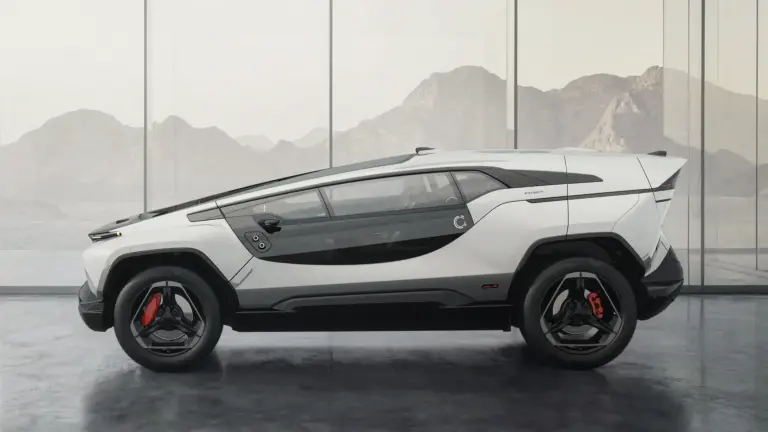
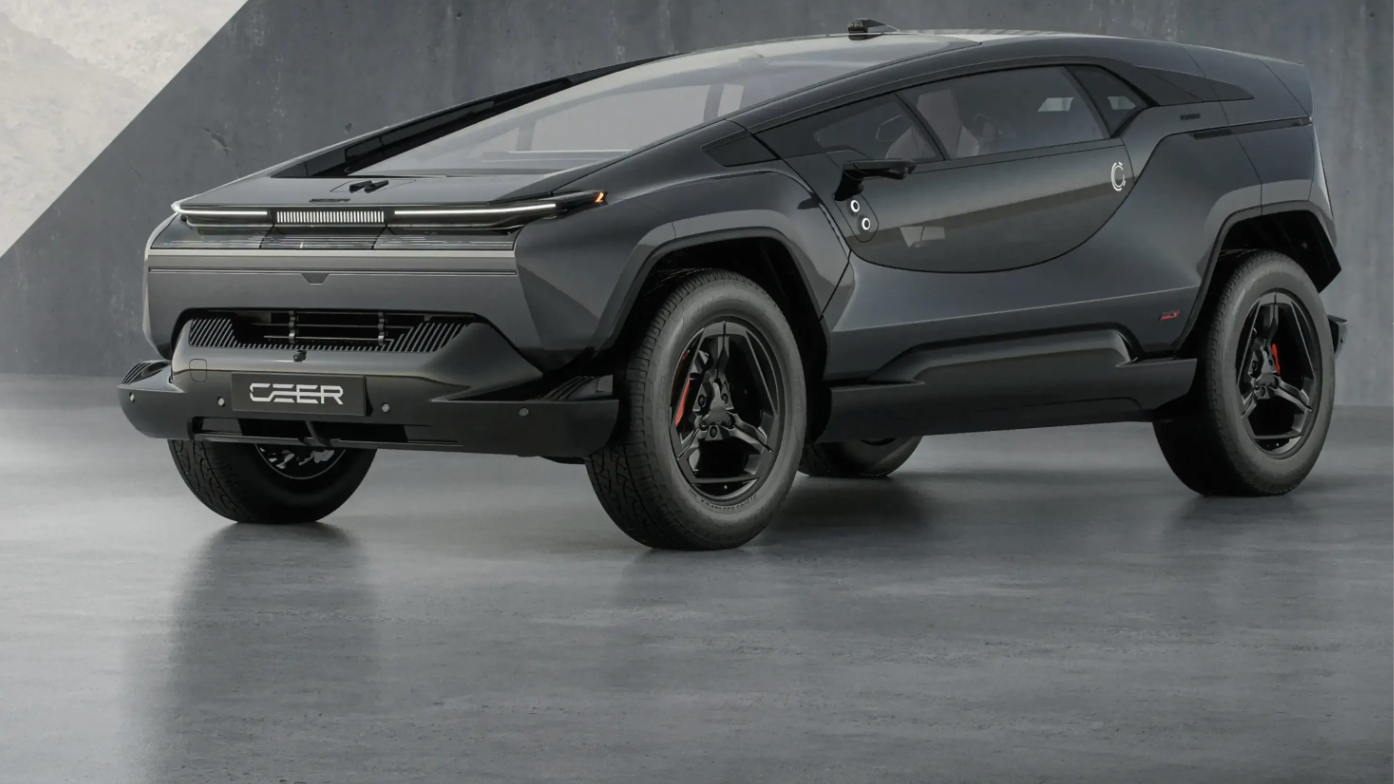
Ceer Motors, a joint venture that is majority-owned by the kingdom’s sovereign wealth fund, the Public Investment Fund (PIF), officially unveiled two flagship electric vehicle models during a high-profile launch event. Deliveries for the eagerly anticipated cars are scheduled to begin in March 2027. The newly revealed EVs—consisting of a high-powered sedan named the Exobot and a matching performance SUV—were entirely designed and engineered within the kingdom. They are slated for commercial production at Ceer’s dedicated manufacturing facility situated in King Abdullah Economic City, located just north of Jeddah.
This ambitious venture marks the PIF’s third major foray into the electric vehicle sector. The sovereign wealth fund previously acquired a roughly 5% stake in Tesla back in 2018 before divesting almost its entire holding by the close of 2019. Beyond that early trade, the fund has poured approximately $8 billion into California-based EV maker Lucid, a company that has famously struggled to turn a profit since its inception.

For the United States and the broader automotive landscape, Ceer’s official market debut establishes an awkward and unprecedented internal rivalry. Saudi Arabia is aggressively building its own indigenous car brand while its sovereign fund simultaneously retains a controlling majority stake in Lucid, whose primary manufacturing plant is located in Casa Grande, Arizona. In many ways, Ceer functions as the PIF’s strategic hedge against Lucid, whose share price has experienced a sharp slump of more than 60% over the past year. Furthermore, Lucid’s sales figures inside the Saudi domestic market have faced mounting pressure, squeezed heavily by lower-cost competitors in a landscape increasingly dominated by Chinese automotive giant BYD.
Industry experts tracking the region point out that while Lucid operates as an established global technology and luxury EV enterprise backed by heavy Saudi capital, Ceer carries an entirely distinct national mandate. According to Bill Russo, founder and chief executive officer of the Shanghai-based consultancy Automobility, Ceer’s mission is centered on building a localized original equipment manufacturer and fostering an indigenous industrial ecosystem from the ground up.
Ceer was originally established in November 2022 as a collaborative partnership between the PIF and Taiwanese multinational electronics manufacturing giant Foxconn. When the joint venture was first announced, executives initially targeted a 2025 rollout for their maiden vehicles. While that timeline faced minor adjustments, Ceer’s leadership confirmed that production is tracking for an early launch, with a robust roadmap of subsequent models planned over the next five years. Furthermore, the company has set a long-term economic goal of producing nearly half of its vehicle components locally within the kingdom by 2034.

The newly unveiled Exobot sedan and its SUV counterpart are positioned squarely as high-powered, premium electric vehicles. This places them directly in the crosshairs of the luxury segment where Lucid operates its flagship Air luxury sedan and Gravity SUV. James DeLuca, CEO of Ceer, noted at the vehicle launch that the most powerful iterations of the Exobot will boast upwards of 1,100 horsepower. This performance benchmark places the Saudi-engineered vehicle within striking distance of Lucid’s most extreme production model, the 1,234-horsepower Air Sapphire sedan. Ceer has not yet publicly disclosed official pricing details for its upcoming fleet.
According to Russo, this initial product positioning places Ceer’s offerings much closer to Lucid’s high-end luxury territory than to the mass-market center of gravity occupied by competitors like BYD. However, the true test of the kingdom’s automotive strategy will materialize only when Ceer’s product range broadens to capture different consumer demographics.
Lucid, in which the PIF holds an approximate 58% stake, is currently navigating a period of severe corporate restructuring. Over the past year, the company appointed a new chief executive officer in Silvio Napoli, laid off roughly a fifth of its U.S. workforce, suspended its secondary manufacturing shift in Arizona, and issued a safety recall affecting 27,000 sedans due to potential fire risks. Consequently, Lucid’s overall market capitalization has contracted significantly, hovering around $1.6 billion.
Inside Saudi Arabia, the retail landscape tells a telling story of shifting consumer preferences. Sales of Lucid vehicles declined by 57% during the first seven months of the year, while sales for China’s BYD surged by an astronomical 369%, according to estimates compiled by Focus2Move, a Rome-based market research firm that monitors vehicle sales across more than 150 countries. Hashim AlFatayerji, CEO of the independent Saudi advisory firm Cararak, noted that this stark divergence in growth partly reflects fundamental differences in vehicle pricing and target demographics. Because BYD and Lucid cater to entirely different market segments, comparing their respective sales volumes directly can often present a misleading picture of automotive demand.
Despite Lucid’s ongoing financial headwinds, the PIF has maintained steady financial faith in the American automaker. Lucid remains one of only five U.S. companies featured in the sovereign fund’s latest quarterly regulatory filings, and the Saudi government previously committed to purchasing up to 100,000 Lucid vehicles over a 10-year span.
Accurate tracking of the Saudi domestic automotive market reveals interesting production-to-consumption dynamics. While Saudi Arabia does not publish an official, centralized count of total EV sales, industry analysts estimate that out of the roughly one million new vehicles purchased annually in the kingdom, anywhere from 10,000 to 20,000 are electric. Other industry leaders, such as Joseph Salem, a senior partner heading travel, transport, and hospitality at Arthur D. Little in the Middle East and North Africa, project domestic figures reaching up to 35,000 to 40,000 electric vehicles, excluding plug-in hybrids.
Even with rising domestic adoption, the planned manufacturing capacity of these regional plants vastly outpaces local demand. Ceer’s manufacturing facility is engineered to produce as many as 240,000 vehicles per year, and Lucid already operates a smaller assembly plant inside the kingdom. Combined, their full-capacity production targets represent roughly ten times what the domestic Saudi market can plausibly absorb in the near term. As a result, industry experts emphasize that the vast majority of their manufacturing output—easily 80% or more—must be intentionally export-oriented by design.
Saudi Arabia’s EV Ambitions
Saudi Arabia is systematically building an automotive industrial base designed to serve the broader Gulf region, North Africa, and international export markets, backed by substantial PIF funding and regional trade agreements. For the kingdom, the domestic market serves primarily as a proving ground rather than the ultimate commercial destination.
Beyond the Middle East, Ceer will inevitably run headfirst into entrenched Chinese competitors who already command a dominant market share abroad. Across the Middle East, BYD accounts for approximately 60% of all electric vehicle sales, while Tesla captures roughly 15%, according to data from the International Energy Agency’s Global EV Outlook.
Chinese carmakers represent an exceptionally formidable competitive hurdle. Over the past decade, these manufacturers have invested heavily in constructing massive production facilities, forging deep ties with localized supply chains, and refining the ability to manufacture vehicles at exceptionally low costs. As domestic production capacity in China outpaces local absorption, these automakers are aggressively expanding their footprint into international markets.
To accelerate its timeline, Ceer relies heavily on established international suppliers for crucial technological components. The company sources its electric motors from Croatia’s Rimac and South Korea’s Hyundai Transys, while utilizing vehicle platforms licensed from Taiwan’s Foxconn. Additionally, Ceer has previously licensed foundational component technology from German luxury automaker BMW.
While leveraging outside engineering gives new market entrants a running start, industry analysts warn that a brand cannot simply license its way to long-term global competitiveness. To win over skeptical consumers both at home and abroad, Ceer must ultimately match established rivals like BYD on price through localized component manufacturing and state-backed financial leverage. Furthermore, the company will need to build out an extensive dealership and service network from day one, ensuring its vehicles stand out on their own merits rather than relying solely on national pride.
Achieving these goals sets a remarkably high bar for any newcomer to the automotive industry. However, analysts agree that Ceer possesses unique structural advantages that few startup automakers ever secure, including multi-year financial runway, powerful domestic backing, and the operational freedom to build upon proven technologies developed by industry veterans. What the company must now earn through careful execution is a trusted global brand that consistently wins customers based on product quality, cost efficiency, and design execution. Saudi Arabia has provided the essential resources and institutional runway to make that ambition possible, but the underlying competitive tests of the global market remain entirely its own to overcome.