










The annual cycle of Apple product releases has once again reached its final stage: the post-launch teardown. Following the recent rollout of its latest wearable technology, iFixit has officially concluded its deep-dive analysis of the Apple Watch Series 12 and the Apple Watch Ultra 4. These teardowns provide the definitive look at the internal engineering changes Apple has implemented this year, shedding light on how the company is balancing hardware performance with the growing consumer and regulatory demand for improved device repairability.
For enthusiasts and potential buyers, these teardowns serve as a vital reality check. While Apple’s marketing often highlights the sleek, sealed design of its wearables, the engineering reality is one of extreme miniaturization, where the pursuit of water resistance and internal space-saving frequently complicates the repair process. The findings from the latest iFixit session indicate that while Apple is making incremental progress in specific areas, the core structural challenges that have long plagued Apple Watch repairs remain largely intact.
iFixit Tears Down Apple Watch Ultra 4
The Apple Watch Ultra 4, positioned as the brand’s most rugged and feature-dense wearable, underwent the first stage of the iFixit examination. The process began with the application of precision heat to the device’s display, a necessary step to soften the adhesive that maintains the watch’s IP6X-rated seal. Once the display was adequately warmed, technician Shahram Mokhtari utilized a specialized metal pick to carefully pry the screen from the titanium casing.

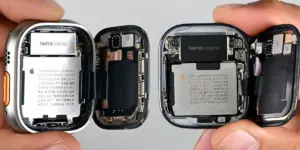
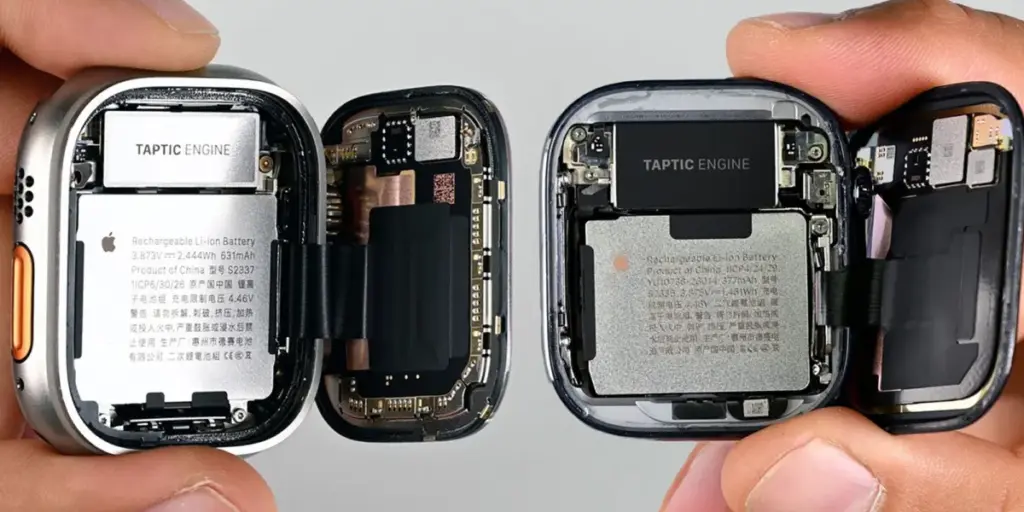
This initial breach of the chassis immediately exposed the device’s internal layout, specifically the Taptic Engine and the battery. One of the most notable technical findings regarding the Ultra 4 is the slight increase in battery capacity. The device now houses a 2.444 Wh battery, a modest upgrade from the 2.313 Wh cell found in the preceding Ultra 3 model. However, the physical reality of replacing this component remains a significant hurdle.
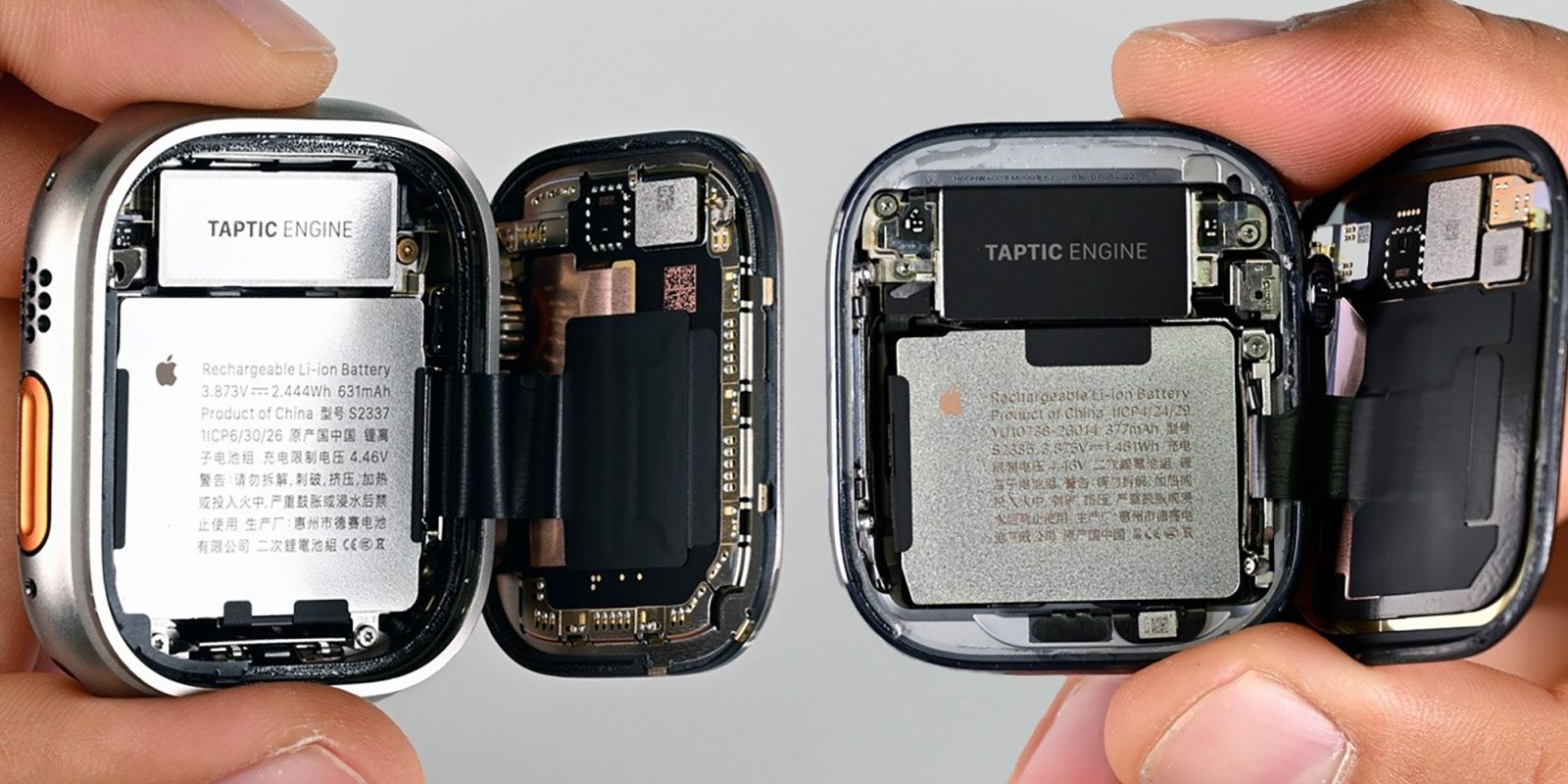
The iFixit team emphasized that despite the Ultra 4’s bulky, outdoor-oriented aesthetic, the battery remains buried behind the screen. Users or repair technicians hoping for an easier path to battery replacement will find the design frustrating; the four screws visible on the bottom of the device case provide access only to the sensor assembly on the underside of the back cover and the S11 chip. They do not offer a gateway to the primary internal components.
Once the screen is successfully unglued, the process of removing the battery and disconnecting the display’s press connector is relatively straightforward in theory. However, the margin for error is razor-thin. The primary risk during this procedure is the potential to inadvertently slice through the delicate flex cables tucked beneath the display panel. Given these constraints, the Apple Watch Ultra 4 received a 4/10 on iFixit’s official repairability scale. This score marks no improvement over the Ultra 3, suggesting that Apple’s engineering priorities for the Ultra line remain focused on structural integrity and water resistance rather than modular, user-serviceable components.
iFixit Tears Down Apple Watch Series 12
The teardown of the Apple Watch Series 12 presented a slightly different, though still complex, narrative. While the device shares the same fundamental obstacle as the Ultra 4—the requirement to pry off a glued-down display to access the interior—iFixit noted a subtle, yet welcome, shift in design philosophy regarding the internal adhesive.
In an effort to streamline the repair process, Apple has integrated stretch-release adhesive and a dedicated pull tab for the battery. This allows for a more controlled removal of the 1.461 Wh battery, which is a marginal capacity increase over the 1.403 Wh battery found in the 46mm Series 11. This addition is a clear nod to repair-friendly design practices, allowing technicians to extract the power cell without relying solely on risky prying techniques that can damage surrounding components.

However, the "improvement" comes with a caveat. The tolerances surrounding the Series 12 display are exceptionally tight—even more so than those found on the Ultra 4. Mokhtari noted that the amount of force required to safely separate the display from the casing is enough to cause concern, as the risk of cracking the screen remains a primary danger during the initial stage of any repair.
Furthermore, Apple has moved away from the ZIF (Zero Insertion Force) connector and tape configuration used in previous generations, opting instead for a simpler press connector for the display. While this simplifies the connection process, it creates a new trade-off for the end user: replacing the screen now necessitates the removal and subsequent replacement of the battery. As Mokhtari pointed out during the teardown, this creates a situation where if a technician has already successfully removed the screen to perform a repair, it becomes logically efficient to replace the battery simultaneously, as the device is already compromised.
Despite the addition of the battery pull tab and the simplified display connector, the Series 12 also earned a 4/10 on the repairability scale. While this represents a one-point improvement over the previous base-model Apple Watch, it highlights just how difficult it remains to service these devices.
The Broader Context of Wearable Repairability
The scores assigned to the Apple Watch Series 12 and Ultra 4 stand in stark contrast to the repairability landscape of other modern smartwatches. For context, iFixit recently awarded the Google Pixel Watch 5 a 9/10 score. The disparity in these scores boils down to design choices: the Pixel Watch 5 allows for display removal via two standard Torx screws and a simple gasket, and its battery can be extracted entirely without the need to contend with industrial-grade adhesives.

These teardowns highlight the ongoing tension between Apple’s industrial design language and the principles of the right-to-repair movement. Apple’s commitment to extreme thinness, seamless water-tight seals, and highly integrated component stacks naturally works against the goal of easy component replacement. While the inclusion of a battery pull tab in the Series 12 suggests that Apple is listening to feedback and experimenting with more accessible assembly methods, the barrier to entry remains high.
For the average consumer, these findings serve as a reminder that the Apple Watch is effectively a sealed unit. While professional technicians with the right equipment can navigate these hurdles, the risks associated with the high-tension display removal mean that DIY repairs remain a daunting prospect for most. As the industry continues to evolve, the 4/10 score remains a benchmark for the current state of Apple’s wearable repairability—a landscape where incremental gains are being made, but where the internal architecture still favors factory-level assembly over user-level maintenance.
As iFixit continues to document these internal changes, the tech community will be watching to see if future iterations of the Apple Watch can bridge the gap between their sophisticated, high-performance internals and a more accessible, repair-friendly design. For now, however, the latest models continue to prioritize the aesthetic and functional performance that defines the Apple Watch experience, even at the cost of serviceability.