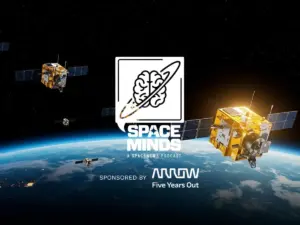










As the aerospace industry undergoes a massive structural transformation, traditional approaches to spacecraft design, manufacturing, and supply chain management are being fundamentally rewritten. In the latest episode of the Space Minds podcast, SpaceNews’ Mike Gruss sat down with Ken Stoler, the space business development lead for Arrow, to explore how modern spacecraft designers and operators view operational risk. The conversation delves into the profound ways the rise of massive megaconstellations has altered purchasing behaviors across the space supply chain, while also examining the intricate engineering challenges of integrating advanced artificial intelligence and high-performance computing power into orbit.
The modern space economy is characterized by a high-tempo operational rhythm that contrasts sharply with the aerospace paradigms of previous decades. Historically, building a spacecraft meant adhering to rigid, highly risk-averse protocols. Every single electronic component underwent years of rigorous testing, radiation hardening, and bespoke qualification processes to guarantee flawless performance over a multi-decade operational lifespan in the harsh environment of low Earth orbit or deep space. However, the commercial imperative of deploying large-scale commercial constellations has forced an industry-wide reassessment of what risk actually means and how it can be effectively managed.
The Evolution of Risk Tolerance in Modern Spacecraft Design
During the discussion, Gruss and Stoler examined how the collective mindset of spacecraft designers and operators has shifted toward a more pragmatic calculation of risk. In the era of megaconstellations, companies are launching hundreds—and in some cases thousands—of satellites into low Earth orbit. This high-volume approach means that individual spacecraft failures are no longer catastrophic events that jeopardize an entire corporate mission or scientific endeavor. Instead, operators are increasingly willing to accept higher failure rates on individual units if it means accelerating time-to-market, reducing capital expenditure, and taking advantage of rapid technological iteration cycles.
This shift in risk appetite directly impacts how the space supply chain operates. Traditional aerospace procurement was defined by specialized, low-volume components that came with exorbitant price tags and lengthy delivery schedules. Today, the demand for commercial-off-the-shelf and hybrid components has surged. Operators need reliable hardware that can be sourced efficiently and scaled to meet the manufacturing demands of prolific satellite builders. This evolving philosophy allows companies to balance cost, schedule, and mission reliability in ways that were previously unimaginable during the legacy era of aerospace engineering.
Navigating the Supply Chain Pressures of Megaconstellations
The transition toward massive constellations has sent ripple effects throughout the entire electronic component supply chain. As manufacturers scale up production to keep pace with commercial demand, traditional procurement channels are being forced to adapt. Component distributors and supply chain partners must now navigate a landscape where lead times, component availability, and quality assurance standards are constantly being challenged by the sheer volume of spacecraft being produced.
Companies that support the aerospace and defense sectors are stepping in to bridge the gap between traditional military-grade reliability and fast-paced commercial manufacturing. By offering comprehensive supply chain services, deep engineering expertise, and access to extensive product portfolios, these partners help innovators streamline the journey from initial concept and design through sourcing, integration, manufacturing, and eventual lifecycle management. This integrated approach is essential for modern space companies striving to maintain competitive advantages in a rapidly crowding orbital environment.

The Computing Challenge: Integrating AI into Spacecraft
Beyond manufacturing scale and supply chain dynamics, the podcast episode also addresses one of the most pressing technological frontiers in modern aerospace engineering: the incorporation of artificial intelligence and advanced computing power onto spacecraft. As satellite operators seek to process larger volumes of data directly on orbit—rather than downlinking raw telemetry and imagery to ground stations for analysis—the need for high-performance onboard processing has skyrocketed.
However, adding AI-enabling computing power to a spacecraft introduces a complex matrix of constraints and challenges. Space is a punishing environment characterized by intense cosmic radiation, extreme thermal fluctuations, and strict power limitations. Traditional high-performance processors designed for terrestrial data centers simply cannot survive the rigors of space without significant thermal management and radiation mitigation strategies. Furthermore, spacecraft operate under strict power budgets, meaning that any increase in computing capability must be carefully balanced against available solar power and battery capacity.
Engineers and component specialists are continually tasked with finding innovative ways to package high-density computing solutions into compact, resilient form factors. Overcoming these hardware constraints is critical for enabling autonomous spacecraft operations, real-time Earth observation analytics, and advanced orbital navigation systems.
About the Space Minds Podcast
The conversation between Mike Gruss and Ken Stoler is part of Space Minds, an audio and video podcast series from SpaceNews dedicated to highlighting the most inspiring leaders, breakthrough technologies, and exciting commercial opportunities shaping the future of space.
Hosted by journalists from the SpaceNews team, including David Ariosto and Mike Gruss, the weekly podcast features in-depth interviews with scientists, founders, and industry experts. The program covers the developments driving the modern space sector and engages listeners with discussions on the technologies transforming the orbital domain. New episodes are released every Thursday across multiple digital platforms, including SpaceNews.com, YouTube, Spotify, and Apple Podcasts, providing space enthusiasts and industry professionals with a front-row seat to the evolving aerospace landscape.