








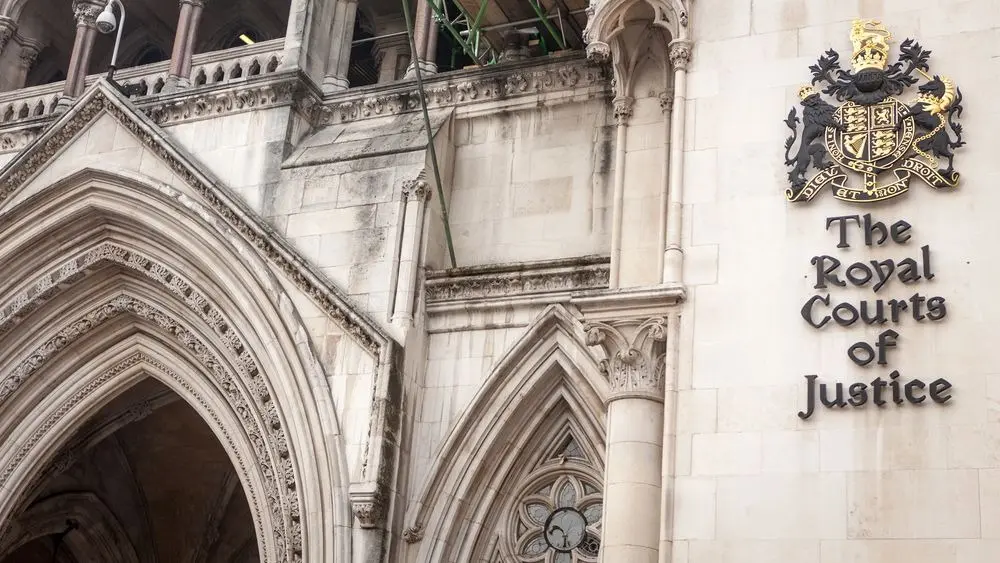
In a high-stakes legal confrontation that highlights the complexities of digital asset custody and private token sales, two investment subsidiaries of the prominent market maker DWF Labs have initiated a lawsuit against cryptocurrency custodian BitGo. The litigation, filed in London’s High Court, centers on allegations that BitGo breached the terms of a token sale agreement by prematurely offloading assets that were subject to strict contractual lock-up periods.
The plaintiffs, British Virgin Islands-based DWF Maas and Panama-based Falcon Digital, are seeking $114 million in damages. They argue that BitGo’s decision to move tokens onto secondary exchanges months before the agreed-upon unlock dates directly triggered a sharp decline in market value, causing significant financial harm to the investment firms.
The Anatomy of the Alleged Breach
At the heart of the dispute are two specific digital assets: Falcon Finance (FF) tokens and ESPORTS tokens. According to the court filing, DWF Labs’ subsidiaries entered into agreements to sell these tokens to BitGo at a discounted rate. In the volatile world of cryptocurrency, such private sales are a standard mechanism used by project issuers to secure capital while protecting the market from sudden, large-scale liquidations. These agreements typically include a lock-up clause—a period during which the buyer is contractually prohibited from selling or transferring the tokens—to ensure market stability.

The plaintiffs contend that the discount afforded to BitGo was explicitly conditional upon the tokens remaining locked for a duration of three months. However, the legal complaint alleges that BitGo bypassed these restrictions, moving the tokens to various exchanges roughly two months before the scheduled unlock dates.
The impact of these premature sales on the market price of the tokens was, according to the lawsuit, immediate and detrimental. Data indicates that Falcon Finance (FF) tokens saw a decline from 8 cents at the start of the lock-up in early March to approximately 7 cents by late April. The ESPORTS token suffered an even more pronounced collapse, dropping from roughly 28 cents in mid-March to just 7 cents by early June. DWF Labs argues that this downward trajectory was a direct consequence of BitGo’s breach, necessitating the $114 million claim for damages to recoup the losses sustained by the subsidiaries.
"The discount BitGo received was conditional on the tokens remaining locked, and they were moved to exchanges roughly two months before the first unlock," DWF stated in comments reported by the Financial Times. The firm further noted that they had attempted to resolve the matter directly with the custodian prior to escalating the issue to the judiciary. "We raised this with BitGo in April and May, and with no undertaking forthcoming, court action became necessary."
The Role of Custodians in Crypto Markets
The lawsuit brings renewed attention to the role of custodians in the digital asset ecosystem. Custodians like BitGo act as the "bank vaults" of the crypto industry, providing secure storage and management services for institutional investors and projects. While their primary mandate is security, their involvement in the active management or handling of tokens during lock-up periods places them at the center of complex contractual obligations.
In private token sales, the custodian often holds the assets in escrow to ensure that all parties adhere to the vesting and lock-up schedules. When a breach of these terms is alleged, it raises questions about the oversight responsibilities of custodians and the limitations of the smart contracts or legal agreements governing these transactions. For investors like DWF Labs, the ability to enforce lock-up periods is essential to maintaining the integrity of their investment strategy, as sudden sell-offs can undermine the viability of the projects they support.
Broader Context: DWF Labs and Industry Scrutiny
The lawsuit comes at a time when DWF Labs is navigating increased scrutiny from both the market and regulatory bodies. The firm has established itself as a significant player in the digital asset space, known for its market-making activities and its aggressive investment strategy. Last year, DWF Labs made headlines by purchasing $25 million worth of WLFI tokens—the native asset of World Liberty Financial, a decentralized finance project backed by President Donald Trump and his family.
This high-profile investment drew immediate attention from lawmakers in Washington, D.C., who expressed concerns regarding the firm’s operational background and the connections of its founder, Andrei Grachev. Grachev previously served as the CEO of the Russian arm of the major crypto exchange Huobi between 2018 and 2019. Huobi has since faced significant regulatory challenges, including being sanctioned in various jurisdictions for its alleged role in facilitating the movement of assets in ways that helped Russia circumvent Western sanctions.
While these historical connections do not directly relate to the current breach-of-contract dispute with BitGo, they have contributed to an environment where DWF Labs’ business practices are under a microscope. The London High Court case represents a pivot from the firm’s usual market-making operations toward a defensive legal posture, as it seeks to protect its interests in a competitive and often litigious sector.
Implications for Future Token Sales
The outcome of the lawsuit could have long-lasting implications for how private token sales are structured and enforced. If the court finds in favor of DWF Labs, it may set a precedent regarding the liability of custodians in adhering to the specific vesting schedules of their clients. Conversely, a ruling in favor of BitGo could highlight potential ambiguities in how lock-up agreements are interpreted or enforced within the custody framework.
As of now, the digital asset industry remains in a state of observation. The lawsuit highlights the inherent risks of the over-the-counter (OTC) and private sale market, where high-value transactions rely heavily on the integrity of contractual obligations and the performance of custodial partners.
Both DWF Labs and BitGo have maintained a low profile regarding the specific allegations, with neither party immediately responding to requests for comment following the initial report. As the case proceeds through the High Court in London, the crypto industry will be watching closely to see how the judiciary interprets these contractual disputes and whether the $114 million claim will be validated by evidence of market manipulation or negligence.
For the time being, the dispute serves as a stark reminder of the complexities involved in digital asset management. In an industry where "code is law" is often the mantra, this legal battle proves that when significant capital is at stake, traditional legal frameworks—and the courts that uphold them—remain the final arbiter of fairness and accountability in the volatile world of decentralized finance and tokenized assets. The resolution of this case will likely influence future agreements, potentially leading to more rigorous, transparent, and legally binding custody arrangements for institutional token sales.