







SpaceXAI has officially entered a new phase of its artificial intelligence expansion with the launch of the early public beta for Grok Bot. This new agent platform, which first saw the light of day in an early release this past August, represents a significant departure from traditional generative AI models. Unlike standard chatbots that function primarily as conversational interfaces, Grok Bot is designed to act as an "agent teammate," capable of logging into professional software suites—including Gmail, LinkedIn, and Salesforce—to execute complex, multi-step workflows on behalf of the user.
The arrival of Grok Bot brings with it a certain degree of industry confusion, largely due to the overlapping nomenclature within the SpaceXAI ecosystem. As the company continues to iterate on its various AI offerings, the term "Grok" has become a catch-all brand that now encompasses several distinct tools. To clarify the landscape: there is "regular" Grok, which remains the company’s flagship conversational chatbot; there is Grok Build, a specialized coding agent that operates within a user’s terminal to draft, test, and deploy software; and now, there is Grok Bot, the autonomous digital work assistant.
Grok Bot’s origin story is rooted in the company’s strategic acquisition of the AI-coding startup Cursor. Originally developed under the codename "Sand," the technology was built using the substantial compute power afforded by the SpaceXAI infrastructure. While a traditional chatbot might provide a user with a written response or a summary of data, Grok Bot is engineered to perform the "doing" phase of a project. A user can delegate a task to the bot, which then navigates various web-based tools and applications, performing actions such as filling out forms, responding to social media engagement, or drafting and sending emails. Once the task is complete, or if the bot requires further guidance, it returns to the user with the final results or requests formal approval for sensitive actions.

The architecture of the platform allows for a scalable, cloud-based approach to automation. Users can manage a single bot or deploy multiple agents simultaneously, all operating within a shared cloud environment tied to their account. These bots are designed to maintain operational continuity, working in the background—even while the user is offline or engaged in other high-priority tasks—to coordinate processes across various digital tools.
Understanding the Scope and Limitations of the Beta
Because the project is currently in an early public beta, SpaceXAI has been transparent about the fact that Grok Bot is not yet a finished, fully polished product. The platform’s feature set, reliability, and underlying performance metrics remain subject to frequent updates and changes as the company collects real-world usage data and user feedback.
For those considering integrating Grok Bot into their daily operations, the learning curve involves understanding the difference between simple automation and the agentic behavior of the bot. The system is designed to learn by observing the user. As a user completes a task, the bot monitors the workflow, effectively "watching" the human’s approach to routine operations. It then encodes this workflow into its own routine, allowing it to execute the task independently in the future. Over time, the bot is intended to refine these routines, using its learned patterns to make internal corrections and improve the efficiency of future runs.
This focus on delegation is the primary value proposition of the software. It moves the needle from the "human-in-the-loop" model, where the AI serves as a suggestion engine, to a "human-on-the-loop" model, where the AI manages the execution while the human provides oversight and strategic direction. However, as with any emerging AI agent, the potential for error remains a factor. Potential users are encouraged to start with low-risk tasks—such as summarizing document sets or organizing research notes—to build confidence in the system before delegating more critical responsibilities.
Eligibility and Access Requirements
The early beta for Grok Bot is not available to the general public in a free-tier format. Instead, access is strictly limited to users who hold specific paid subscriptions within the SpaceXAI and Cursor ecosystems. Eligibility for the beta is restricted to subscribers of the SuperGrok Plus and SuperGrok Heavy plans, as well as users on the various Cursor tiers, including Cursor Pro+, Cursor Ultra, and the Cursor Teams Standard or Premium plans.
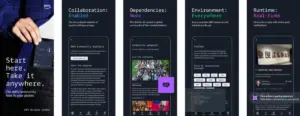
For those who meet these subscription criteria, the platform is available for download across all major operating systems, including macOS, Windows, iOS, and Android. The primary entry point is the official Grok Bot webpage, which hosts a prominent, context-aware download button that detects the user’s operating system. For power users who manage multiple devices or switch between different platforms, additional download links are available under a "More Downloads" section on the same page.
Upon installing the client, users must sign in with their authenticated subscription account. Once logged in, the interface allows for the creation and configuration of bots, where users define the specific roles and responsibilities of their agents.
A Measured Approach to Autonomous Automation
The integration of an autonomous agent into a personal or professional workflow requires a high degree of caution, particularly when that agent is granted access to sensitive data such as email inboxes, browser tools, and corporate accounts. SpaceXAI has emphasized the importance of maintaining oversight, urging users to keep human approval mechanisms enabled for any task that could result in public-facing actions, such as sending messages, altering records, or exposing screen recordings.
The risks associated with granting an AI agent the ability to "act" are not merely theoretical. As these bots begin to interact with third-party platforms like Salesforce or LinkedIn, they become an extension of the user’s digital identity. A miscalculation by the bot could have professional consequences, making the "human-in-the-loop" approval process an essential safety rail for the foreseeable future.
Industry analysts have noted that the fascination with Grok’s capabilities—ranging from its unique, often unfiltered personality to its increasing utility as an agentic tool—highlights the broader trend of AI moving from passive knowledge retrieval to active task completion. As SpaceXAI continues to iterate, the company is likely to encounter challenges regarding security, data privacy, and the inherent volatility of beta software. For now, the focus for early adopters remains on experimentation: testing the limits of what these bots can handle, navigating the inevitable bugs and login hurdles, and determining which routine, time-consuming tasks can safely be handed off to an automated teammate.
As the beta progresses, the evolution of Grok Bot will likely depend on how effectively it can bridge the gap between simple script-like automation and true, intuitive agentic reasoning. For the professional user, the promise of the platform is significant, offering the potential to reclaim hours previously spent on administrative coordination. However, the current reality remains one of early-stage development, where the burden of supervision rests firmly on the human operator, ensuring that while the bot does the heavy lifting, the final results align with the user’s objectives and professional standards.