










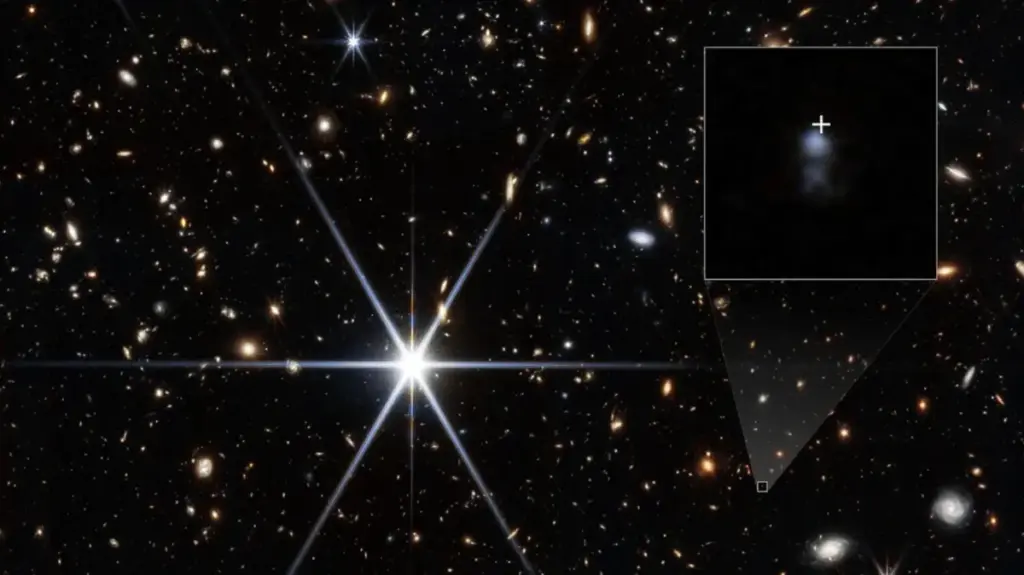
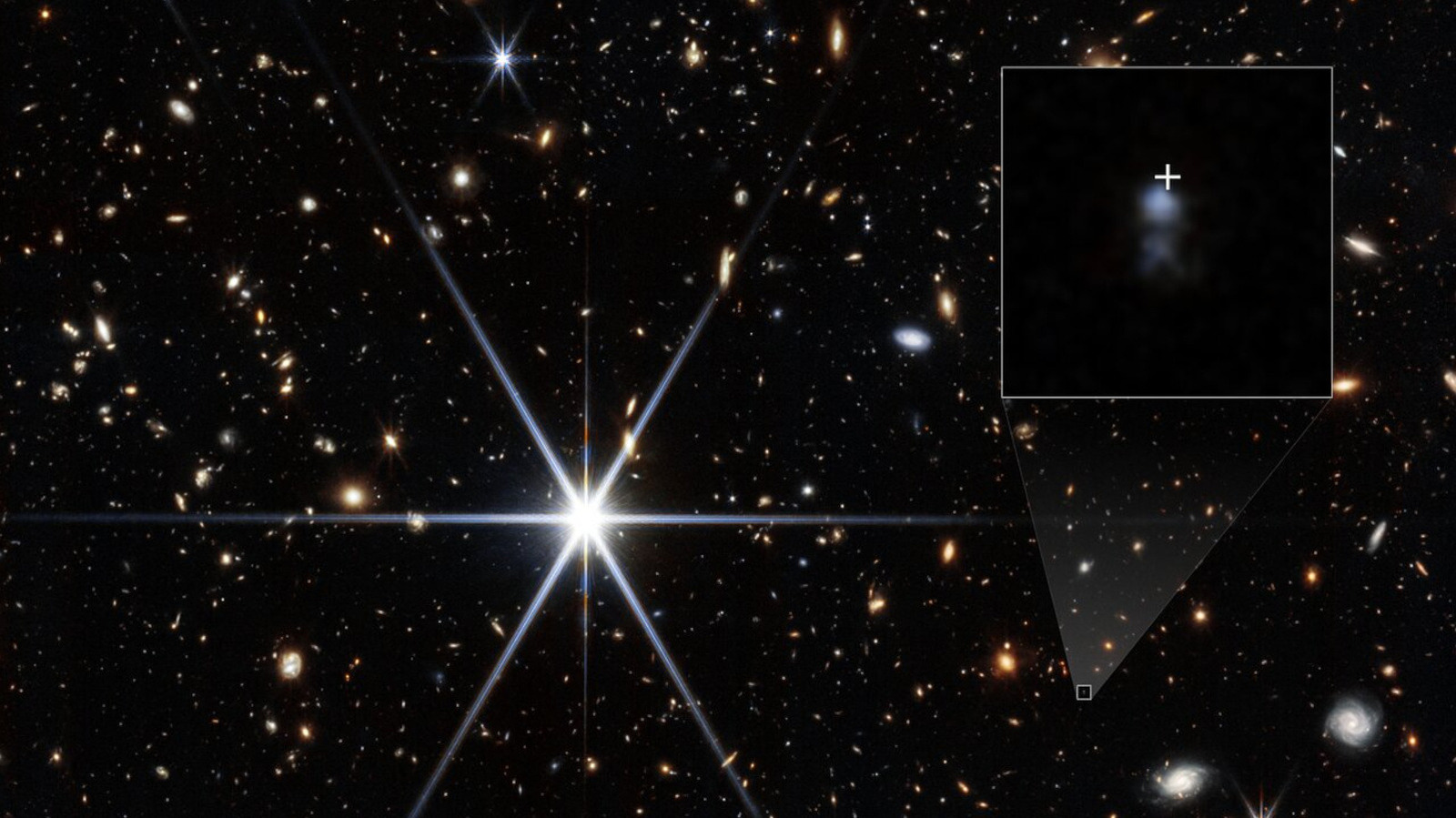
In a significant breakthrough for high-energy astrophysics, researchers have successfully identified the galactic origin of the most distant fast radio burst (FRB) ever recorded. By leveraging the unparalleled sensitivity of the James Webb Space Telescope (JWST), astronomers have peeled back the layers of deep space to reveal the environment in which this mysterious, high-energy event occurred. The findings, recently published in the journal Science, not only mark a milestone in observational astronomy but also provide critical evidence that may finally resolve long-standing debates regarding the cosmic origins of these fleeting, yet immensely powerful, radio signals.
Fast radio bursts are among the most enigmatic phenomena in the modern universe. First discovered in 2007, these transient pulses of radio waves last for only a fraction of a second, yet in that blink of an eye, they release a staggering amount of energy—equivalent to the total output of our Sun over a period of three days. Despite their intensity, the brevity of these bursts and their unpredictable nature have made them notoriously difficult to study. For years, the scientific community has grappled with the question of what celestial engines could possibly generate such immense power, and where exactly these bursts originate.
The specific burst in question was first detected in 2024 by the MeerKAT telescope array, a powerful radio telescope located in South Africa. The initial detection confirmed that the signal had traveled an extraordinary distance across the cosmos, setting a new record for the farthest FRB observed to date. However, radio telescopes often struggle to provide the high-resolution imaging necessary to pinpoint a host galaxy with absolute certainty, especially at such extreme distances. To bridge this gap, astronomers turned to the James Webb Space Telescope.

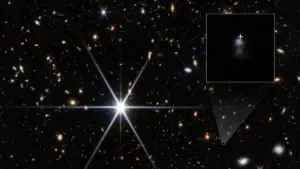
Webb’s near-infrared instruments were trained on the coordinates provided by the MeerKAT array. Because the universe is expanding, light from distant objects undergoes a phenomenon known as "redshift," where light waves are stretched toward the red end of the spectrum. By analyzing this redshift, astronomers were able to calculate the age of the signal: the burst originated roughly 3 billion years after the Big Bang. This places the event in a "cosmic youth," a period when the universe was significantly younger than it is today and when the rate of star formation was at its historical peak.
The data returned by Webb revealed something entirely unexpected. While previous fast radio bursts had been traced to massive, sprawling galaxies that were actively birthing stars, the host galaxy of this record-breaking burst was remarkably small—nearly 1,000 times smaller than the host galaxies identified in earlier studies. This discovery challenges the existing paradigm of where and how these bursts occur, suggesting that the conditions required to produce such an event are not exclusive to the massive galactic structures astronomers had previously assumed were the primary culprits.
The findings have sent ripples through the astrophysical community, primarily because they force a re-evaluation of the theoretical models used to explain the birth of FRBs. Currently, there are two primary schools of thought regarding the origins of these bursts. The first, and perhaps most widely discussed, theory proposes that fast radio bursts are the result of cataclysmic mergers between two neutron stars. Neutron stars are the ultra-dense, collapsed remnants of massive supergiant stars, and when two of these objects spiral inward and collide, the resulting release of energy is immense.
However, this merger theory comes with a significant chronological constraint. It takes billions of years for a binary system of stars to evolve, undergo supernovas, and eventually spiral into a collision. Because this process is so protracted, the merger model suggests that FRBs should logically be confined to older, more mature galaxies where such binary systems have had sufficient time to evolve. The discovery of a burst occurring just 3 billion years after the Big Bang—at a time when the universe was arguably too young for such long-lived binary systems to have finished their evolutionary dance—suggests that the merger hypothesis cannot account for every fast radio burst observed.
The second, and increasingly compelling, theory involves the death of a single massive star. In this scenario, a star undergoes a supernova explosion, leaving behind a highly magnetized, rapidly rotating neutron star known as a magnetar. Magnetars possess some of the most powerful magnetic fields in the universe, and it is hypothesized that these fields could trigger the intense radio emissions observed as FRBs.
Manisha Caleb, a researcher from the University of Sydney and the lead author of the study published in Science, emphasized the importance of these findings in narrowing down the field of possibilities. "Our work suggests that it’s very unlikely that this fast radio burst was produced by a merger," Caleb stated. By providing evidence that this specific burst originated in a young, small galaxy, the research effectively decouples the event from the long timescales required by the merger theory. Instead, it provides robust support for the magnetar-supernova pathway, indicating that these bursts can indeed emerge from the aftermath of a single, massive star’s demise.
This distinction is crucial for understanding the diversity of FRB sources. It is entirely possible that the phenomenon is not the result of a single mechanism, but rather a collection of different cosmic events that happen to produce similar radio signatures. By identifying that this distant burst does not fit the "merger" profile, researchers have added a vital piece to the puzzle. It suggests that while some FRBs might result from the collisions of older, dead stars, others are the violent, short-lived cries of young, massive stars reaching the end of their life cycles.
The success of this observation highlights the transformative power of the James Webb Space Telescope. By providing the precision required to look back to the early universe and identify the specific galactic environments of transient events, Webb is allowing astronomers to move beyond simple detection and into the realm of detailed environmental analysis. This capability is essential for characterizing the "host" of an FRB, as the properties of the galaxy—such as its mass, star-formation rate, and chemical composition—serve as a roadmap for understanding the progenitor of the burst itself.
As researchers continue to analyze the data, the focus will likely shift to finding more examples of high-redshift fast radio bursts. If more of these distant events are found in small, young, and active galaxies, it will solidify the theory that the early universe was a "hotbed" for magnetar production. This would imply that the frequency and nature of fast radio bursts have changed over the course of cosmic history, evolving in tandem with the star-formation history of the universe itself.
For now, the team behind this discovery remains focused on the implications for stellar evolution. The fact that an FRB could occur so early in the history of the universe serves as a reminder of how much is still left to uncover about the life and death of stars. As astronomers refine their models and continue to monitor the skies with both ground-based arrays like MeerKAT and space-based observatories like Webb, the mystery of fast radio bursts is slowly beginning to give way to a more nuanced, evidence-based understanding of the extreme, high-energy processes that shape our universe. This latest finding is a testament to the fact that even the most fleeting, distant signals can carry profound information about the fundamental mechanics of the cosmos.