










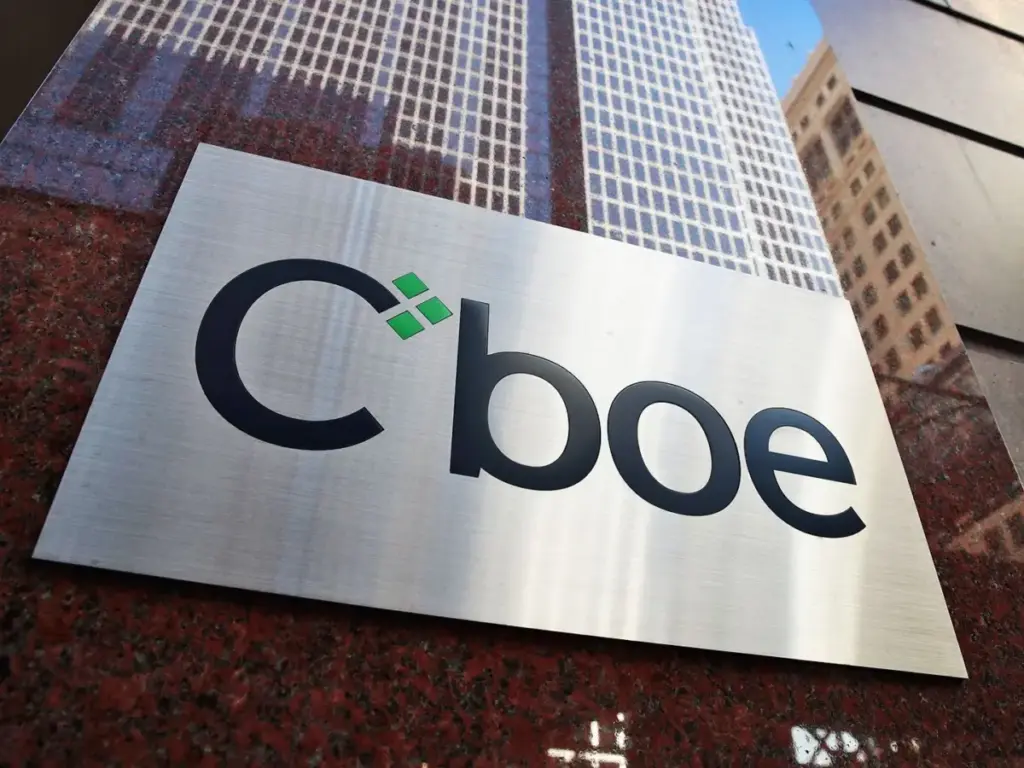
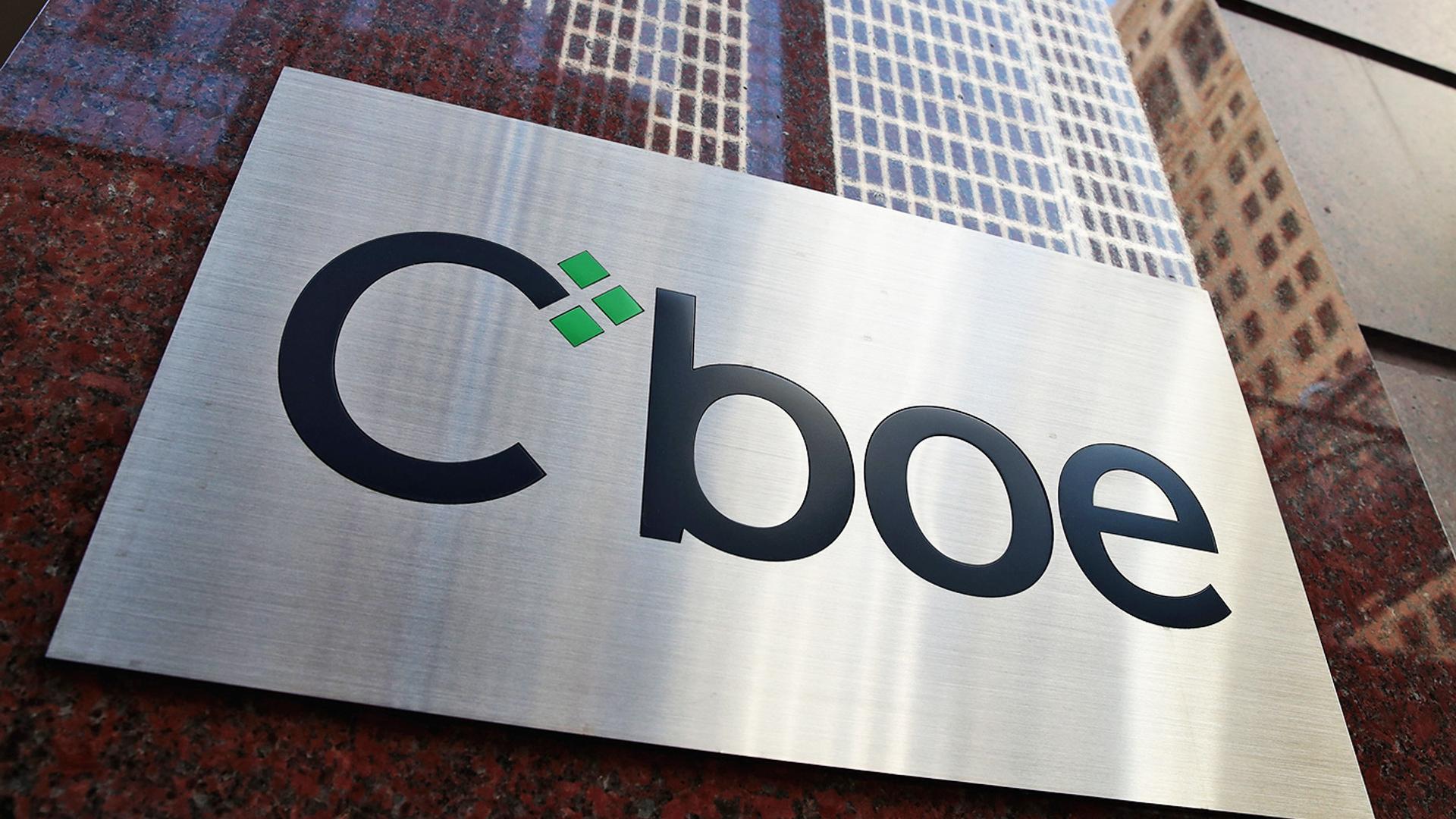
Financial market titans Cboe Global Markets (CBOE) and S&P Dow Jones Indices (S&P DJI) have announced a monumental 25-year extension of their long-standing licensing agreement, a move that secures the future of one of the world’s most significant financial benchmarks. Beyond the long-term continuity of the S&P 500 Index (SPX) options, the deal signals a strategic shift toward the integration of blockchain technology into traditional derivatives. As Wall Street heavyweights increasingly experiment with on-chain assets, this partnership could soon herald the arrival of tokenized options, marking a new chapter in how institutional capital moves through global markets.
The agreement, announced Monday, grants Cboe exclusive rights to continue offering its flagship S&P 500 Index options through 2051. While the extension provides stability for the massive ecosystem of traders and institutions that rely on SPX derivatives, the most significant takeaway for market observers was the explicit mention of future technological collaboration. In their joint statement, the companies noted that they “may collaborate on innovation beyond traditional index derivatives, including products such as tokenized options contracts.”
This acknowledgment represents a major validation of the digital asset space by some of the most established pillars of the financial industry. Catherine Clay, CEO of S&P DJI, emphasized the necessity of evolving alongside market participants, stating, “Investor demand for exposure to U.S. equities continues to accelerate, and we see a future where every investor, everywhere, can access this benchmark in the format that best suits their needs.”

While neither firm has released a specific timeline, product roadmap, or technical blueprint for how these tokenized derivatives might be structured, the inclusion of the topic in a quarter-century-long agreement underscores its importance to their long-term strategic vision.
The Scale and Significance of SPX Options
The potential impact of bringing such high-volume instruments on-chain cannot be overstated. SPX options are among the most liquid and actively traded index derivatives on the planet. According to data provided by Cboe, the market reached a staggering milestone in 2025, with 970.6 million contracts changing hands. This averages out to approximately 3.9 million contracts traded every single day.
S&P DJI, meanwhile, serves as the gatekeeper to the world’s most widely followed financial benchmarks. Trillions of dollars in investment capital, spanning pension funds, ETFs, and retail portfolios, are anchored to indices like the S&P 500. By exploring tokenized versions of these instruments, Cboe and S&P DJI are signaling that they are prepared to transition the backbone of the U.S. securities market into the era of decentralized finance (DeFi) infrastructure.
The Promise of Tokenization for Derivatives
Tokenization, at its core, involves the representation of traditional financial assets—such as stocks, bonds, or complex derivatives—on a blockchain ledger. This transition offers a departure from the legacy systems that have governed Wall Street for decades. Instead of operating within the constraints of traditional trading hours and centralized clearing houses, tokenized assets can theoretically trade around the clock, facilitate near-instant settlement, and move with greater fluidity between diverse financial platforms.
For the derivatives market, the benefits of moving on-chain extend well beyond simple accessibility or extended trading windows. The implementation of smart contracts—self-executing code that automatically carries out the terms of an agreement once specific conditions are met—could revolutionize the lifecycle of a trade. In a tokenized environment, functions such as collateral management, margin requirements, and the final settlement of a contract could be automated, significantly reducing the reliance on intermediaries.
By locking collateral on-chain and encoding contract parameters like strike prices and expiration dates into a smart contract, the entire settlement process could become transparent and instantaneous. This would allow for a more efficient deployment of capital, as traders would no longer have to wait for the standard T+1 or T+2 settlement cycles to regain access to their funds.
A Growing Trend Among Financial Giants
Cboe and S&P DJI are far from the only institutions exploring the tokenization of traditional finance. The move is part of a broader, industry-wide trend as Wall Street’s most established players look to modernize their infrastructure.
Nasdaq, for instance, has been making significant inroads into the space, recently investing $100 million in Payward, the parent company of the cryptocurrency exchange Kraken, with a focus on developing tokenized, voting-enabled equities. Similarly, the New York Stock Exchange (NYSE) is currently in the process of developing a 24/7 trading venue specifically designed for tokenized stocks and exchange-traded funds (ETFs).
The infrastructure layer of the market is also evolving. The Depository Trust & Clearing Corporation (DTCC), which serves as the clearing and settlement backbone of the U.S. securities industry and holds custody of over $100 trillion in assets, is preparing to launch a tokenized securities platform this October. This platform is specifically designed to support the on-chain versions of assets held at the DTC, further bridging the gap between traditional and decentralized systems.
S&P DJI’s Expanding Blockchain Footprint
S&P Dow Jones Indices has already begun to test the waters of on-chain integration. In late 2025, the firm licensed the S&P 500 to Centrifuge for the creation of SPXA, which holds the distinction of being the first blockchain-based index fund licensed by the firm to operate on Coinbase’s Base network.
Earlier this year, the company took another step forward by licensing the S&P 500 benchmark to Trade[XYZ], enabling a 24/7 perpetual futures product that trades on the Hyperliquid platform. These experiments have served as a proving ground, demonstrating that there is a tangible market demand for institutional-grade indices to be accessible through blockchain-native channels.
The new licensing agreement between Cboe and S&P DJI suggests that the success of these early experiments has provided the confidence needed to scale these efforts into the highly complex world of derivatives.
Looking Toward the Future
For Cboe, the extension of the licensing agreement is not just about maintaining the status quo; it is about future-proofing the business. Craig Donohue, CEO of Cboe Global Markets, emphasized the balance between stability and innovation during the announcement.
“This extension allows us to further grow our SPX and VIX franchises, while providing the certainty and continuity that our customers have come to expect in these products,” Donohue said. “It also gives us significant runway to pursue the next frontier of innovation and stay ahead of evolving investor needs and emerging technologies.”
As the financial industry continues to grapple with the possibilities of blockchain technology, the collaboration between Cboe and S&P DJI stands as a bellwether for the institutional adoption of digital assets. By blending the deep liquidity and regulatory history of traditional derivatives with the efficiency and transparency of blockchain rails, these institutions are positioning themselves to lead the next generation of global market infrastructure. For now, the market will be watching closely for the next steps in this quarter-century partnership, as the prospect of tokenized options moves from a strategic vision toward potential reality.