








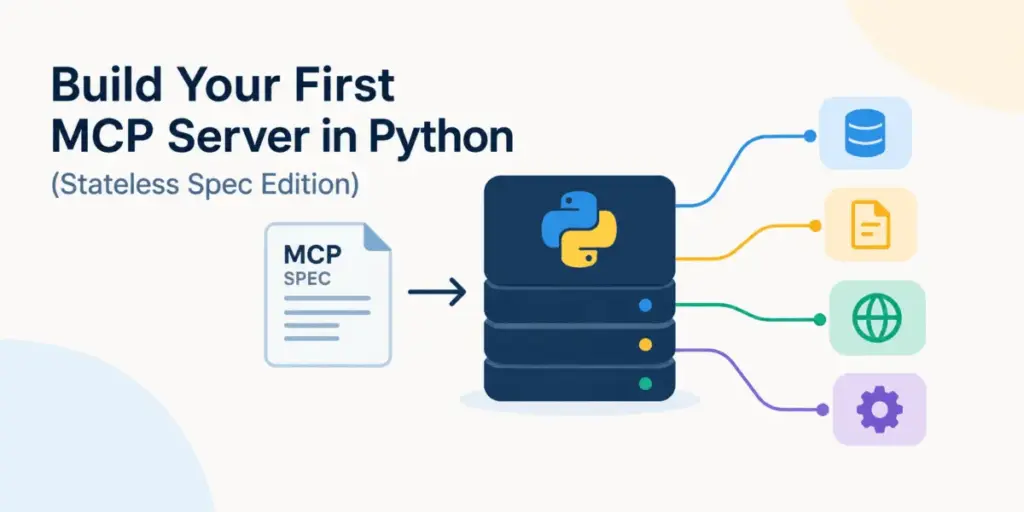
The developer ecosystem surrounding the Model Context Protocol (MCP) has reached a significant maturation point following a fundamental core architectural shift implemented this summer. According to the updated 2026-07-28 MCP specification, the protocol’s core architecture has transitioned to a fully stateless model. Modern clients no longer need to establish a formal protocol session before transmitting requests, and servers are liberated from relying on the Mcp-Session-Id header for standard request execution. This critical protocol evolution dramatically reduces operational complexity, making MCP servers considerably easier to scale behind conventional HTTP infrastructure and standard load balancers.
Concurrently, the official Python SDK has advanced to version 2 as its stable release line, introducing a high-level MCPServer application programming interface designed to simplify how developers define tools, resources, and prompts using ordinary Python functions. Rather than grappling with complex boilerplate or manual JSON schema definitions, engineers can leverage native type hints to construct robust server applications. This synergy between the stateless protocol architecture and the refined Python SDK streamlines the development of reliable artificial intelligence extensions, bridging the gap between large language models and backend enterprise knowledge bases.
What Are We Building?
To demonstrate the practical application of these architectural updates, developers are looking toward lightweight, specialized implementations such as a developer knowledge-base server. This sample application exposes three primary MCP primitives: a search tool for querying information, a resource for listing available documentation, and a prompt template for drafting standardized customer support replies.
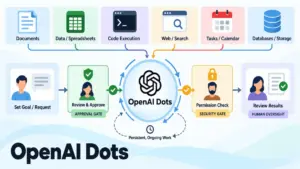
Crucially, this server architecture contains zero user session state. Every incoming request carries all the contextual data required for processing, perfectly embodying the stateless MCP model. In this setup, an LLM host transmits an MCP request directly to the Python MCP server, which evaluates the payload, executes the relevant function, and returns the response without cross-referencing internal session memory or persistent connection state caches.
Creating the Project and the Server Core
The current Python SDK requires Python 3.10 or newer and recommends utilizing modern dependency managers such as uv to handle installations and development workflows. By initializing a project and installing the core package with the command-line interface extra, developers gain immediate access to the essential development environment and the MCP Inspector tool. The project layout remains remarkably clean, requiring only a couple of modular files for the server logic and client implementation, entirely bypassing heavy framework boilerplate.
Within the server module, the high-level MCPServer class serves as the primary interface for defining the application. For the vast majority of use cases, this high-level API replaces the lower-level Server class, which is reserved exclusively for scenarios demanding granular control over custom methods, exact protocol metadata, or complex schema adjustments. Developers instantiate the server by supplying a descriptive title and instructional guidelines that instruct the language model on how to utilize the exposed knowledge base effectively rather than relying on guesswork.
Populating the server with data relies on standard Python structures, such as a collection of dictionaries containing article identifiers, titles, and body text. The real power of the framework becomes apparent when these ordinary functions are exposed to the MCP ecosystem through straightforward decorators.
Integrating Tools, Resources, and Prompts
An MCP tool represents an executable function that an artificial intelligence model can autonomously decide to call when attempting to resolve a user query. By applying a simple tool decorator to a standard Python function that accepts a search query and an optional result limit, the SDK automatically parses the function signature to generate the corresponding input schema. The function’s type hints dictate the schema types, while default parameter values establish which fields remain optional. This approach eliminates the historical requirement of manually writing JSON schemas or custom argument parsers, allowing the function signature itself to act as the interface definition.
In contrast to tools, which function as executable actions comparable to action-oriented operations, resources expose passive information that the host application can load directly into context. Resources are identified by standardized Uniform Resource Identifiers, such as a knowledge-base URI that lists available articles. Clients can read these resources directly without triggering computational logic or invoking active functions, operating similarly to data retrieval mechanisms.
Furthermore, the framework accommodates reusable prompt templates via dedicated decorators. These prompts are typically initiated by human users or host applications rather than being invoked autonomously by the model. By combining tools, resources, and prompts under a unified decorator-oriented server interface, developers can construct comprehensive network-accessible applications with minimal code overhead.
Running in Development and Production Environments
For local development, the SDK provides a specialized development command that launches the application alongside the MCP Inspector interface. This graphical debugging utility provides developers with a browser-based user interface to inspect registered primitives, view generated schemas, and test tool invocations interactively with sample JSON payloads.
When transitioning from development to actual HTTP deployments, the server can be executed directly as a script, exposing a streamable HTTP endpoint. For advanced production environments, the framework allows developers to extract a standard ASGI application compatible with popular asynchronous servers like Uvicorn. This capability proves particularly valuable when integrating an MCP server as a microservice component inside a larger enterprise deployment built on frameworks like FastAPI or Starlette.
The Architectural Impact of the Stateless Protocol Update
The transition to a stateless core represents a fundamental departure from earlier versions of the protocol. Under older specifications, HTTP clients were required to initialize a formal handshake, which returned a session identifier that had to be included in every subsequent request to maintain the logical session. This requirement frequently complicated multi-instance deployments, forcing engineering teams to implement sticky routing or shared session storage infrastructure to ensure requests landed on the correct server worker.
Under the modern specification, each MCP request is entirely self-contained. Consecutive requests can be routed to entirely different server instances or worker threads without breaking the application flow. This decoupling of protocol state from transport infrastructure enables seamless horizontal scaling, allowing load balancers to distribute traffic evenly across available server nodes without regard for session affinity.
Despite this architectural shift, engineers must still accommodate application-level state where business logic demands it. Stateless protocol design does not mean applications cannot manage state; rather, it means the protocol layer no longer conceals application state inside transport sessions. Developers are encouraged to utilize explicit state handles, such as generating unique identifiers that are passed back and forth explicitly by the model during multi-step interactions. This shift ensures that application state remains transparent, trackable, and fully compatible with distributed backend architectures.
The convergence of the stateless MCP specification and the refined Python SDK v2 marks a major milestone for artificial intelligence engineering. By removing unnecessary protocol overhead, eliminating session management complexities, and allowing developers to build robust servers using native language features, the ecosystem has lowered the barrier to entry for creating sophisticated, scalable AI-integrated tools and enterprise knowledge systems.