








Amazon Web Services (AWS) has announced a significant evolution in its onboarding and project management experience, designed specifically for modern builders working at the rapid pace of artificial intelligence. By introducing a new, simplified entry point, AWS aims to lower the barrier to entry for developers who want to move from a conceptual idea to a deployed product without being slowed down by the complexities of traditional infrastructure configuration.
Since its inception, AWS has been defined by its foundational infrastructure services—namely Amazon Simple Storage Service (S3), Amazon Elastic Compute Cloud (EC2), and Amazon Simple Queue Service (SQS). These building blocks were designed to provide the utility needed for anyone with an idea to begin constructing digital products. Over the years, as the platform matured and became the primary infrastructure for the world’s largest enterprises and government agencies, the feature set grew exponentially. AWS expanded globally through a sprawling network of Regions and added deep, granular controls for security, networking, governance, and cost management. While this breadth and depth remain vital for massive, mission-critical operations, the sheer volume of configuration options can often act as a friction point for new developers or small teams trying to prototype a new application.
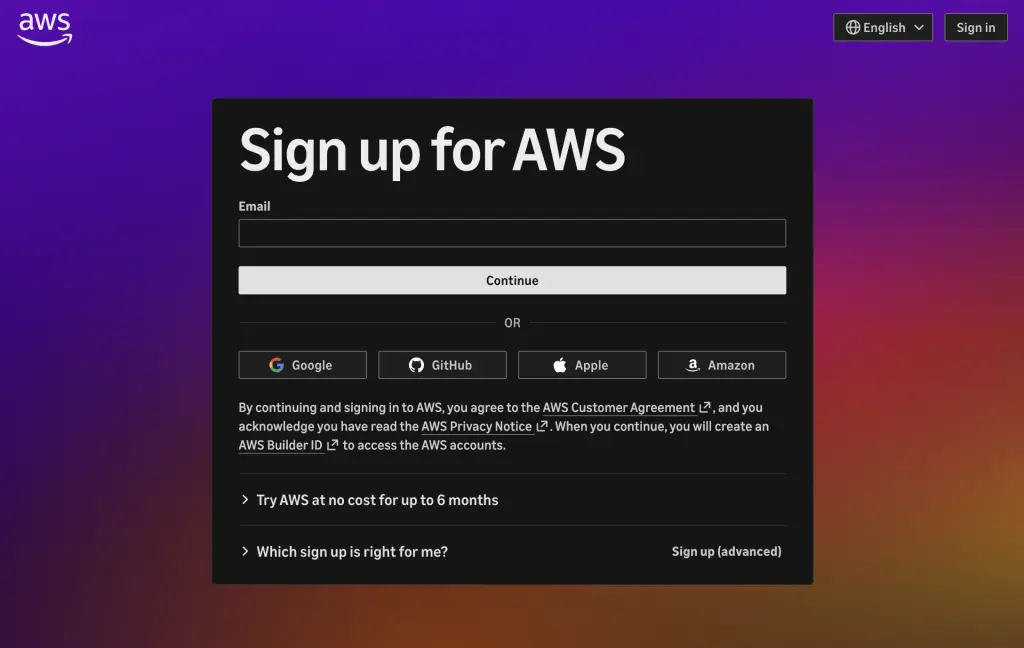
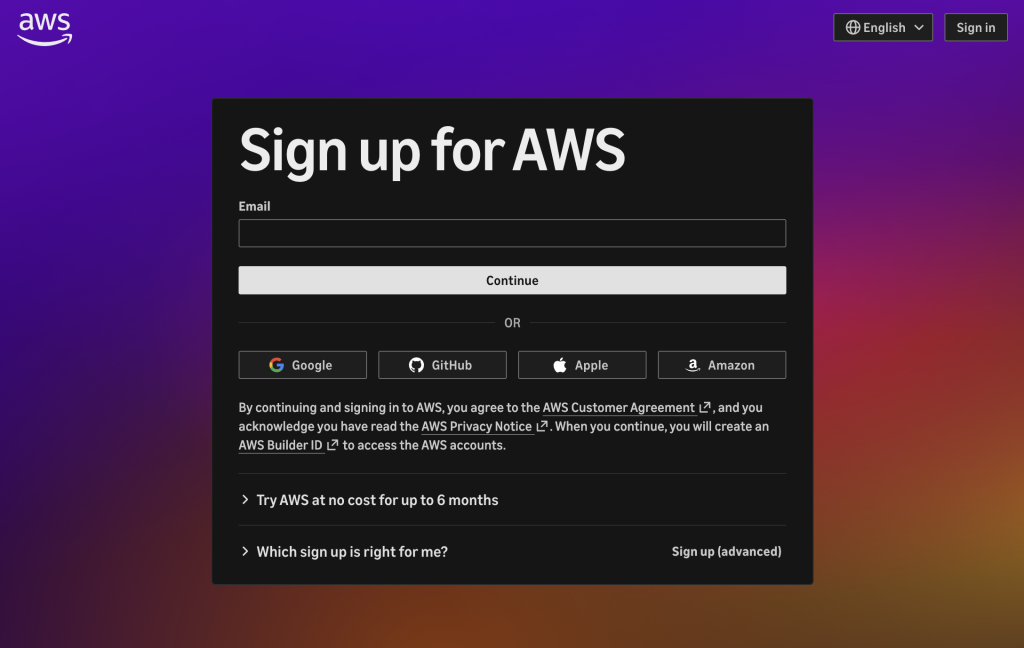
The newly announced experience is a direct response to this feedback. Recognizing that modern development is increasingly powered by coding agents and automated workflows, AWS has shifted its approach to prioritize speed and sensible defaults. For new users, the signup process is now streamlined to favor existing identities, allowing developers to authenticate using credentials from providers such as Google, GitHub, and Apple. In a move to further reduce friction, most new customers will no longer require a credit card to initiate their journey, and they will receive $100 in free credits under the AWS Free Tier to begin experimenting immediately.
A Project-Centric Approach to Infrastructure
At the core of this new experience is a "project-centric" organizational model. When a user signs up, the AWS environment is automatically structured into a project, which serves as a container for an AWS account, shared settings, and team collaboration tools. This structure is pre-configured with security controls, allowing builders to focus entirely on their code rather than the administrative overhead of managing permissions or network architecture.

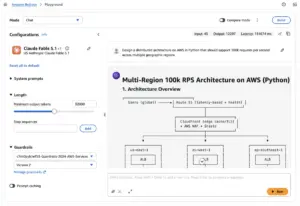
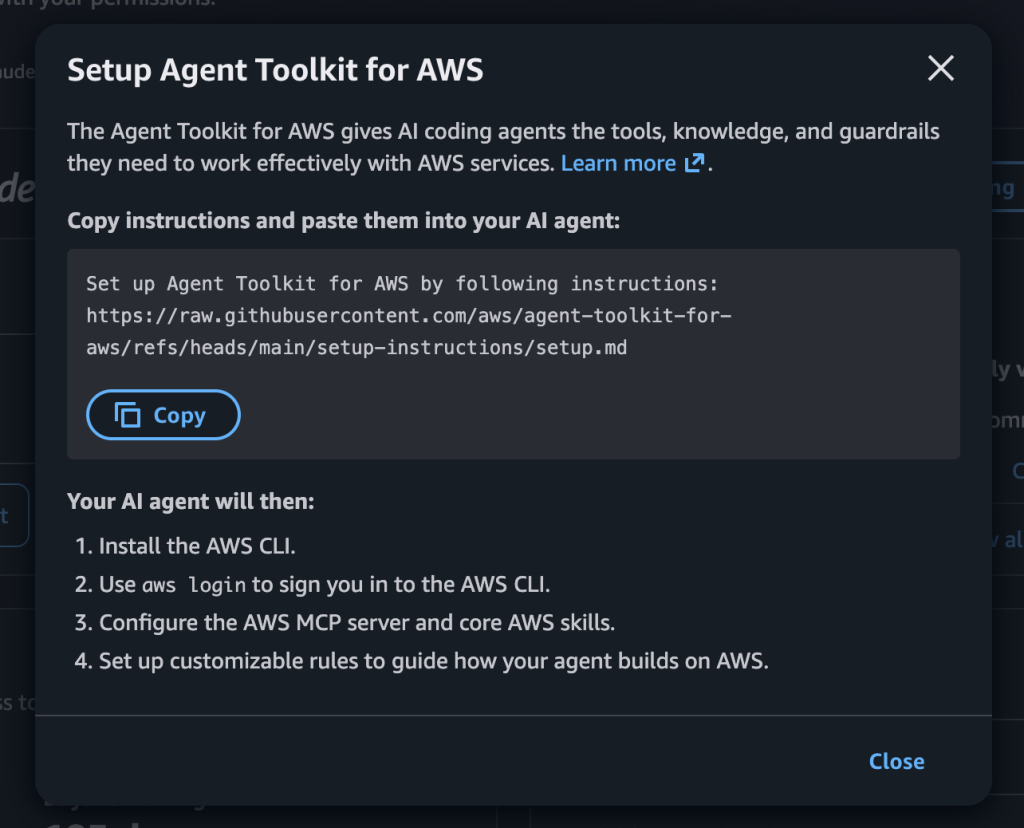
Once signed in, the platform provides a specific prompt that users can paste into their preferred coding agent. This integration configures the agent to interact directly with the new AWS environment, enabling it to deploy resources, manage workloads, and iterate on applications according to AWS best practices. By automating the connection between coding agents and cloud infrastructure, AWS is essentially removing the "plumbing" phase of development.
Collaboration has also been significantly simplified. Rather than requiring users to master the intricacies of AWS Identity and Access Management (IAM) or the IAM Identity Center, the new experience allows project owners to invite collaborators simply by entering their email addresses. Permissions are handled behind the scenes; the system ensures that each invitee is granted access only to the specific projects they have been invited to, effectively eliminating the need for manual user creation or complex policy troubleshooting.
Managing Costs and Scaling Without Friction
For developers, the transition from experimentation to production often brings concerns regarding cost management. To address this, the new experience includes a simplified billing and budget control system. When a project is ready to scale beyond the initial free credits, users can enter a payment method and define a monthly spend limit. This limit acts as a strict ceiling for the project, starting at $20 per month.
The system is designed to provide transparency and control: AWS will suggest a spend limit based on the user’s specific usage trends, which can be accepted as-is or customized based on the project’s growth trajectory. If a project approaches its designated budget, the user receives notifications to keep them informed. In the event that the spend limit is reached, AWS proactively pauses the project to prevent further charges, rather than allowing costs to accrue unexpectedly. This allows for clear, per-project budgeting, meaning a team can allocate a larger, more flexible budget to a core application while keeping a strict, low-cost limit on an experimental, secondary project.
The power of this new, simplified model is most evident when testing it in a real-world scenario. A developer can go to the AWS portal, sign in with a standard identity provider, and have a fully functioning, secure project environment within seconds. By using a coding agent, a developer can simply request an API that performs a specific task—such as generating a unique sequential ID for every request—and the agent will automatically set up the necessary components, including AWS Lambda functions, Amazon DynamoDB tables, and Amazon API Gateway endpoints. In this workflow, the agent handles the resource deployment and, crucially, automatically configures the permissions between these services. This allows a developer to reach a live, public endpoint in minutes without having to manually navigate the AWS console or configure resource policies.
Seamless Growth Into Advanced AWS Features
A common concern with simplified, "beginner-friendly" interfaces is the potential for developers to hit a wall when their project outgrows the initial environment. AWS has architected this new experience to be an on-ramp, not a dead end. As projects evolve and require more sophisticated capabilities—such as deploying across multiple global Regions or implementing complex governance features like custom policies within AWS Organizations—developers can activate "advanced features" at no additional cost.

When these features are enabled, the environment transitions into a fully configured AWS Organization that adheres to established best practices. Crucially, this transition occurs without any need for migration, downtime, or manual reconfiguration. The work that was completed in the initial, simplified project remains intact, with all settings and resources seamlessly mapped to the underlying, professional-grade AWS services.
By re-introducing a low-friction entry point, AWS is effectively returning to its roots as a platform for builders, while leveraging the massive, mature infrastructure it has built over the last two decades. The company notes that this experience is currently in the process of a gradual rollout to new customers. The primary goal is to ensure that the time spent "configuring" is replaced by time spent "building," while still maintaining the global scale and technical depth that developers expect from AWS when their ideas eventually turn into high-scale, production-ready applications. As the rollout continues, AWS is actively seeking user feedback to further refine this streamlined interface, signaling a shift in how the cloud giant plans to engage with the next generation of developers.