



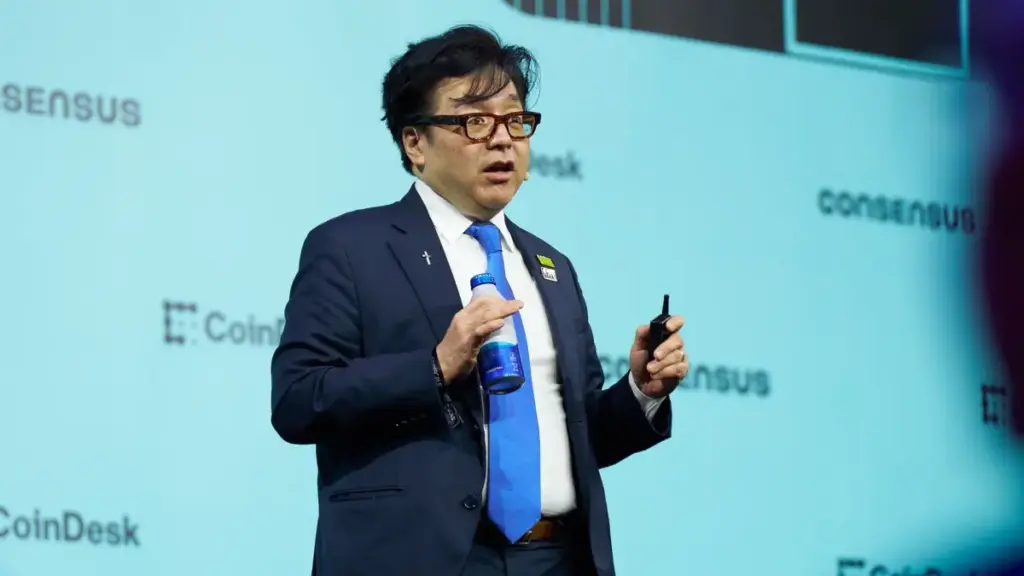
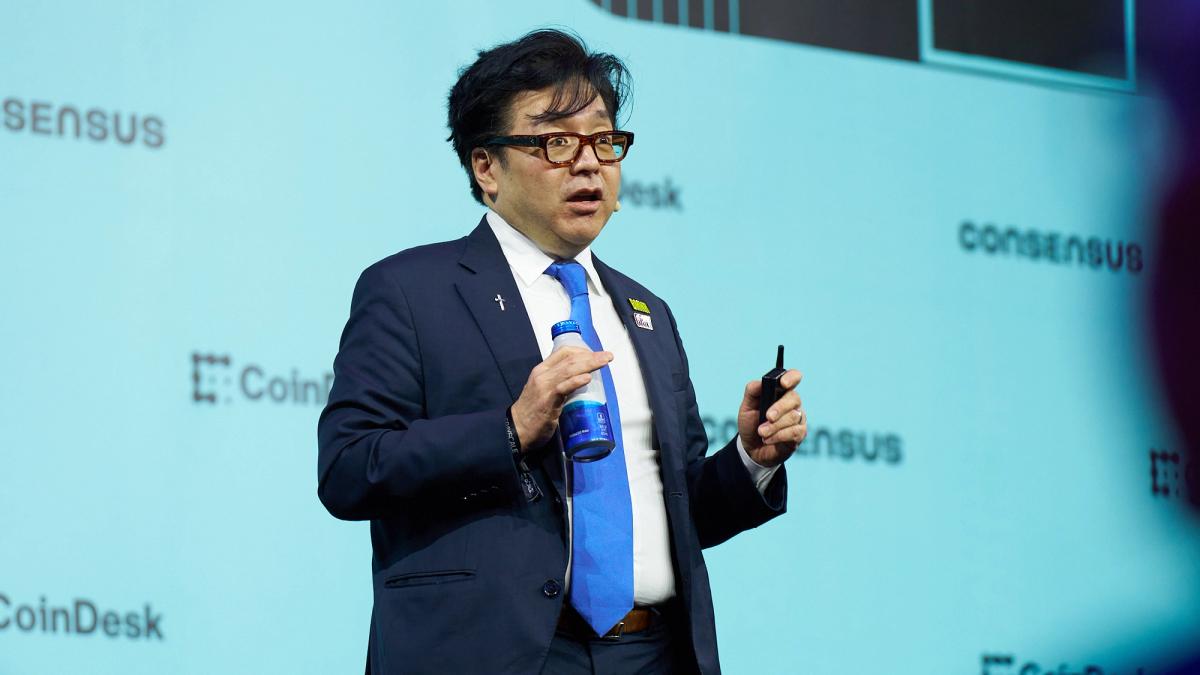
Tom Lee, the chairman of ether treasury firm Bitmine and a prominent figure in financial circles as the co-founder of Fundstrat Global Advisors, believes that a massive impending shift in global wealth will serve as a primary catalyst for the next sustained cryptocurrency bull market. As Bitmine inches closer to its stated objective of controlling 5% of the total circulating supply of ether, Lee’s outlook provides a window into how institutional players are positioning themselves for what they view as an inevitable transition in capital ownership.
The core of Lee’s thesis rests on the "Great Wealth Transfer," a phenomenon currently being tracked by tax authorities and financial researchers alike. According to estimates from the U.S. Internal Revenue Service (IRS) and independent projections from Fundstrat, between $1.5 trillion and $2 trillion in assets are expected to change hands between 2026 and 2028 alone. This period represents the beginning of a decades-long transition where older generations pass their accumulated wealth down to their heirs—a younger demographic that research suggests possesses a significantly higher risk appetite for digital assets and modern equities.
"The wealth transfer currently underway is expected to provide substantial support for the upcoming crypto bull market," Lee stated in a recent address. "Those inheriting this wealth are generally younger and, consequently, are more likely to diversify their portfolios into crypto-assets, which they view as both a store of value and a high-growth investment vehicle."

Lee’s perspective aligns with broader industry observations regarding changing investment behaviors. Last month, Vlad Tenev, the CEO of the retail-focused brokerage firm Robinhood, echoed similar sentiments during a high-profile interview with Jim Cramer. Tenev noted that upwards of $100 trillion in wealth is projected to shift across generational lines over the coming decades. While the exact percentage of this capital that will eventually flow into the digital asset ecosystem remains a subject of intense debate among economists, the consensus among industry leaders like Lee and Tenev is that the digital-native mindset of the younger generation will lead to higher adoption rates compared to their predecessors.
The transition, however, is not merely about the demographic shift in ownership. It is also being underpinned by the rapid maturation of the underlying financial infrastructure. Lee highlighted that the growing institutional adoption of blockchain technology to represent traditional financial assets—often referred to as the "tokenization of real-world assets"—is effectively lowering the barrier to entry for mainstream investors. Combined with the explosive growth of artificial intelligence and the emergence of corporate treasury strategies that treat crypto-assets as long-term holdings rather than speculative bets, the foundation for a new market cycle appears to be firming up.
Bitmine Approaches Its 5% Strategic Milestone
While Lee’s market commentary offers a macro perspective on the industry, his firm, Bitmine Immersion Technologies, is executing a micro-strategy that has captured the attention of market analysts. Bitmine has spent the better part of the last year building an aggressive position in ether, aiming to secure a "whale-level" stake that would represent 5% of the total token supply.
The company’s most recent holdings report indicates that it is rapidly closing in on that target. In the most recent week of trading, Bitmine acquired an additional 12,532 ETH, an investment valued at approximately $32 million based on current market prices. This latest purchase brings the company’s total holdings to 6,028,946 ETH, a hoard valued at roughly $15.3 billion. With the current supply of ether hovering around 122.1 million tokens, Bitmine’s stake now sits at approximately 4.9% of the total circulating supply.
The firm is currently only about 76,000 ETH away from reaching its 5% threshold. Given the current pace of acquisitions, market analysts project that Bitmine could achieve its goal in approximately six weeks, assuming current market conditions hold and the company continues its consistent purchasing schedule.
This accumulation strategy has been a cornerstone of the firm’s operational pivot. Since June 2025, when Bitmine officially shifted its corporate focus toward an ether-centric treasury strategy, it has maintained a rigorous weekly buying cadence. This consistent buying pressure has been a notable feature in the ether market, providing a steady stream of demand that has historically helped stabilize price fluctuations during periods of volatility.
However, the era of Bitmine as a constant buyer may soon be drawing to a close. Lee recently confirmed that the company intends to cease its accumulation of ether once the 5% target is met. For a market that has become accustomed to the predictable buying patterns of the firm, this shift in strategy will represent a significant transition. When the company stops purchasing, it will effectively remove a major source of consistent, institutional-grade demand from the open market, forcing other participants to step in to maintain the current price equilibrium.
Beyond simple accumulation, Bitmine has also demonstrated a commitment to utilizing its treasury for yield generation. The company has staked approximately 5.07 million ETH—roughly 84% of its total holdings. This move into liquid staking is a strategic play to maximize the utility of its assets. By participating in the network’s consensus mechanism, Bitmine is able to generate passive income from its massive position, with current projections estimating roughly $336 million in annualized staking revenue.
This dual-pronged approach of asset accumulation and yield generation highlights a sophisticated institutional strategy. By controlling a significant percentage of the total supply and simultaneously staking those assets, the company is not only betting on the long-term price appreciation of ether but is also ensuring a reliable cash flow that can be reinvested or used to offset operational expenses.
As Bitmine approaches its self-imposed deadline, the broader market is watching closely. The confluence of the massive generational wealth transfer, the increasing integration of blockchain technology into traditional finance, and the conclusion of one of the largest corporate accumulation cycles in crypto history creates a complex environment for investors. Whether the incoming wave of wealth from younger investors will be sufficient to absorb the potential volatility resulting from the cessation of Bitmine’s buying remains to be seen.
For now, the message from the Bitmine boardroom is one of long-term confidence. Tom Lee’s assertion that the next bull market will be driven by a change in generational priorities suggests that the firm views its current holdings as a foundational investment for the next decade of digital finance. As the company crosses the final stretch toward its 5% goal, the industry waits to see how the market will respond to a world where a single entity holds such a substantial portion of the world’s second-largest cryptocurrency.