What can digital transformation teach us about the current wave of artificial intelligence adoption? According to digital strategist and author Paul Boag, organizations are once again making the exact same structural, cultural, and strategic errors they made a decade ago, turning what should be a transformative opportunity into a corporate farce.
Revisiting the lessons from his 2014 book Digital Adaptation, published by Smashing Magazine, Boag argues that the striking similarities between past tech rollouts and today’s AI deployment reveal a collective corporate amnesia. While senior leadership teams rush to embrace the latest technological breakthroughs, they continue to treat profound organizational change as a simple software installation task rather than a complex human challenge.
The parallels to the digital transformation era are difficult to ignore. Back in 2014, corporate IT departments busily rolled out content management systems, customer relationship management platforms, and intranets. Simultaneously, customer-facing teams launched websites, mobile applications, and early personalization engines. Yet, organizations invested almost no effort into understanding how actual human beings would interact with or benefit from these systems. Internal infrastructure remained notoriously difficult to use, and customers frequently found that the digital products being built either missed the mark entirely or failed to solve their actual problems.
Today, a nearly identical dynamic is playing out with artificial intelligence. Buoyed by endless media hype, senior management teams authorize company-wide software licenses, such as enterprise deployments of Copilot Studio, and consider the job finished. Aside from a generic, organization-wide training session, little structural support is provided. Consequently, staff members are left feeling pressured to deliver measurable results with unfamiliar tools, all while wondering what their role in the company will actually look like in the near future.
It’s About People, Not Technology
Undoubtedly, both digital transformation and artificial intelligence represent major technological leaps forward, requiring some degree of technical implementation. However, technology is merely the tip of a very large and complex iceberg.
Organizations must recognize that artificial intelligence is fundamentally a cultural shift as much as a technological one, and that shift carries enormous implications for everyday staff members. This time around, the psychological stakes are even higher because employees are acutely aware of the existential threat automation poses to their livelihoods. Having read the same sweeping headlines as leadership, staff members find little reassurance in generic promises from upper management.
From an employee’s perspective, corporate AI initiatives offer very little personal upside, particularly when workers suspect management’s ultimate goal is headcount reduction. The primary driver behind executive enthusiasm for AI is enhanced productivity—the promise that people can accomplish more in less time. However, this increased output rarely benefits the individual worker. Employees are still expected to work their standard hours, but now under the expectation of heightened velocity and volume without any additional compensation, shorter hours, or reduction in workload.
Before demanding that staff embrace AI, organizations must first address how they intend to motivate them. One viable strategy is helping employees identify the most tedious, repetitive parts of their jobs and demonstrating how AI can alleviate those specific friction points. People are naturally far more receptive to operational changes when those shifts are framed as genuine opportunities to improve their day-to-day working lives. Beyond merely removing administrative burdens, forward-thinking organizations may need to consider offering tangible incentives for AI adoption, ranging from professional development opportunities to career progression pathways.

Staff Need Time and Support to Adopt AI
Adopting artificial intelligence is far from a trivial task. For many workers, it requires challenging and dismantling workflows, habits, and procedural knowledge built up over decades. Rebuilding that expertise demands an enormous cognitive investment, particularly when employees are already overworked and struggling simply to stay on top of daily operational demands.
Learning a new technological paradigm requires dedicated time, deep consideration, and safe spaces for experimentation. Sending employees to a single, generic training course and expecting them to unlock the full potential of artificial intelligence is fundamentally unrealistic. At a minimum, staff require specialized training tailored to their distinct departmental roles. Furthermore, organizations must develop comprehensive, ongoing support frameworks that grant workers the necessary time to experiment and discover practical applications within their specific domains.
While formal instruction has its place, the most effective support consistently emerges from peer collaboration. Rather than focusing initial rollout efforts on winning over the most resistant skeptics, organizations should identify and empower internal enthusiasts—those individuals who are already experimenting with AI tools independently. By bringing these early adopters together, giving them time and space to share successful use cases, and letting their organic enthusiasm spread, organizations can leverage powerful social proof. Witnessing a peer in a similar role successfully utilize a tool does more to drive genuine adoption than any top-down corporate memo ever could.
It Needs to Be Safe to Fail
Unfortunately, organic experimentation inevitably involves missteps, errors, and trial-and-error discovery. This reality clashes directly with corporate cultures built on fear, where mistakes are frequently penalized as indicators of professional incompetence.
During the digital transformation era, senior executives routinely demanded sweeping modernization while remaining baffled when progress stalled. They failed to recognize the contradictory messages they were sending. While demanding digital evolution, leadership continued to enforce rigid key performance indicators and penalized any operational missteps during annual performance reviews. The relentless pressure to deliver flawless execution left zero institutional space for failure.
In the current AI landscape, these cultural hazards appear even more pronounced. Reports circulate of employees receiving reprimands for consuming excessive API tokens mere weeks after being instructed to aggressively adopt AI tools. Others face such heavy-handed compliance warnings regarding restricted use cases that they decide the safest career move is to avoid AI altogether and stick strictly to legacy methods. If leadership genuinely expects workforce-wide AI adoption, they must cultivate an environment where experimentation is safe. This requires recalibrating performance metrics, shifting evaluation criteria, and relaxing internal governance while employees navigate the steep learning curve.
Handle Governance With Care
Naturally, enterprise artificial intelligence cannot be deployed without a clear governance framework. However, governance is an area organizations have historically managed with heavy-handed ineptitude.
During the digital transformation era, oversight was either completely absent or paralyzingly strict, effectively stifling any organic innovation. Today, that exact pattern is repeating itself. While employees require baseline governance to understand institutional boundaries, compliance structures are frequently so restrictive that workers find it easier to abandon official tools entirely. Lengthy policy documents detailing exhaustive prohibitions create an atmosphere of anxiety and hesitation.

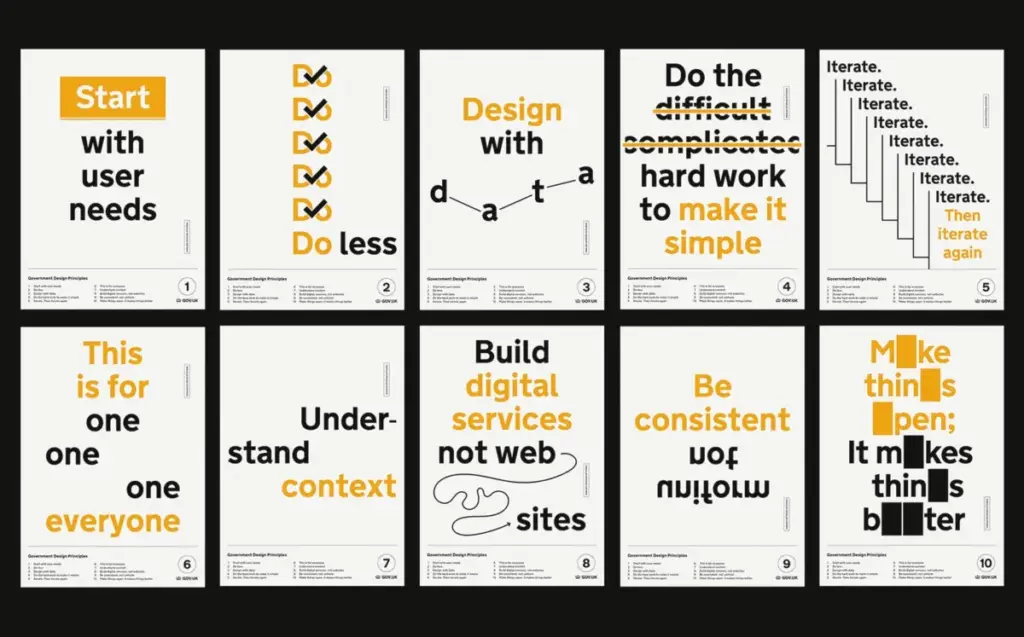
Instead of exhaustive rulebooks, organizations require concise, accessible sets of guiding principles—frameworks compact enough to fit on a handful of posters, comparable to established public sector design standards. Beyond establishing these clear core boundaries, organizations must demonstrate a degree of trust in their employees’ professional common sense. While mistakes will inevitably occur, they represent an unavoidable cost of organizational evolution.
Adaptive Technological Rollout
From an IT infrastructure perspective, organizations must exercise extreme caution to avoid locking down environments so rigidly that adoption grinds to a halt. In 2014, overstretched IT departments frequently deployed rigid, standardized technology stacks organization-wide with little consultation from end users. Bypassing official channels required navigating complex bureaucratic approval processes involving steering committees, resulting in glacial change management and high project failure rates.
Today, a parallel phenomenon is unfolding. Many IT departments provision a single enterprise tool, such as Microsoft Copilot, and declare the technology deployment complete. Yet, standard enterprise toolsets frequently fall short of satisfying the specialized needs of distinct internal teams. When innovative teams find themselves blocked by bureaucratic steering groups and unable to realize their project visions using restricted corporate tools, their initial enthusiasm quickly wanes.
When internal systems fail to meet operational needs, employees do not simply give up; instead, they bypass official channels entirely. Just as the digital transformation era witnessed the rise of unauthorized cloud storage applications like Dropbox due to inadequate enterprise offerings, modern workplaces are now experiencing widespread "shadow AI." When corporate tools prohibit productive work, employees open personal accounts on mobile devices or home laptops to get the job done.
This unauthorized usage introduces severe security and data governance risks that rigid corporate policies attempt to prevent in the first place, pushing sensitive company data into external environments entirely outside organizational oversight. Rather than responding to shadow AI with stricter bans, blocked domains, and threats of disciplinary action—tactics that merely drive user behavior deeper underground—organizations should treat shadow AI as diagnostic feedback. By analyzing what unauthorized tools are being used for and where official systems fall short, IT leadership can directly inform subsequent technological rollouts.
Ultimately, viewing AI adoption strictly as a technological deployment while ignoring the human and cultural dimensions is a critical miscalculation. True integration requires sustained attention to culture, change management, and workforce empowerment. The sooner organizations recognize the true scope of the challenge before them, the more effectively they can navigate the realities of the modern technological landscape.