The digital community surrounding Opensource.com has quietly entered a period of intense activity, signaling that something entirely new is in the works. While specific details regarding the upcoming project remain under wraps for the moment, the ongoing developments have already sparked widespread discussion among contributors, readers, and long-time participants. Rather than viewing the recent quiet period on the platform as a sign of inactivity, observers note that it represents the preparatory phase of a significant transition—one that aims to realign the digital home of open source with the fundamental nature of the people who sustain it.
To understand the direction of this upcoming shift, it is helpful to look at the broader architecture of the internet itself, starting with its foundational layers and the ways we categorize digital spaces.
The Internet, and Top-Level Domains
The internet, by definition, is a network—a vast, sprawling group of interconnected connections. In fact, the term "internet" is a portmanteau derived from "interconnected" and "network." From its earliest days, the internet has functioned as a network of networks. Originally, the architecture of this digital expanse consisted of just two primary components: a military network and an academic network.


As the digital frontier expanded and the internet gained popularity outside of those initial, specialized groups, the need for clear designations became apparent. It was necessary to create a system that could easily differentiate between a commercial entity, a charitable organization, a university, or a governmental department. These crucial designations became known as top-level domains, commonly abbreviated as TLDs.
Today, the digital landscape offers a wide array of TLD extensions, but for a long time, users navigated a web defined by only a handful of familiar choices. These original top-level domains remain remarkably popular and culturally embedded in how we browse today. Most internet users intuitively recognize that when they visit a web address ending in .com, they are navigating to a commercial site, whereas a visit to a .org address typically points toward a non-profit organization or a public-interest entity.
These distinctions have long served as a shorthand for the underlying intent, structure, and backing of the digital spaces we inhabit every day.
Open Source Is a Network
Open source itself can manifest in many different forms and fulfill a multitude of purposes. It can be commercial, driving enterprise software and global technology infrastructure; it can be non-profit, supporting public goods and collaborative research; it can be academic, fostering the next generation of computer science innovations; and it can be cultural, shaping how creators share art, writing, and ideas.

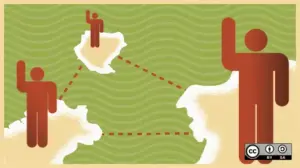
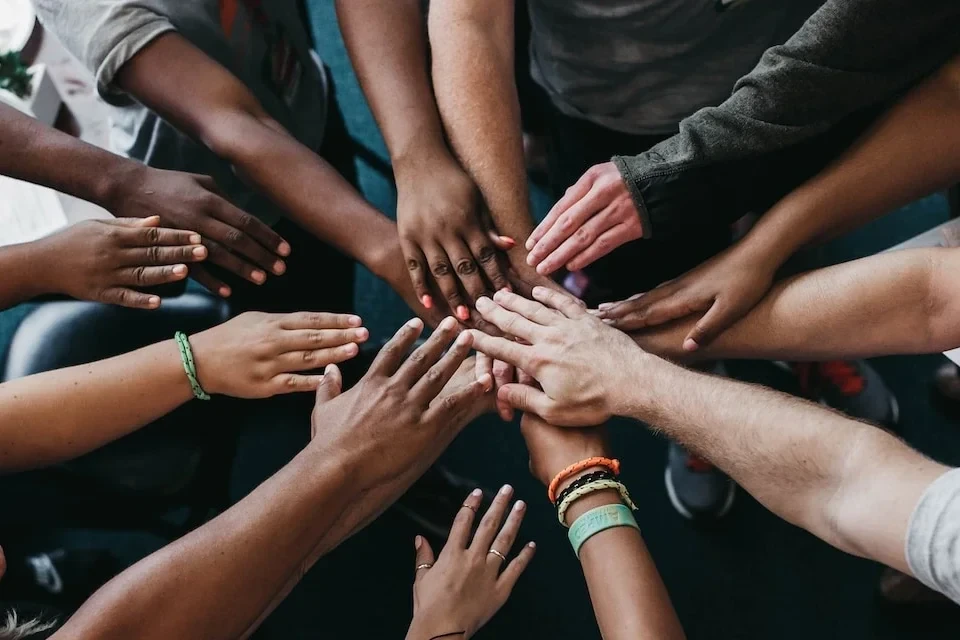
No matter what form it ultimately takes, open source is, at its core, always a network. Sometimes that network is literal, consisting of servers, repositories, and computers passing code back and forth across the globe. More importantly, however, open source is fundamentally a network of people.
Whether these individuals are gathering in person at a massive international technology conference, catching up informally at a local pub, or collaborating asynchronously in an online chat room, the open source movement is driven by a vibrant community of human beings.
For the past twelve years, the website Opensource.com has been supported by a commercial entity, serving as a prominent digital publication for stories, essays, and discussions about creating, adopting, and sharing open source solutions. However, the individuals who make up the beating heart of the Opensource.com community—the writers, editors, advocates, and readers—are not commercial entities. They are people.
Now, after more than a decade of publication under its current structural model, that dichotomy is set to change. In just one month, Opensource.com is preparing to resolve that underlying mismatch, entering a new phase designed to better reflect the human network that built it. As the community waits for the official curtain to rise on this next chapter, the message from organizers is clear: stay tuned.