The global open source community is currently hard at work behind the scenes on an exciting new initiative. Visitors to Opensource.com may have recently noticed a distinct quietness across the platform’s digital pages. That relative silence is not a sign of winding down, but rather the opposite: a period of intense preparation and development for a brand-new project currently in the works.
While specific details regarding the exact nature, scope, and launch timeline of this upcoming venture are still under wraps and not yet ready for public announcement, there is already plenty to discuss regarding the philosophy, history, and people driving the change. To understand the magnitude of what is brewing within the community, it helps to return to foundational concepts and look at the very fabric of the internet itself, starting with the entire architecture of global digital connectivity.
The Internet, and Top-Level Domains
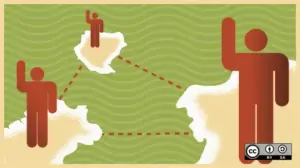
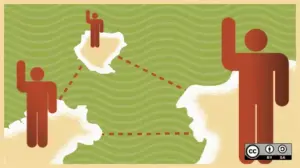
To appreciate the trajectory of modern digital communities, one must understand how the internet is structured. Most people know that the internet is, fundamentally, a massive network. In fact, the term "internet" is a portmanteau—a linguistic blending of the words "interconnected" and "network." By definition, a network is a group of distinct connections, and the internet is essentially a vast network of interconnected networks.

In its earliest days, the internet was remarkably compact, originating primarily from two foundational pillars: a military network and an academic network. These initial environments were tightly controlled and served specific, highly specialized institutional audiences. However, as digital technology matured and the internet grew in popularity far beyond those initial military and academic groups, it rapidly became apparent that different designations were desperately needed.
Administrators and early architects needed a reliable way to differentiate between a commercial entity, a charitable organization, a university, and a governmental department. Without clear categorical markers, navigating the early digital landscape would have been chaotic and opaque.

These crucial designations ultimately became known as top-level domains, universally abbreviated as TLDs. Today, users can choose from an expansive and diverse ecosystem of top-level domains, ranging from niche industry tags to regional identifiers. However, for a very long time, there were only a handful of these designations available to the public.
These original top-level domains remain remarkably popular and culturally embedded in modern digital life. Most internet users intuitively recognize that when they navigate to a web address ending in .com, they are visiting a commercial site. Conversely, when a user visits a web address ending in .org, they immediately understand they are navigating to a non-profit organization’s website. These suffixes carry deep institutional and operational meaning, signaling the underlying intent and structure of the entity behind the screen.
Open Source Is a Network
Just as the internet is a network of interconnected systems, open source can represent many different things simultaneously. Within the broader technological and cultural landscape, open source can take on a commercial form, operating as enterprise software and revenue-generating business models. Alternatively, it can function as a non-profit endeavor, driven by foundations and public interest grants. It can also be deeply academic, emerging from university research labs, or purely cultural, reflecting the shared creative expressions of global participants.
No matter what specific form open source takes, however, it is always a network. Sometimes—though certainly not always—that network is composed of physical computers, servers, and repositories sharing code across continents. But most importantly and fundamentally, open source is a network of people.
Whether individuals are gathering in person at a massive international technology conference, catching up over drinks at a local pub, or collaborating asynchronously in an online chat room, the true essence of open source is a vibrant, deeply interconnected community of human beings. Technology provides the tools and the infrastructure, but the human element provides the passion, direction, and soul.

The prominent website Opensource.com has been proudly supported by a single commercial entity for the past twelve years. Throughout that extensive run, the platform has served as a central hub for publishing stories, tutorials, perspectives, and news about creating, adopting, and sharing open source solutions. It has documented how open source principles have transformed industries, governments, and everyday lives.
However, there is a fundamental distinction to be made between a digital publishing platform’s corporate backing and its actual readership and contributors. The people—representing both the readers and the creators, or simply put, you and me—who make up the beating heart of the Opensource.com community are not commercial entities. They are flesh-and-blood human beings with shared values, collaborative spirits, and a common dedication to open principles.
In just one month, Opensource.com is going to resolve that underlying structural discrepancy and step into its next evolutionary phase. With new developments on the horizon, community members are encouraged to stay tuned as more information becomes available.
Opensource.com publishes stories about creating, adopting, and sharing open source solutions. Readers and supporters can follow official updates on Twitter via @opensourceway. This work is made available to the public under a Creative Commons Attribution-Share Alike 4.0 International License, ensuring that the spirit of sharing and openness continues to guide the platform into its next chapter.