On October 1, 2026, Nigeria’s official addressing system underwent a monumental shift, transitioning from a legacy six-digit postcode format to an advanced 11-character digital addressing code known as NDAPS. This new alphanumeric format, exemplified by codes such as EK-01-A03-FK-01, is designed to precisely identify individual buildings rather than broad geographic zones. However, this modernization has exposed a critical vulnerability in modern artificial intelligence systems: large language models trained prior to the change continue to rely on their historical training data, confidently generating outdated and invalid postal codes.
This discrepancy poses a severe operational risk for automated systems deployed across various industries. Developers currently deploy two primary categories of AI agents that are affected by this issue. Coding agents, which assist software engineers by writing validation logic and application code, routinely fall back on outdated patterns. Simultaneously, runtime agents—those interacting directly with customers to extract delivery information or process checkout forms—frequently mishandle user inputs by misinterpreting modern postcodes or hallucinating invalid sequences that satisfy obsolete structural rules.
The root cause of this behavior lies in the fundamental training mechanics of language models. Because models reproduce patterns that dominated their pre-training corpora, and because the new Nigerian addressing format had virtually no historical presence in those datasets, the AI defaults to what it knows best. When asked to write validation scripts, these coding agents routinely produce regular expressions that reject every legitimate, modern Nigerian postcode currently in circulation. Standard validation code written by an unguided AI will instantly invalidate real-world addresses like EK-01-A03-FK-01, creating immediate friction in digital logistics and e-commerce platforms.

To address this at the development stage, engineers must implement explicit contextual rules within their project environments. By incorporating specific guidelines into configuration files such as editor rules or project instructions, developers can successfully steer coding agents toward utilizing modern libraries designed specifically for the new standard, such as the open-source ng-postcode utility package. When provided with explicit context regarding the October 2026 transition and the new 11-character format, coding agents successfully adapt, recommending appropriate libraries and generating accurate validation mechanisms.
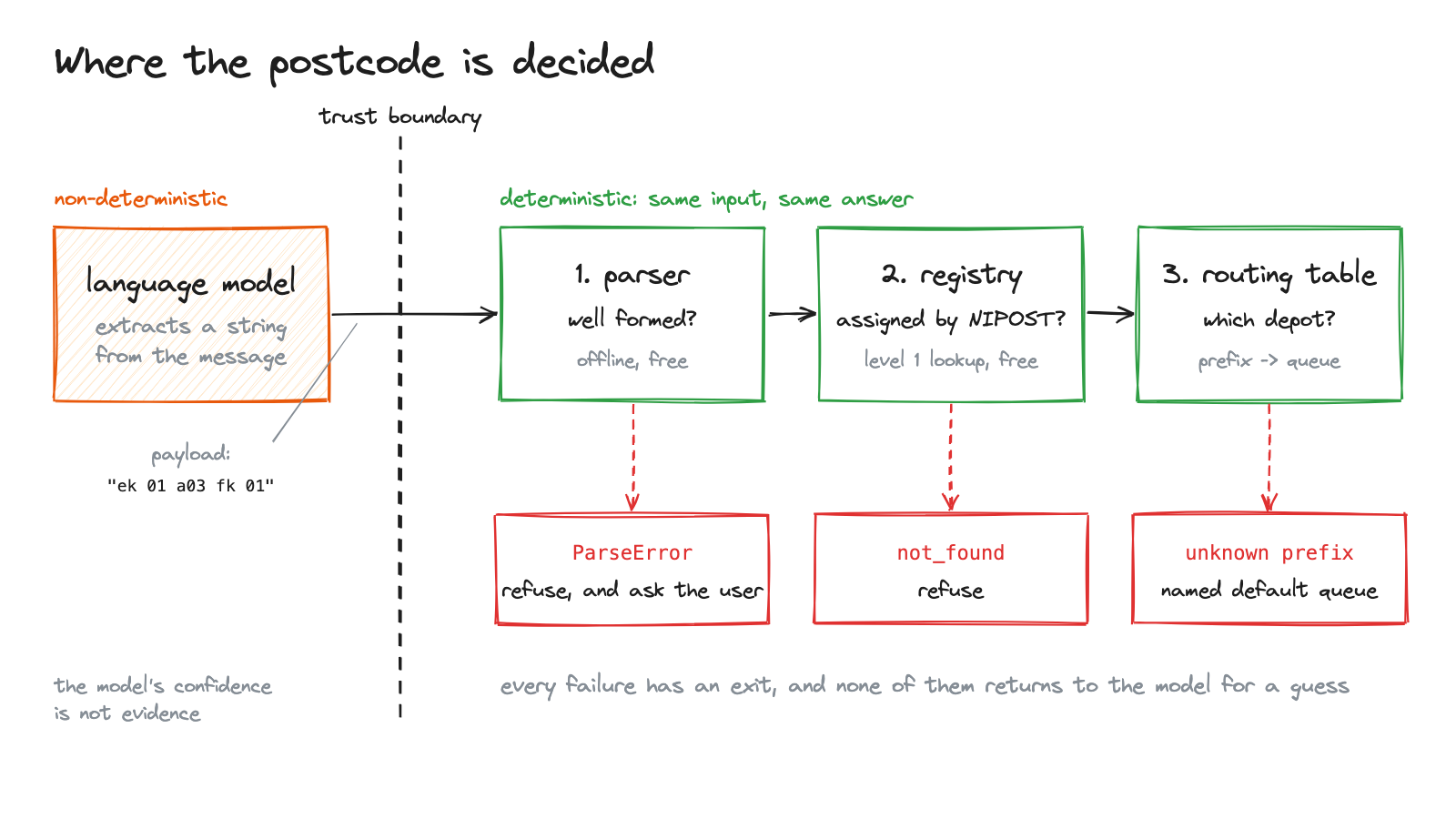
However, developer-level instructions alone cannot solve runtime failures, where autonomous agents process live customer interactions. Runtime AI components inherently possess probabilistic properties, meaning they can produce varying outputs for identical inputs, occasionally returning erroneous data that appears deceptively correct. System architects must therefore establish strict operational boundaries, treating AI models with the same caution applied to untrusted network packets or user-submitted form data.
Within a robust architecture, the division of labor must be strictly enforced. The language model should be restricted solely to extracting raw text strings from user messages. Once the string is captured, deterministic code must take over entirely. A dedicated parser evaluates whether the extracted string conforms to the strict structural rules of the new postal format. The code analyzes the hierarchical segments of the address, verifying that the state identifier, local government area digits, district codes, area indicators, and building units align with official specifications. A failure at any point in this parsing stage triggers an immediate, deterministic rejection rather than relying on the AI’s internal confidence score.
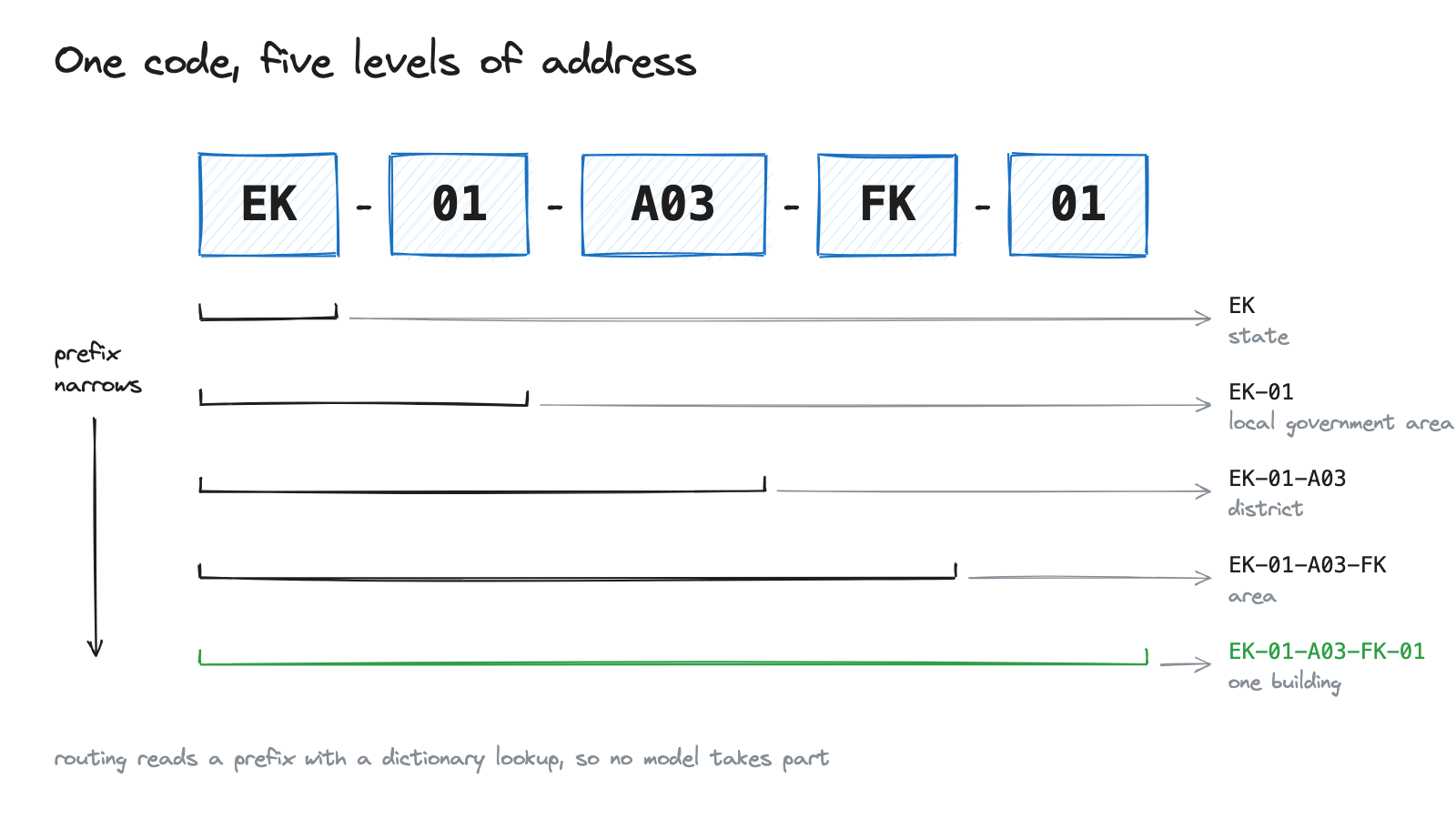
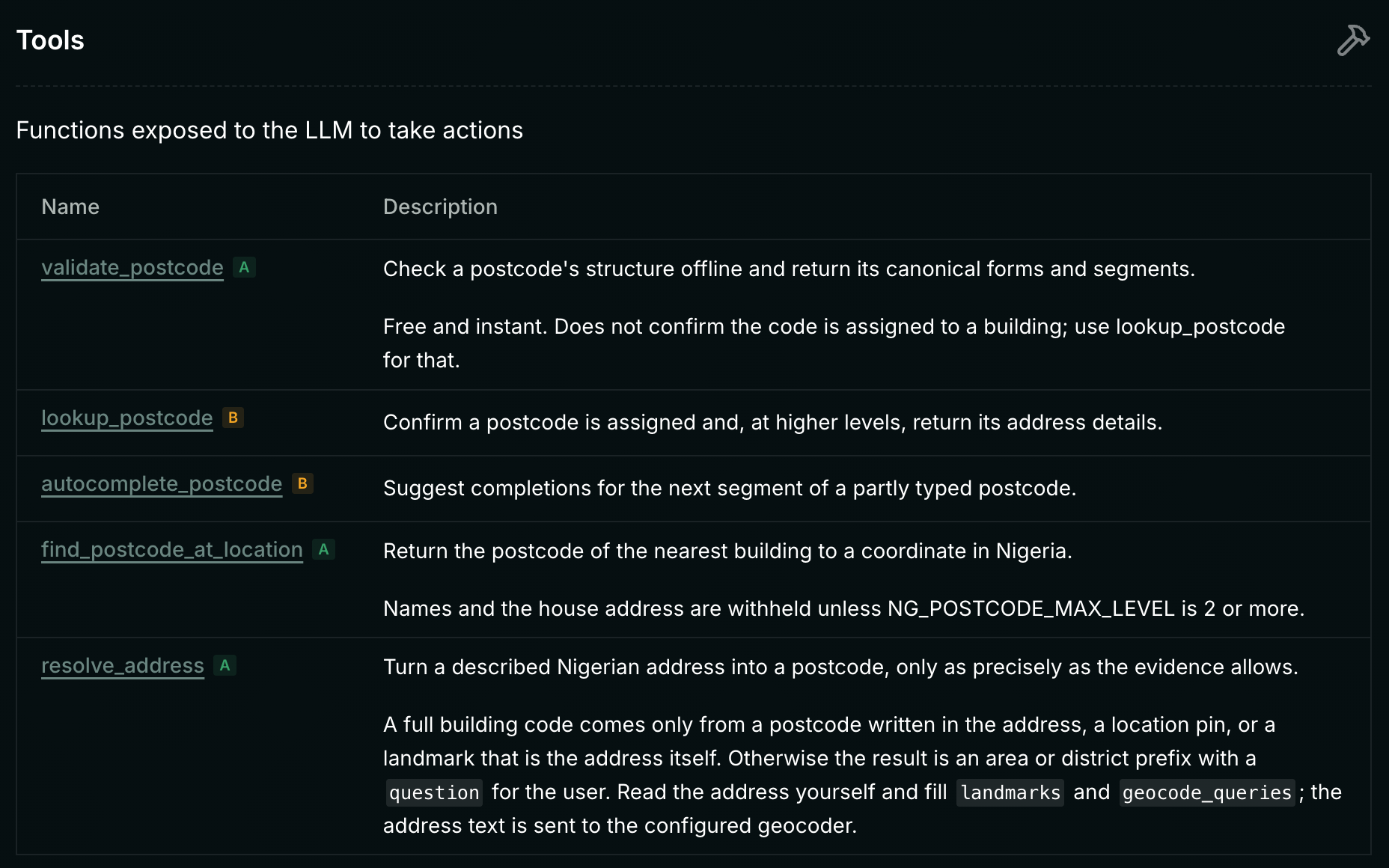
Beyond structural parsing, verifying whether an officially formatted code has actually been assigned to a physical building requires registry confirmation. Systems can interface with official developer APIs to perform lightweight lookups, ensuring that a structurally valid code corresponds to an active location in the national registry. Furthermore, routing logic can be safely decoupled from the AI by utilizing deterministic prefix matching. Because the initial segments of the code designate specific administrative regions down to the municipal level, routing engines can reliably map postcodes to regional sorting depots or fulfillment queues via static lookup tables, entirely bypassing the need for probabilistic AI decision-making.
When autonomous agents require direct interaction with addressing tools, their capabilities must be tightly constrained through strict protocol servers and pre-configured operational limits. Security implementations can enforce strict parameter caps, such as restricting API queries to basic validation levels while blocking advanced, credit-consuming lookups unless explicitly authorized by system administrators. By maintaining these strict boundaries, organizations ensure that unexpected model behaviors cannot trigger unauthorized financial expenditures or compromise sensitive geographic data.
Ultimately, addressing the challenge of AI hallucinations in modern postal systems requires shifting trust away from probabilistic models and anchoring system reliability in deterministic code. By treating language models merely as data extractors while delegating validation, registry checks, and routing decisions to traditional software logic, developers can build resilient applications that seamlessly adapt to regional infrastructure updates without succumbing to outdated training biases.