The United Kingdom has officially designated the cryptocurrency platform Cryptomus as a primary target for economic sanctions, marking a significant escalation in the international effort to dismantle the financial infrastructure supporting Russian state-linked cybercrime. The move, announced on October 8, 2026, represents a decisive shift from monetary fines to total operational prohibition, aiming to sever the platform’s ability to function within the Western financial system.
Cryptomus, which has operated under various aliases including Certa Payments and Xeltox Enterprises, has long been identified by cybersecurity experts as a "chameleonic" entity. It has served as a central conduit for illicit funds, facilitating payments for ransomware syndicates, narcotics trafficking, darknet marketplace transactions, and various cybercrime services that provide the Russian government with a vital lifeline to circumvent international financial restrictions.
In addition to Cryptomus, the U.K. sanctions package targets a network of related virtual payment services, specifically VexPay, TokenSpot, and the Tsunami Payments service. The sanctions effectively freeze any assets these entities may hold within British banks and impose a strict prohibition on British companies from engaging in any business dealings with them, whether virtual or traditional.

A History of Evasion and Rebranding
The rise of Cryptomus as a major player in the underground economy has been marked by a series of strategic rebrandings. Since its inception in 2022, the platform has frequently altered its corporate identity to evade regulatory scrutiny. Most recently, following a record-breaking CAD $176 million fine imposed by Canadian authorities in October 2025 for severe anti-money laundering violations, the platform transitioned into a new iteration known as "Heleket."
Despite the Canadian government’s attempt to penalize the platform, the transition to Heleket highlighted the limitations of traditional financial penalties when applied to decentralized, highly mobile cryptocurrency operations. As industry observers noted, while a fine acts as a deterrent, it often fails to stop the actual movement of illicit funds. The platform simply rebranded, reorganized, and continued its operations with minimal disruption.
The U.K. action is widely viewed by industry analysts as a more potent response. By sanctioning the platform, the British government has effectively rendered it toxic to the global financial system, making it nearly impossible for the entity to find banking partners or payment rails that can facilitate its operations.

The Scale of Illicit Activity
The scale of the operations conducted through Cryptomus and its spin-offs is staggering. According to data from the blockchain analysis firm Chainalysis, the U.K. sanctions are targeting the broader, sophisticated infrastructure that sustains Russia’s wartime economy. In a blog post detailing the impact of the sanctions, Chainalysis noted that Cryptomus and Heleket had collectively become major payment hubs for illicit activity.
The data suggests a massive surge in suspicious transactions. By late 2025, the number of illicit counterparties interacting with these services spiked to more than 900 in a single month. These platforms have consistently handled more illicit funds across various tracked categories than many of the specialized "mixers" typically monitored by law enforcement and compliance agencies.
Further corroborating the illicit nature of the platform’s activities, a report from TRM Labs in April 2026 revealed that Cryptomus had processed upwards of $7 billion in transactions since its launch in 2022. The volume of funds passing through the platform was linked to a disturbing array of criminal activities, including the distribution of child sexual abuse material (CSAM), the financing of terrorist networks, and human trafficking operations.
TRM Labs also observed a notable shift in the platform’s strategy following the Canadian fines. While Cryptomus initially attempted to implement "know your customer" (KYC) requirements, the move caused a significant cratering in transaction volume. In response, the platform launched Heleket as a parallel service specifically designed to continue offering high-volume, no-KYC payment processing, effectively creating a bypass for criminals looking to avoid identity verification.
Expert Analysis and the "Five Eyes" Precedent
Richard Sanders, a blockchain investigator who spent months meticulously mapping the infrastructure behind Cryptomus, emphasized that the U.K. sanctions represent a vital turning point. Sanders, who has been instrumental in exposing the connections between the platform’s various aliases, pointed out on LinkedIn that the primary issue with previous efforts was their lack of enforceability.
"A fine doesn’t stop a cryptocurrency payment processor from processing payments," Sanders noted. "Sanctions kill the operation. The distinction matters."

The U.K. sanctions are particularly significant because they represent the first known instance of a "Five Eyes" nation—the intelligence-sharing alliance comprising Australia, Canada, New Zealand, the United Kingdom, and the United States—imposing sanctions on a cryptocurrency operation incorporated within another Five Eyes jurisdiction. This cross-border coordination signals a new level of cooperation in the fight against financial technology-based crime.
The Mystery of Regulatory Authority
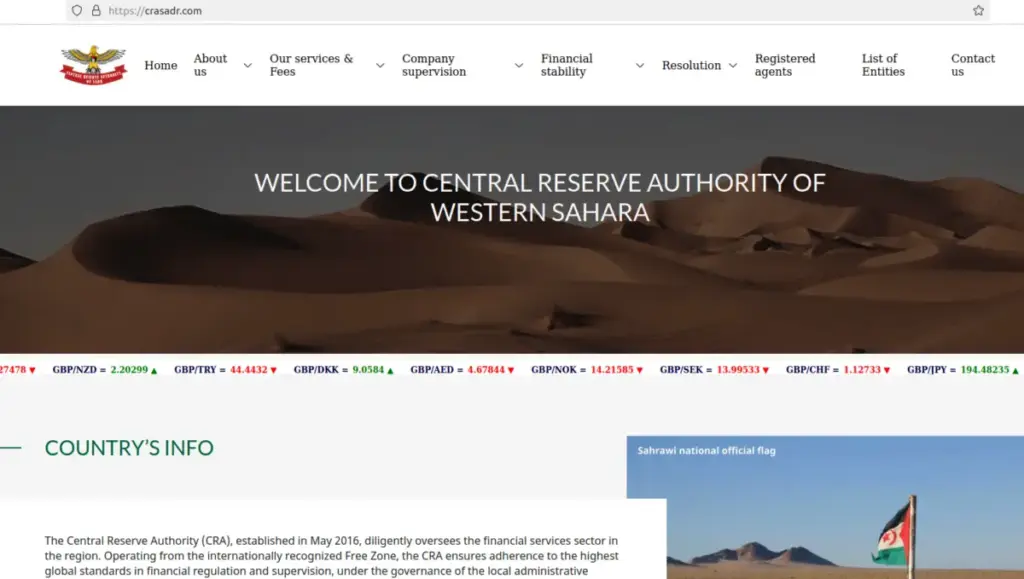
The success of Cryptomus in maintaining a facade of legitimacy has relied on a complex web of shell companies and fabricated regulatory bodies. Investigations conducted in late 2024 uncovered that the parent company of Cryptomus, Certa Payments, was linked to a 25-year-old Ukrainian woman who served as the sole shareholder. She was also found to be at the helm of the WS Management and Advisory Corporation, an entity that markets itself as a regulatory body for cryptocurrency, foreign exchange, and online gaming businesses.
This organization claims to oversee licenses for entities incorporated in the Western Sahara—a region in northwest Africa whose sovereignty is disputed and not widely recognized by the international community. The website for this "regulatory body," crasadr.com, functions as a hub for businesses seeking to operate with the appearance of legitimacy, offering services such as bank setup and licensing.
Further investigation into the digital footprint of these entities revealed that Certa Payments’ previous website, certa.website, shared a server with over a dozen other domains, including one associated with the "Central Reserve Authority of the Western Sahara." This connection provided a window into how these platforms exploit obscure, non-sovereign jurisdictions to grant themselves a veneer of authority while operating in the shadows of the global financial system.
The recent sanctions imposed by the U.K. aim to pierce this facade. By targeting the core infrastructure and the associated payment services that have fueled this ecosystem, the U.K. government is attempting to force a reckoning for platforms that have prioritized anonymity and criminal profit over international law. As the investigation into these networks continues, the coordinated response from global regulators may signal the beginning of a more difficult era for services that operate at the intersection of illicit finance and the digital asset economy. Whether these sanctions will be sufficient to fully dismantle the operations of Cryptomus and its various iterations remains to be seen, but the intent to strip away their access to the global financial grid is clear.