The United Kingdom has launched a significant crackdown on the shadow infrastructure of the global cryptocurrency economy, imposing robust economic sanctions on Cryptomus, a platform widely identified by investigators as a central hub for laundering proceeds from ransomware, narcotics trafficking, darknet markets, and various cybercrime services. The move, enacted on October 8, 2026, represents a major escalation in the international effort to disrupt the financial networks that allow the Russian government and its affiliated entities to circumvent long-standing global financial restrictions.
The sanctions effectively freeze any assets held by Cryptomus—which has operated under various aliases including Certa Payments and Xeltox Enterprises—within the U.K. banking system. Furthermore, the directive strictly prohibits British companies and individuals from providing any business services, virtual or otherwise, to the platform. The U.K. government’s action also extended its reach to include several other virtual payment platforms that have been identified as part of the same ecosystem, specifically VexPay, TokenSpot, and the Tsunami Payments service.
A History of Evasion and Rebranding
Cryptomus has long been a subject of intense scrutiny by international law enforcement and blockchain intelligence firms. Since its inception in 2022, the platform has maintained a chameleonic presence, frequently rebranding to distance itself from its increasingly toxic reputation. This strategy of rapid iteration allowed the firm to continue processing illicit transactions even after facing significant legal and regulatory pressure in other jurisdictions.
The most recent iteration of the platform, branded as "Heleket," emerged last year following a massive regulatory blow from Canadian authorities. In October 2025, Canada hit the company with a record-setting CAD $176 million fine for systemic anti-money laundering (AML) violations. Despite this historic penalty, investigators noted that the platform’s core operations remained largely undeterred. Rather than ceasing its illicit activities, the entity simply shifted its branding to Heleket and continued to facilitate the flow of funds for cybercriminals operating with little regard for international law.
The persistent nature of these platforms was highlighted in investigations published by KrebsOnSecurity as early as December 2024, which detailed how Cryptomus served as a primary gateway for dozens of Russian cryptocurrency exchanges and websites specializing in cybercrime-as-a-service. These platforms effectively act as a bridge, allowing illicit digital assets to be converted into cash through Russian financial institutions, thereby bypassing the global financial barriers erected against the Russian state.
Scaling the Illicit Economy
The scale of the operation is staggering. According to data provided by the blockchain analytics firm Chainalysis, the infrastructure supporting Cryptomus and Heleket has become a critical pillar of Russia’s wartime economy. In a blog post accompanying the announcement of the U.K. sanctions, Chainalysis noted that these services have reached a level of integration with criminal networks that rivals, and in some metrics exceeds, the activity seen on traditional cryptocurrency mixers—services specifically designed to obfuscate the origin of digital assets.

The firm observed a sharp increase in the number of illicit counterparties engaging with these platforms, with the count surging to more than 900 in a single month in late 2025. This explosion in volume underscores the degree to which these platforms have become the preferred clearinghouses for illicit digital wealth.
The findings from TRM Labs, another leader in blockchain intelligence, provide further context regarding the sheer volume of funds moving through these channels. In April 2026, TRM Labs reported that Cryptomus had processed more than $7 billion in transactions since its launch in 2022. The nature of these transactions included payments associated with some of the most heinous criminal activities online, including the sale of child sexual abuse material, the financing of international terrorist networks, and sophisticated human trafficking operations.
TRM Labs also observed an interesting shift in behavior following the Canadian fines. While the company briefly instituted "know your customer" (KYC) rules—which generally require users to provide identification to prevent money laundering—the impact on transaction volume was short-lived. The platform eventually launched Heleket as a parallel service that continued to operate without any significant KYC oversight, effectively providing a "no-questions-asked" environment for its users.
The Significance of the U.K. Sanctions
Richard Sanders, a veteran blockchain analyst and investigator who has spent months mapping the complex payment infrastructure of Cryptomus, emphasized that the U.K. sanctions are qualitatively different from the penalties previously levied by Canada. According to Sanders, while the Canadian fine was substantial in dollar terms, it ultimately proved unenforceable. The platform simply ignored the penalty and continued its operations.
"A fine doesn’t stop a cryptocurrency payment processor from processing payments," Sanders noted in a public assessment of the sanctions. "Sanctions kill the operation. The distinction matters."
The U.K. action is also notable from a geopolitical perspective. Sanders pointed out that this is the first documented instance of a "Five Eyes" nation—the intelligence-sharing alliance comprising Australia, Canada, New Zealand, the United Kingdom, and the United States—sanctioning a cryptocurrency operation that was incorporated within another Five Eyes jurisdiction. This signals a new level of inter-agency cooperation and a willingness to pierce the corporate veils that these entities use to hide their true operational bases.

The Illusion of Regulation
The investigative work into the origins of Cryptomus has revealed a bizarre and murky world of fabricated regulatory oversight. When researchers began to peel back the layers of the parent company, Certa Payments, they discovered that the firm’s claims of legitimacy were built upon a foundation of fiction.
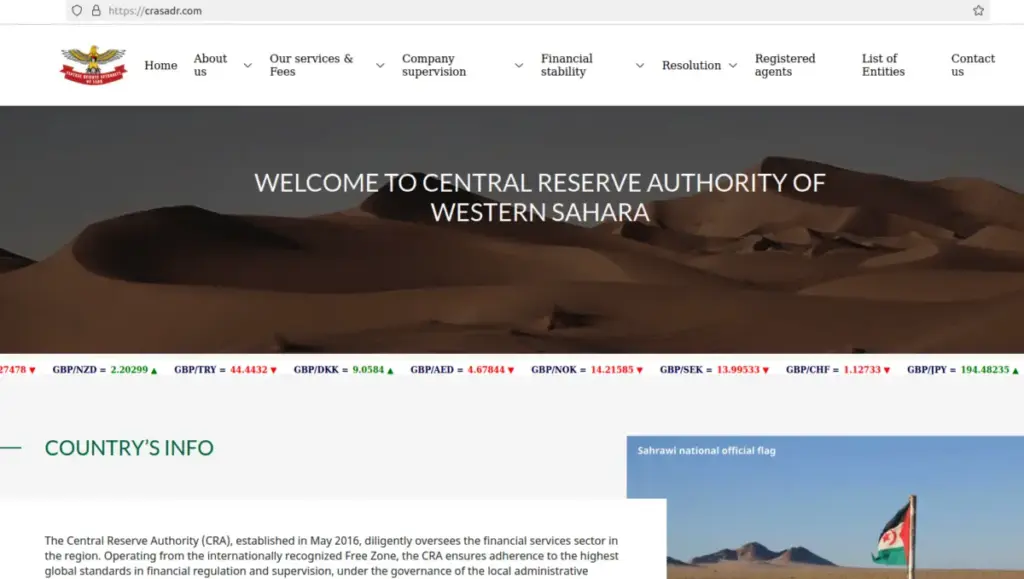
The sole shareholder of Certa Payments was identified as a 25-year-old Ukrainian woman who held leadership roles in several other firms. Among these was the "WS Management and Advisory Corporation," an entity that claimed to function as a legitimate regulatory body for cryptocurrency, foreign exchange, and online gaming businesses. However, the jurisdiction it claimed to oversee was the disputed region of Western Sahara in northwest Africa.
The website for this "regulatory body," crasadr.com, presented itself as a formal government-affiliated portal, offering to assist applicants with bank setup, business formation, and licensing. Further analysis revealed that one of Certa Payments’ previous web domains shared a server with over a dozen other sites, including one dedicated to the "Central Reserve Authority of the Western Sahara." This elaborate charade was designed to provide a veneer of institutional respectability to businesses that were, in reality, operating in the darkest corners of the global economy.
The End of the Line?
As of October 8, the impact of the U.K. sanctions was immediate. Support channels, including the Telegram bots that served as the primary interface for users to troubleshoot transactions and conduct business with the platform, began to display error messages or outright denials of service. In one instance, a Cryptomus support bot informed a user that the platform was suddenly unable to process transactions, a direct consequence of the sudden loss of access to the formal financial systems necessitated by the sanctions.
While the operators behind Cryptomus and Heleket have demonstrated a remarkable ability to pivot and rebrand, the coordinated international effort to dismantle their infrastructure represents a significant threat to their survival. By targeting the financial arteries that connect these platforms to the global banking system, the United Kingdom has signaled that the era of operating with impunity in the crypto-shadows is coming to a close. Whether these platforms can find yet another loophole or whether the weight of global sanctions will finally force a permanent shutdown remains to be seen. For now, the "chameleonic" platform finds itself under a spotlight that it can no longer easily escape.