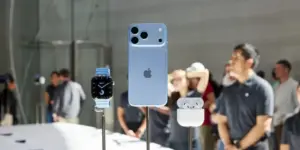










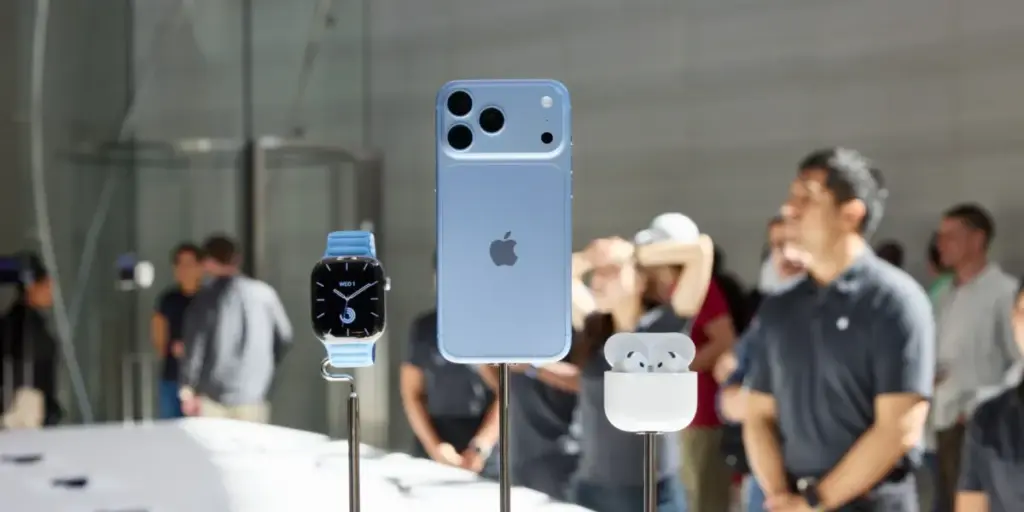
Apple has once again demonstrated its unparalleled dominance in the premium consumer electronics space, reporting its highest-ever global smartphone revenue for a third calendar quarter. According to the latest market analysis from Counterpoint Research, the technology giant has successfully navigated a challenging global environment, solidifying its financial position even as broader market shipments remain stagnant. This milestone underscores Apple’s unique ability to command pricing power and maintain consumer demand for its flagship iPhone lineup, even during periods of economic uncertainty and rising production costs.
The comprehensive report, released earlier this week, maps out the competitive landscape of the global smartphone market during the third quarter of 2026. While the industry at large has struggled with fluctuating shipment volumes, Apple’s performance stands in stark contrast to its competitors, as the company captured its highest-ever share of industry revenue for the July-through-September period. This financial triumph is not merely a reflection of unit sales, but rather a testament to the company’s strategic shift toward higher-end, premium hardware that commands significantly higher margins.
The competitive hierarchy remains largely familiar, yet the revenue gap between Apple and its closest rivals continues to widen. Samsung, which maintains a significant footprint in the global market, secured second place with 19% of global smartphone revenue. Following Samsung, Xiaomi captured 6%, OPPO held 5%, and vivo rounded out the top five with 4%. While these companies remain critical players in the global ecosystem, Apple’s revenue performance highlights a growing divide between the mass-market smartphone sector and the ultra-premium segment that Apple effectively owns and defines.


A critical component of this record-breaking quarter is the substantial increase in the iPhone’s average selling price (ASP). Counterpoint Research notes that the ASP reached an all-time high of $1,031, marking an impressive 19% increase year-over-year. This figure is particularly striking when considering the broader inflationary pressures affecting the global supply chain. Many manufacturers have struggled to balance the rising costs of raw materials, memory, and logistics with the need to keep devices affordable for a mass audience. Apple, however, has effectively bypassed these concerns by leaning further into its premium product strategy.
Tarun Pathak, Research Director at Counterpoint Research, provided expert insight into the mechanisms behind these figures. He highlighted that the launch of the iPhone 18 Pro series was a primary catalyst for the surge in ASP, despite the fact that the devices were only available for a fraction of the quarter.
"Apple remained the most resilient major brand in Q3 2026, with shipments nearly flat year-over-year," Pathak explained. "Apple has the pricing power to absorb rising memory costs and pass them on to consumers with minimal impact on demand. At the same time, ASP growth was supported by higher launch prices for the iPhone 18 Pro series, the absence of the base iPhone 18 from the launch, and price increases across older models in September. Together, these factors helped Apple deliver strong revenue growth in an otherwise challenging market."

The strategy described by Pathak reveals a calculated evolution in Apple’s market approach. By omitting the base-model iPhone 18 from the initial launch cycle and strategically adjusting the pricing of legacy models, Apple successfully funneled consumers toward higher-tier, higher-margin hardware. This "premiumization" of the iPhone lineup has allowed the company to generate significantly more revenue from fewer units sold, essentially decoupling its financial success from the raw shipment numbers that dominate traditional industry reporting.
Furthermore, the data suggests that Apple’s brand loyalty acts as a powerful insulator against market volatility. While other manufacturers often rely on volume and aggressive discounting to move inventory, Apple has demonstrated that its user base is increasingly willing to pay a premium for the latest technological advancements, whether in camera capabilities, processing power, or specialized material finishes. The ability to pass on rising memory costs to the end consumer without stifling demand is a luxury that few, if any, other smartphone manufacturers currently possess.
The report also offers a nuanced look at the wider shipment landscape. While Apple dominates in revenue, the battle for sheer shipment volume remains tight. Samsung continues to lead the global market in terms of total units shipped, though its lead over Apple has narrowed slightly. Currently, Samsung and Apple account for 22% and 21% of global smartphone shipments, respectively. This razor-thin margin in shipment volume highlights the intensity of the competition; while Samsung serves a vast, diverse global demographic across all price tiers, Apple’s concentration in the top-tier market allows it to achieve similar reach while maintaining significantly healthier profit margins.

The broader implications of this data for the remainder of 2026 are significant. As the industry moves into the final quarter of the year, the trends established in Q3 suggest that the market for smartphones is undergoing a fundamental shift. Consumers are increasingly favoring longevity and high-end performance, a trend that plays directly into Apple’s hands. The success of the iPhone 18 Pro series, even in its limited early window, signals that the appetite for top-tier technology remains robust, even as the global economy faces various headwinds.
This record revenue is not an isolated incident but rather the result of a multi-year strategy to cement the iPhone as an essential, high-value tool in the modern consumer’s life. By continuously refining the Pro series, integrating proprietary silicon, and maintaining a high barrier to entry, Apple has managed to protect its margins while competitors remain locked in a race to the bottom on price.
As investors and analysts look ahead, the focus will likely remain on whether this trajectory is sustainable. Can Apple continue to push the ASP higher, or will it reach a ceiling where consumer demand finally begins to taper off? For now, the evidence suggests that the brand’s influence, combined with the strategic release of its latest hardware, has positioned it to capitalize on the current market environment better than any of its peers. The Q3 2026 performance serves as a powerful reminder of Apple’s unique market position, proving that in the world of high-end mobile technology, value is increasingly defined by prestige, performance, and the ability to maintain a premium ecosystem.