









Amazon Web Services has announced a significant expansion to the capabilities of AWS Lambda, introducing native GPU support for Lambda Managed Instances (LMI). This development allows developers to execute compute-intensive, GPU-accelerated workloads—such as machine learning inference, media processing, scientific simulations, and high-end rendering—within the familiar, scalable framework of serverless architecture. By removing the traditional operational overhead associated with managing GPU clusters, this update enables organizations to deploy complex AI and graphics-heavy applications with the same operational simplicity previously reserved for standard CPU-based functions.
For years, developers seeking the benefits of serverless computing have faced a fundamental roadblock when dealing with GPU workloads. While the serverless model offers unmatched ease in scaling and event integration, GPU-based tasks traditionally required self-managed infrastructure. This necessitated the selection of specific EC2 instances, the manual installation and ongoing maintenance of GPU drivers, the alignment of CUDA versions, and the creation of complex scaling logic. Furthermore, many existing serverless GPU solutions have functioned as isolated silos, existing outside the core AWS ecosystem and lacking native hooks into services like Amazon EventBridge, Amazon SQS, or AWS Identity and Access Management (IAM).
The new GPU-accelerated functions on Lambda Managed Instances eliminate these friction points. By deploying workloads as container images that comply with the Open Container Initiative (OCI) standard, developers can now point their functions to a container and allow Lambda to handle the provisioning, scaling, and event-driven orchestration. The service reconciles the complexities of hardware management, meaning developers no longer need to worry about driver compatibility or cluster orchestration. Instead, they gain the specialized power of EC2 G-series GPU instances integrated directly into the Lambda programming model, benefiting from the same pricing structure and security posture as other AWS serverless functions.
Beyond the operational efficiency, the integration addresses the persistent challenge of cost optimization. GPU resources are traditionally expensive, and in many enterprise environments, they suffer from low utilization rates; a single task may require a high-end GPU for only a fraction of its runtime, leaving the hardware idle for the remainder of the time. This new feature mitigates this issue by consolidating multiple concurrent functions onto a single instance. By keeping the GPU active across various requests, the service maximizes throughput and ensures that organizations are paying for compute capacity that is being fully utilized rather than sitting dormant.

The potential use cases for this capability are broad, spanning both AI-driven and non-AI workloads. While the service is specifically optimized for inference tasks rather than resource-intensive training, it is ideal for custom models that fall outside the scope of managed services like Amazon Bedrock. Whether it is real-time image classification, video transcoding, or executing complex scientific models, developers can now embed these processes into larger, multi-step workflows. Because these functions are fully integrated into the Lambda ecosystem, they can be combined with other serverless components. For instance, Lambda durable functions can be used to orchestrate long-running workflows, while MicroVMs can handle logic on the CPU before triggering a GPU-accelerated function for the intensive inference step.
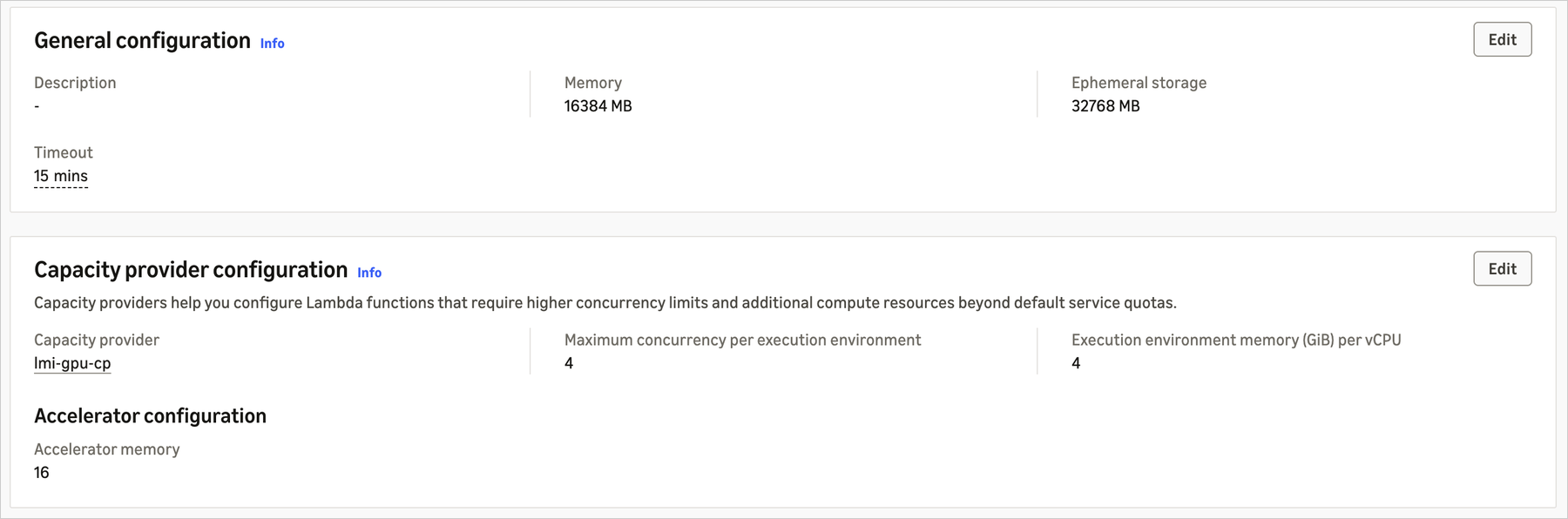
Flexibility is a cornerstone of this new offering, particularly regarding resource allocation and execution duration. Recognizing the needs of batch processing and complex multi-step tasks, AWS has extended function timeouts up to 90 minutes for asynchronous and event source mapping invocations. This allows for sustained compute cycles without the need to re-architect applications into shorter, fragmented bursts. The infrastructure supports substantial container images of up to 32 GB, complemented by up to 32 GB of ephemeral storage and significant memory headroom. By allowing up to 48 concurrent requests per execution environment, the service ensures that a single GPU instance can handle a high density of traffic, significantly improving the cost-to-performance ratio for production applications.
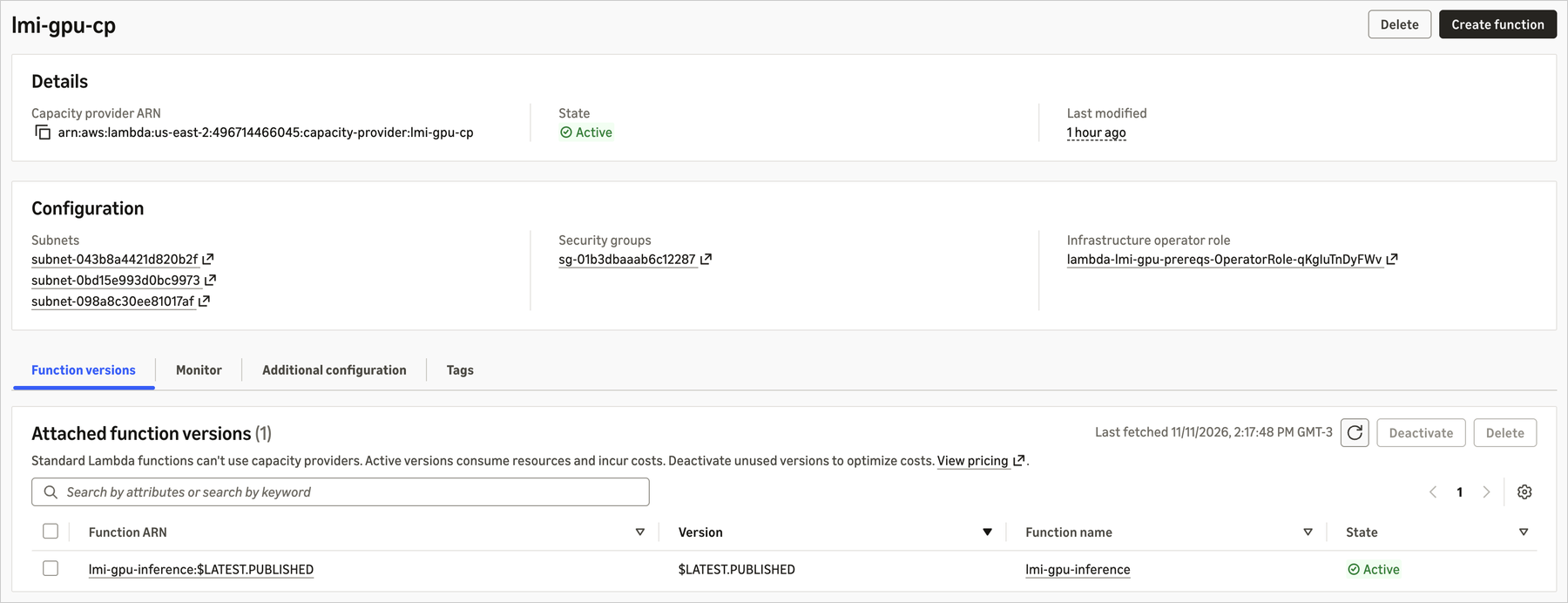
The practical deployment of these functions mirrors existing serverless workflows, making the transition seamless for current AWS users. The process typically involves creating a capacity provider, which allows developers to specify preferred instance types—such as G5, G6, or G6e—and enabling auto-scaling. From there, the developer can utilize curated base images provided by AWS, such as those pre-configured with vLLM or PyTorch, which contain all the necessary drivers and frameworks. By simply setting environment variables to point toward a specific model ID or data location, the infrastructure takes over the heavy lifting of memory management and request serving. Because these functions are published as immutable versions, developers can run different models side-by-side, ensuring that production environments remain stable and predictable.
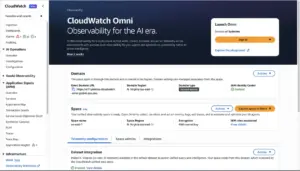
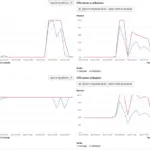
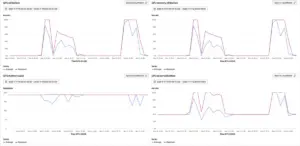
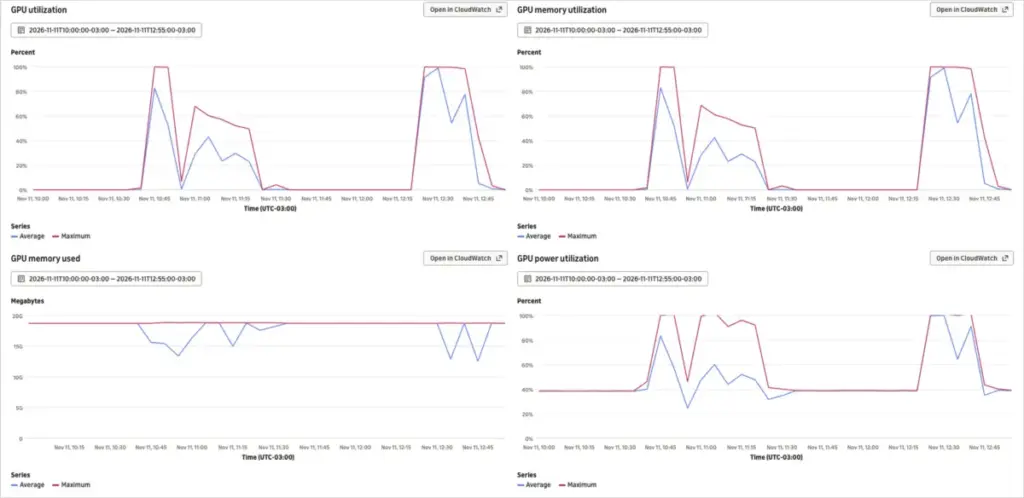
One of the most notable aspects of this release is the depth of observability provided within the AWS console. Standard monitoring often falls short when dealing with the intricacies of GPU performance, but this integration brings GPU-specific metrics into the familiar view of Amazon CloudWatch. Developers can track GPU utilization, memory usage, and power consumption alongside standard function metrics. This level of transparency is vital for fine-tuning performance and ensuring that auto-scaling thresholds are set correctly. By observing how an application interacts with the underlying hardware, teams can make data-driven decisions about their configuration, further refining the efficiency of their serverless deployment.
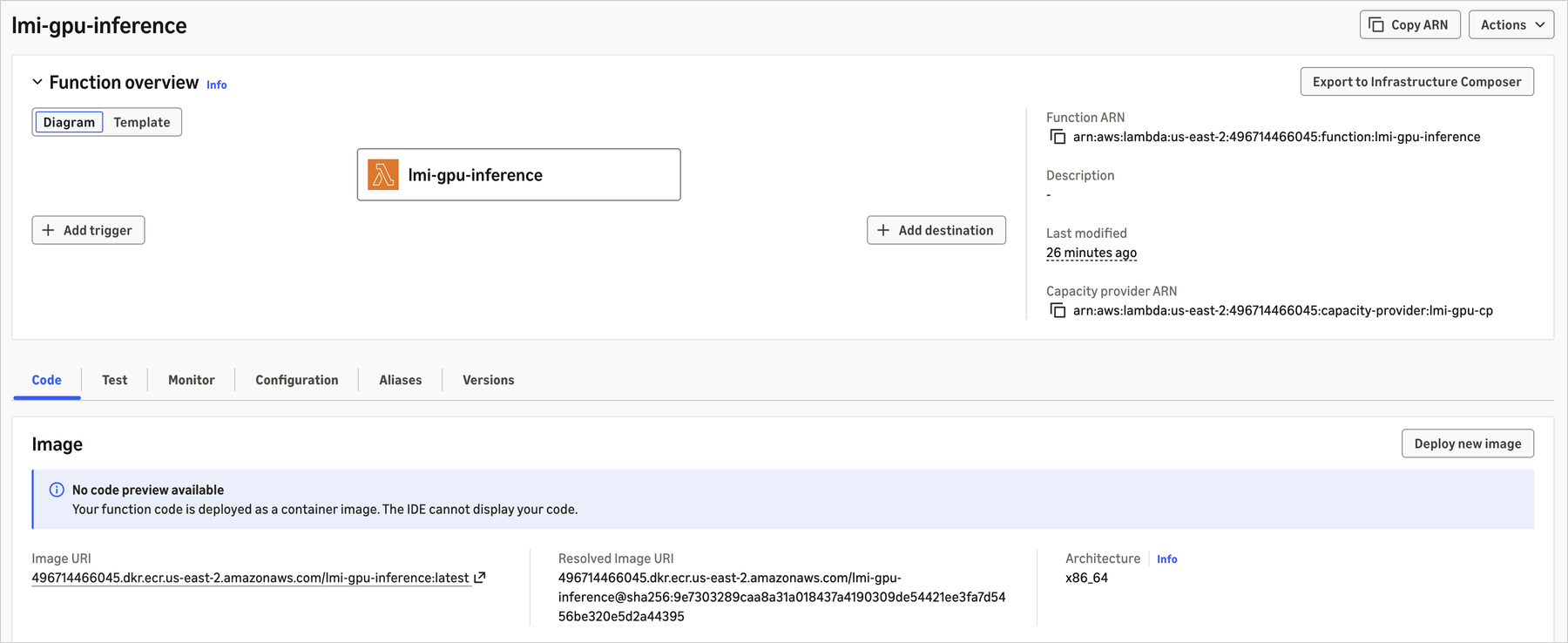
Security and compliance are maintained through the same robust mechanisms that govern all Lambda functions. The integration with IAM ensures that access to GPU resources is strictly controlled, and the use of VPC configurations allows for private, secure networking within the AWS environment. Moreover, the ability to utilize Amazon EC2 On-Demand Capacity Reservations (ODCR) ensures that developers can secure the specific GPU capacity they need for mission-critical applications, providing the predictability of reserved hardware with the operational benefits of a managed service.
As of the launch, the service is generally available across multiple regions and supports a wide range of Amazon EC2 G-series instances, including G4dn, G5, G6, G6f, Gr6, Gr6f, and G6e. The pricing model is designed to be transparent, combining the standard Lambda request fees with a 9.75 percent management fee for the GPU instances, while allowing users to apply existing Savings Plans and Reserved Instances to the underlying EC2 costs. This approach provides a clear financial path for organizations looking to scale their serverless AI capabilities while maintaining strict control over their cloud expenditure.
The introduction of GPU support into AWS Lambda represents a fundamental shift in how developers can approach high-performance computing in the cloud. By bridging the gap between the specialized requirements of GPU hardware and the ease of serverless development, AWS has provided a path for teams to innovate faster. Whether deploying advanced LLMs for in-application summarization or handling large-scale media processing tasks, the ability to trigger these workflows from standard event sources creates a cohesive environment where the infrastructure becomes essentially invisible, leaving developers free to focus entirely on the logic and value of their applications. As the ecosystem continues to evolve, this integration is expected to become a foundational component for the next generation of intelligent, event-driven software architectures.