











Few experiences in Magic: The Gathering carry the same weight as the psychological warfare inherent in blue-aligned control. There is a distinct, rhythmic tension to untapping your blue mana, passing the turn with a full hand, and staring down an opponent who must calculate exactly how many counterspells you are prepared to unleash. Counterspells represent more than just a pillar of the game’s color identity; they are the ultimate interactive weapon, a mechanic that transforms every spell an opponent resolves to cast into a high-stakes, calculated risk.
Over the span of three decades of game design, the humble counterspell has evolved from a straightforward, two-mana hard answer into a complex array of format-policing safety valves, color-pie-shattering anomalies, and zero-mana emergency brakes. To separate casual staples from the absolute ceiling of power, one must measure raw mana efficiency, card advantage, and the ability to exert format-warping dominance across the game’s most competitive arenas, including Legacy, Vintage, Modern, and Commander. From game-ending tempo swings to free-pitch spells that keep aggressive metas honest, these are the 10 most significant counterspells in Magic history.

Stifle
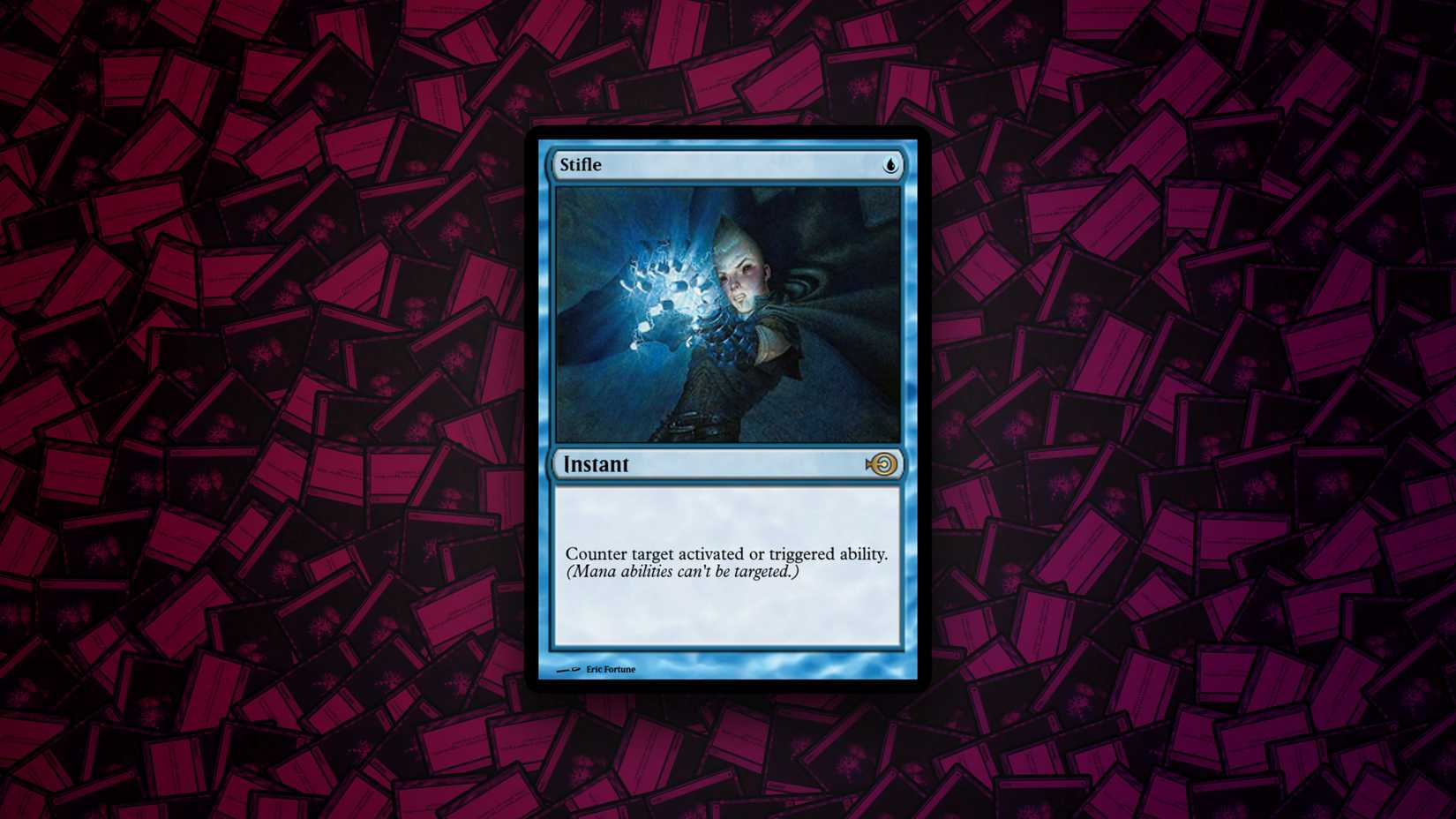
While it does not technically fit the dictionary definition of a "counterspell," Stifle remains one of the most high-powered tools ever printed, capable of completely altering the momentum of a turn or securing a victory in a single stroke. Its ability to neutralize a triggered or activated ability for a single blue mana is unparalleled, provided the ability is not a mana ability. Beyond its utility in land-destruction strategies—where it can effectively punish opponents for cracking fetch lands like Polluted Delta or Scalding Tarn—Stifle functions as a surgical silver bullet against game-ending threats. In instances where a Thassa’s Oracle trigger hits the stack to win the game, or a lethal Grapeshot storm count threatens to erase a player’s life total, traditional permission spells often fall short. Stifle intercepts the game at the exact point of failure, proving that in many contexts, stopping the ability is far more effective than stopping the card itself.
Red Elemental Blast and Pyroblast
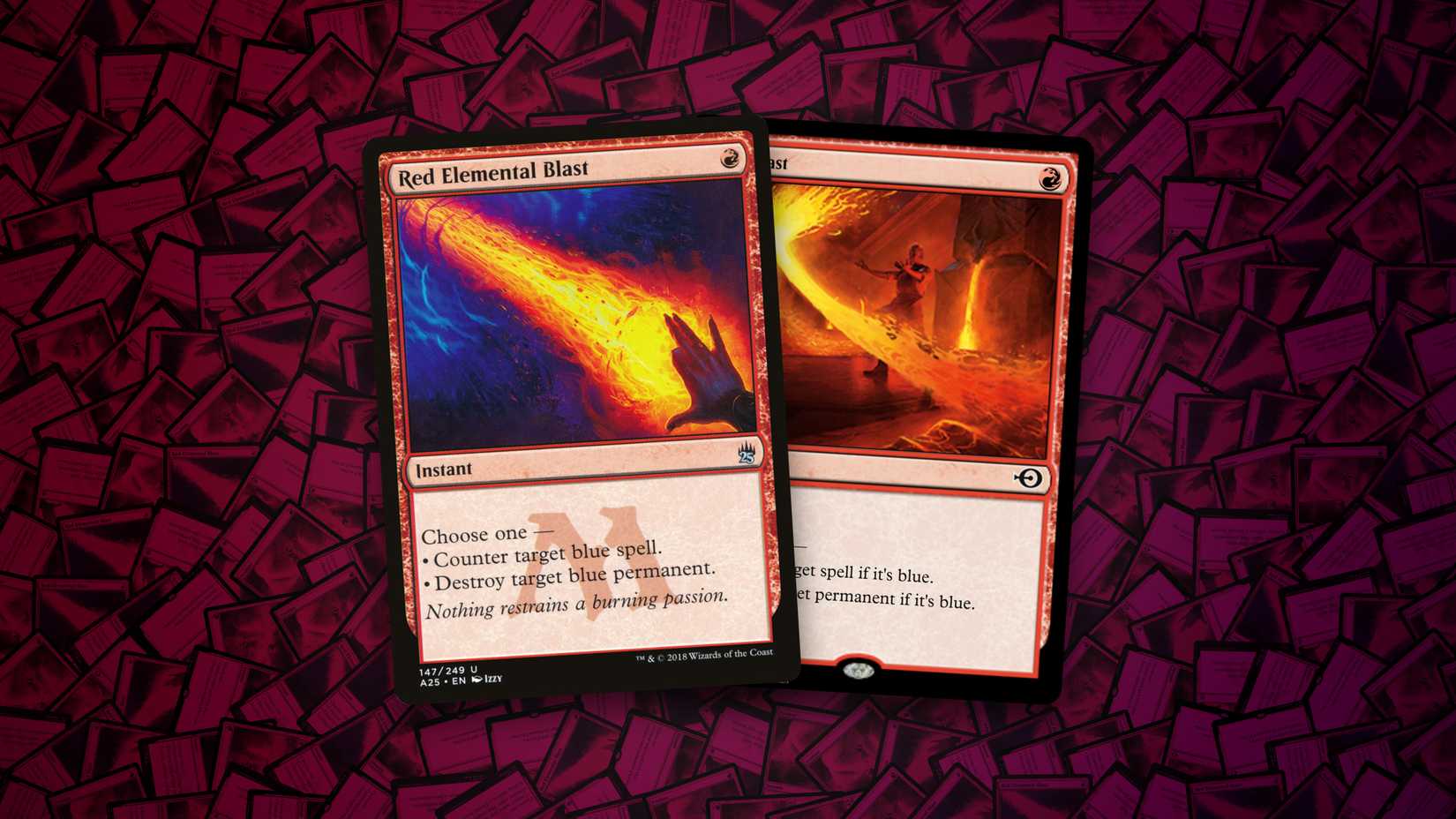
The Magic color pie is defined by rigid, fundamental boundaries that dictate what each color can and cannot achieve. Red is traditionally the color of chaotic emotion and raw damage, while blue maintains a near-monopoly on stack interaction. However, tucked away in the game’s earliest expansions are the most efficient color-pie breaks in history: Red Elemental Blast and Pyroblast. For the cost of a single red mana, these cards allow a player to either counter a blue spell or destroy a blue permanent. In formats like Legacy, Vintage, and Commander, where blue is often the most omnipresent and powerful color, these one-mana answers are practically mandatory for any red-based deck. They allow aggressive strategies to force threats through a wall of permission or instantly answer game-ending permanents like a resolved Rhystic Study. These cards represent red’s defiant answer to blue’s dominance, offering hyperefficient interaction that fundamentally shifts how players navigate the stack.
Mindbreak Trap
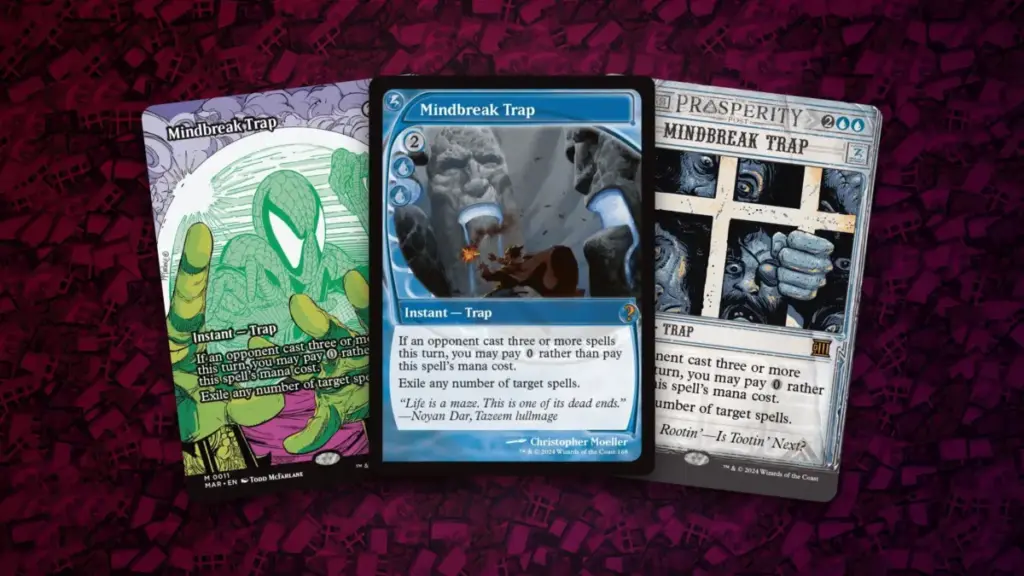
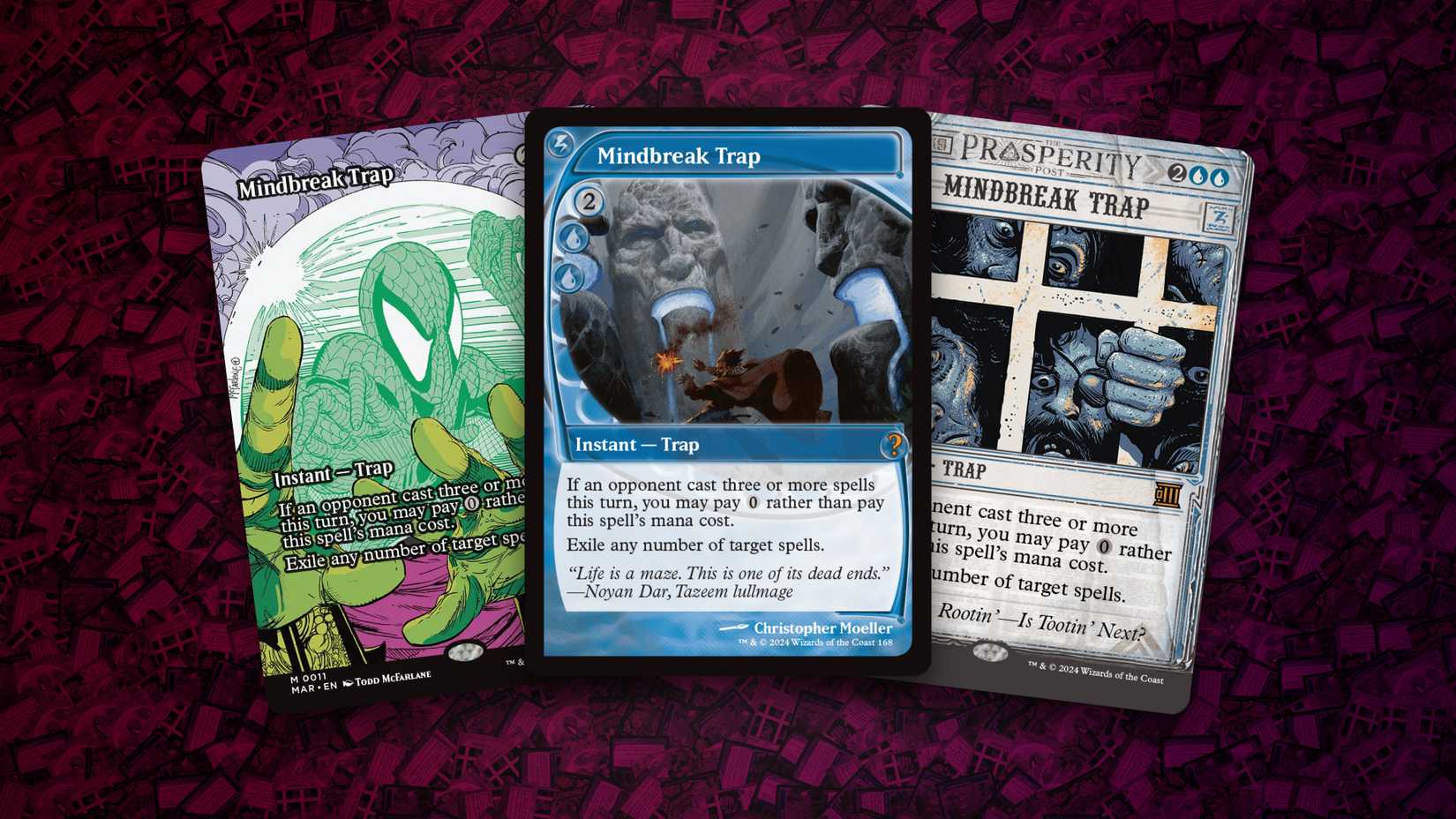
There are critical moments in high-level Magic where traditional permission is insufficient. When an opponent casts a threat that explicitly states it "cannot be countered," or unleashes a Storm sequence resulting in twenty copies of a spell, a standard Counterspell is rendered obsolete. This is where Mindbreak Trap thrives. The brilliance of this Zendikar staple lies in its specific phrasing: it does not "counter" spells; it exiles them directly from the stack. This bypasses "uncounterable" clauses and allows a player to wipe away a massive, chaotic stack of triggers in one motion. Even better, if an opponent has cast three or more spells in a single turn—a common occurrence for combo decks—Mindbreak Trap can be cast for zero mana. It serves as the ultimate emergency brake for a format spiraling into degeneracy.
Pact of Negation
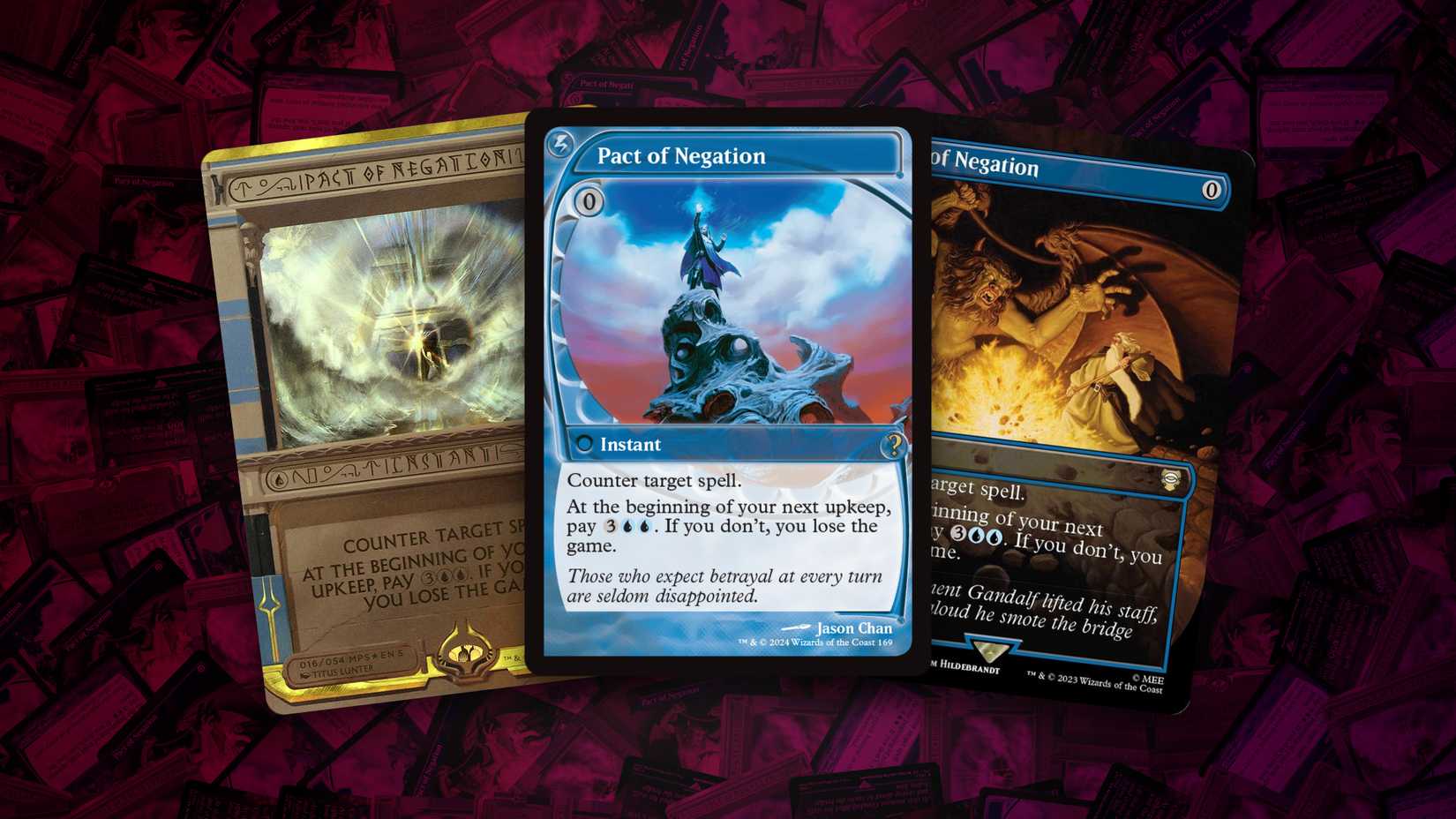
The concept of paying for a spell later is inherently risky, but the game’s most competitive combo players recognize that the next turn is irrelevant if the game ends in the current one. Pact of Negation offers a classic Faustian bargain: counter any spell for zero mana upfront, with the staggering downside of being forced to pay five mana on your next upkeep or immediately losing the game. For slow, reactive control decks, this is a dangerous liability. However, for explosive strategies like Ad Nauseam or Underworld Breach loops, it is the cleanest protection available. It allows players to tap out completely to fuel their win condition, safe in the knowledge that they can answer any disruption. The upkeep cost is often purely theoretical; by the time the bill arrives, the opponent has usually already conceded.
Force of Negation
When Modern Horizons launched in 2019, Wizards of the Coast faced the difficult task of introducing a free counterspell to prevent combo decks from dominating on turn two, without repeating the mistakes of the original Force of Will. The result was Force of Negation, a masterclass in modern card design that threads the needle of format health. By allowing players to pitch a blue card to cast it for free only during an opponent’s turn, it functions as a strictly defensive safety valve. Crucially, it exiles the spell it answers, providing an effective answer to graveyard-centric strategies and recursive threats. It has become a cornerstone of competitive play, policing aggressive strategies while requiring players to be more strategic about protecting their own threats.
Flusterstorm
Counterspell wars are the most high-stakes moments in eternal formats. As the stack builds into a complex tower of interaction, Flusterstorm stands out as an undisputed trump card. While it appears to be a conditional one-mana counter for an instant or sorcery, its Storm mechanic makes it lethal. Every spell cast before it that turn creates a separate copy of Flusterstorm on the stack. If an opponent attempts to force a play through with rituals and tutors, a single Flusterstorm creates a cascade of triggers. It is mathematically impossible for an opponent to pay the one-mana tax for every single copy, making it a nearly uncounterable, airtight finisher for complex stack battles.
Fierce Guardianship
Commander has historically required a different evaluation of power than traditional competitive formats. In 2020, Wizards of the Coast introduced a cycle of cards that permanently altered the multiplayer landscape, with Fierce Guardianship standing as the most prominent example. While its base cost of three mana is unremarkable, the ability to cast it for free if you control your Commander creates an overwhelming tactical advantage. In a format defined by explosive mana rocks and board-wiping sorceries, the ability to hold up a hard-counter without leaving mana open is invaluable. It removes the tension between developing a board state and holding up interaction, cementing its place as the undisputed king of multiplayer permission.
Mental Misstep
Mana efficiency and card advantage are the twin pillars of competitive Magic, and Mental Misstep shattered both so effectively that it required bans across almost every major format. The card utilizes Phyrexian mana, allowing players to cast it for two life rather than tapping an island. In environments like Legacy and cEDH, the game often revolves around hyper-efficient one-mana plays, such as Delver of Secrets, Brainstorm, or Sol Ring. Mental Misstep allowed any deck, regardless of its color identity, to play a free counterspell that hit the most essential cards in the format. Its existence warped deckbuilding so severely that it remains restricted in Vintage, serving as a cautionary tale regarding the dangers of unconditional free interaction.
Mana Drain
For years, the original Counterspell was the undisputed gold standard for two-mana interaction. That changed with the release of Legends in 1994, which introduced Mana Drain. For the same cost as a basic Counterspell, it not only counters any spell but also provides the caster with colorless mana equal to the countered spell’s value at the start of their next main phase. Trading a two-mana card to stop a six-mana Commander and then untapping with six additional mana to play a threat of one’s own is a back-breaking tempo swing. Its ability to simultaneously halt an opponent and accelerate one’s own board state ensures it remains a titan of multiplayer play and a permanently banned card in Legacy.
Force of Will
If you sit across from a Legacy or Vintage player, there is an unspoken agreement: as long as they have a single blue card in hand and at least one life, you are never truly safe. Force of Will is widely considered the most important piece of interaction in the history of Magic: The Gathering. Originally designed in the Alliances set as an experimental pitch-cost card, it became the foundational safety valve for the entire game. In formats where combo decks can routinely win on the first turn, Force of Will is the only thing preventing the game from devolving into a pure coin-flip. The raw card disadvantage of exiling an additional blue card is entirely irrelevant when it serves as the final barrier between a fair game and an immediate loss. Decades later, it remains the undisputed king of all counterspells.