









Amazon Web Services (AWS) has officially announced the general availability of its latest generation of memory-optimized EC2 instances, the R9g and R9gd series. These new instances represent a significant leap forward in cloud infrastructure, powered by the newly debuted AWS Graviton5 processor. As the most energy-efficient processor ever developed by AWS, the Graviton5 chip aims to redefine the performance-per-watt benchmark for memory-intensive workloads, offering users up to a 25% improvement in compute performance compared to the preceding Graviton4-based R8g instances.
The release of these instances marks a pivotal moment for enterprises and developers who rely on high-memory throughput to power their most demanding applications. By combining the architectural advancements of the fifth-generation Graviton silicon with the robust infrastructure of the AWS Nitro System, AWS is providing a platform that balances raw power with sustainable, efficient energy consumption.
Targeted Performance for Memory-Intensive Workloads
The R9g series has been meticulously engineered to cater to workloads that require substantial memory capacity and high-speed processing. This includes large-scale relational databases, in-memory caching solutions—such as Valkey, Redis, and MemCached—and real-time big data analytics platforms. Furthermore, the architecture is highly optimized for modern, Linux-based environments. Whether an organization is running complex containerized microservices via Kubernetes, Docker, Amazon EKS, or Amazon ECS, or utilizing popular programming languages like C++, Rust, Go, Java, Python, .NET Core, Node.js, Ruby, and PHP, the R9g instances are designed to provide a seamless and high-performance execution environment.
For organizations that require not just memory but also high-performance local storage, the R9gd variant offers an integrated solution. These instances come equipped with local NVMe-based SSD block-level storage. This feature is particularly beneficial for scenarios where low-latency access to temporary scratch space or local caches is critical, such as in distributed real-time analytics or the management of massive in-memory database clusters. By moving the storage closer to the compute, the R9gd instances minimize data movement latency, allowing applications to process information with greater speed and efficiency.
Hardware Evolution: The Graviton5 Advantage
The performance gains of the R9g series are largely attributable to the architectural refinements within the Graviton5 processor. These processors introduce several hardware-level improvements over the previous Graviton4 generation, contributing to a more responsive and capable computing environment. Users transitioning from the R8g instances can expect a more favorable performance-per-vCPU ratio. This is achieved through a combination of faster memory, increased network throughput, expanded Amazon EBS bandwidth, and a larger L3 cache.
A key innovation accompanying this launch is the Instance Bandwidth Configuration (IBC). This feature provides administrators with the flexibility to fine-tune the allocation of bandwidth between Amazon EBS and Amazon VPC networking. By allowing a 25% adjustment in bandwidth distribution, IBC enables organizations to optimize their infrastructure for the specific requirements of their workloads. For instance, a database cluster might prioritize network connectivity for inter-node communication, while a data-heavy analytics task might favor increased EBS bandwidth for faster read/write operations to persistent storage.
Security and the Nitro Isolation Engine
At the core of the R9g and R9gd instance families is the AWS Nitro System, which has become the industry standard for secure and performant cloud virtualization. The Nitro System offloads virtualization, storage, and networking functions to dedicated hardware, enabling near-bare-metal performance while ensuring that the underlying host remains secure.
A standout security feature in the R9g line is the inclusion of the Nitro Isolation Engine (NIE). Initially introduced in the C9g and M9g instances, the Nitro Isolation Engine marks a significant advancement in cloud security. It enforces strict isolation between virtual machines by mediating all access to memory, CPU register states, and I/O devices through a tightly controlled set of APIs.
The most notable aspect of the Nitro Isolation Engine is its reliance on formal verification. This is a rigorous mathematical technique used to verify that hardware and software components behave exactly as intended under all possible conditions, moving beyond traditional testing methods. By applying formal verification to the hypervisor, AWS has established the Nitro system as a pioneer in providing mathematically proven cloud security, offering users an additional layer of assurance regarding the integrity of their data and the isolation of their compute resources.
Seamless Migration and Operational Efficiency
One of the primary concerns for organizations adopting new hardware is the potential for migration friction. AWS has prioritized compatibility, ensuring that the transition from R8g to R9g is as smooth as possible. For the vast majority of applications, no code changes are required. Developers simply need to select the appropriate R9g instance size, and their applications are expected to run with the enhanced performance benefits of the new architecture.
For those operating in containerized environments, the experience is equally straightforward. Multi-arch container images built for Arm64 run seamlessly on the new instances, maintaining compatibility with existing Amazon EKS and ECS deployments. To assist with the migration process, AWS provides a suite of resources, including the AWS Graviton Getting Started Guide, which offers comprehensive instructions on building, running, and optimizing workloads. Furthermore, the AWS Transform service is available to automate the complex process of migrating Java applications from legacy x86 architectures to the more efficient Graviton platform.
Pricing, Availability, and Getting Started
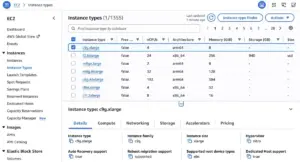
The R9g and R9gd instances are now available in a wide variety of configurations, ranging from the modest r9g.medium for smaller tasks up to the massive r9g.metal-48xl for the most intensive compute requirements. Each instance size is designed to provide specific vCPU and memory profiles, ensuring that organizations can right-size their deployments to match their budgetary and operational needs.
At launch, these instances are available in major AWS Regions, including US East (N. Virginia and Ohio), US West (Oregon), and Europe (Frankfurt). AWS offers flexible procurement options for these instances, allowing customers to utilize Savings Plans, On-Demand pricing, Spot Instances, or dedicated hosting options. This flexibility allows organizations to tailor their spending based on their specific usage patterns and workload duration.
For those ready to begin, the instances can be launched directly through the Amazon EC2 console. Support for a wide array of operating systems, including Amazon Linux 2023, Amazon Linux 2, Ubuntu, RHEL, SUSE Linux Enterprise Server, and Debian, ensures that most production environments can be migrated without a change in the underlying OS ecosystem.
As with previous instance launches, AWS continues to support developers through its evolving AI-powered toolkits. Users can leverage the AWS MCP Server and various plugins to interact with APIs, query documentation, and troubleshoot issues, further streamlining the deployment and management lifecycle. By providing these tools alongside the new hardware, AWS aims to lower the barrier to entry, allowing businesses to focus on innovation rather than infrastructure management. The introduction of the R9g and R9gd instances reflects a continued commitment to high-performance, energy-efficient computing at scale, providing a powerful foundation for the next generation of cloud-native applications.