










U.S. federal investigators, currently locked in an intense campaign to dismantle the prolific hacking syndicate known as ShinyHunters, have uncovered evidence of a disturbing trend: ransomware negotiation firms acting in league with the very extortionists they are ostensibly hired to combat. According to information obtained by KrebsOnSecurity, investigators have identified senior executives at two prominent cybersecurity firms who maintained suspiciously close relationships with the hacking group. Sources close to the inquiry allege that at least one U.S.-based executive went beyond mere communication, actively assisting ShinyHunters in the operation of a dedicated portal designed to coerce victims into paying ransoms.
The investigation follows a string of high-profile breaches that have left the cybersecurity industry reeling. Since its inception in 2019, ShinyHunters has claimed responsibility for dozens of major data intrusions. While the group originally operated out of France, the mantle of leadership eventually shifted as the group’s founding members were systematically identified and apprehended by law enforcement. Control of the brand eventually landed with a figure known as “Rey,” a teenage hacker based in Amman, Jordan, who was unmasked by researchers last year. By all metrics, the group has been exceptionally successful, with the FBI estimating that ShinyHunters has successfully extorted more than $70 million from its victims within the current year alone.
The stakes of this investigation escalated significantly in late September, when the group successfully infiltrated the FBI’s recruitment portal, fbijobs.gov. The hackers taunted the federal agency by threatening to leak a treasure trove of sensitive data, including Social Security numbers, home addresses, and detailed records concerning the medical and psychological histories of agency employees, as well as their specific units and specializations. This brazen attack prompted an immediate and aggressive response from the FBI, which moved with rare speed to track down anyone with known links to Rey. On October 3, Reuters reported that Jordanian authorities had detained Rey, who is reportedly cooperating with U.S. investigators.

The path to identifying these conspirators was paved by the arrest of a key ShinyHunters lieutenant. On September 15, 2026, Dutch authorities apprehended Pepijn van der Stap, a convicted hacker and core member of the ShinyHunters operation. In a tactical raid, Dutch police utilized flash-bang grenades to neutralize Van der Stap, who was reportedly actively engaged in online communications at the moment of his arrest. Critically, his seizure of devices and logged-in sessions allowed authorities to gain unprecedented access to his Signal instant messaging history, revealing a network of contacts that included ransomware negotiators in both Canada and the United States.
The contents of these messages have proved to be a goldmine for federal agents, not only in tracking the mechanics of the hacks but in uncovering a chilling murder-for-hire plot. Reports from the Dutch news outlet RTL indicate that the messages contained orders for two separate murders to be carried out abroad. While there is no evidence that these lethal instructions were ever executed, the discovery adds a violent dimension to the group’s criminal portfolio.
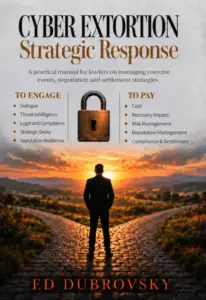
The fallout from these digital breadcrumbs reached a fever pitch on October 9, when the FBI arrested Edward Dubrovsky, a 54-year-old Canadian cybersecurity executive. Dubrovsky, who recently authored a book advocating for the proactive engagement of hackers during extortion attempts, now faces federal charges including the threat to disclose stolen data and interference with interstate commerce through extortion. According to court records and reports from Politico, federal prosecutors have pushed for Dubrovsky to remain in custody pending trial, with the details of his case largely held under seal.

The investigation has revealed that the lines between "incident response" and "criminal facilitation" have become dangerously blurred. Sources indicate that Van der Stap’s messages showed frequent, substantive conversations between himself, Dubrovsky, and at least one other executive at a major U.S. consulting firm. These communications suggest a level of insider knowledge that borders on the predatory; in many instances, these executives were reportedly privy to the details of new ShinyHunters victims before the victims themselves had even discovered the breach. Perhaps most damning is the evidence suggesting that Dubrovsky was aware of the breach of FBI servers but failed to report the compromise to the bureau, choosing instead to remain silent even as the hackers publicly threatened to dump the personal files of federal agents.
The Rise and Fall of Shinywire
One of the most significant revelations from the investigation is the existence of "shinywire[.]com," a now-defunct portal that federal authorities believe was operated with the active assistance of at least one U.S.-based consulting firm executive. While the specific firm and individuals involved remain shielded from public identification due to ongoing investigations, the company is described as a prestigious entity with over 1,000 associates.
The Shinywire portal, which operated from early May 2026 until mid-October, served as a centralized hub for the group’s extortion efforts. It contained entries for nearly 100 organizations targeted by ShinyHunters, providing a professionalized interface that urged victims to initiate contact and negotiate payment terms. To amplify the pressure, the site hosted samples of stolen data and included countdown timers, warning victims that their sensitive files would be permanently leaked on the group’s Tor-based shaming blog if they failed to pay within seven days. The site even listed victims like Intuitive Surgical, which suffered a major breach earlier this year after a targeted phishing campaign compromised an employee’s credentials.

The arrest of Dubrovsky has also shone a light on the internal fractures within the cybersecurity industry. In court filings preceding his arrest, Dubrovsky claimed to be the target of a personal vendetta by a former business partner, Daniel Tobok, the former CEO of the firm Cypfer. The lawsuit, filed in Ontario, alleged that Tobok was attempting to "destroy" him through professional sabotage. Tobok has denied these claims and filed a counterclaim alleging that Dubrovsky engaged in unfair competition and unauthorized access to confidential information.
The "Ghostbyte" Connection
The shadow of the ransomware industry stretches deep into the past. Former colleagues of Tobok have alleged that he was known among ransomware purveyors years ago by the moniker "Ghostbyte." In 2018, when a Canadian firm was targeted by the Dharma ransomware group, the attackers specifically recommended the victim contact a representative at a Canadian IT firm via the email address "[email protected]" to secure guarantees that their data would be returned if a ransom were paid. While it remains unproven if Tobok personally utilized that specific address, breach-tracking services have linked email addresses frequently used by Tobok to online accounts registered under the name "ghostbyte."
Cypfer, for its part, has sought to distance itself from the unfolding scandal. In a statement released in mid-October, the company asserted that it does not facilitate ransom payments and maintained that it had no prior knowledge of Dubrovsky’s arrest. The company further noted that it is not currently the subject of any law enforcement investigation. The complexity of the sector is further illustrated by the corporate lineage of these firms: Cypfer was recently acquired by the Apros Group, led by Jason Hogg, a former FBI special agent. This corporate web traces back to Aon’s 2020 acquisition of Cytelligence, a firm where both Tobok and Dubrovsky previously held leadership roles.

Conflicting Interests in the Ransomware Ecosystem
The legal landscape regarding ransomware payments in the U.S. remains complex. Paying a ransom to decrypt systems or prevent the leak of stolen data is not inherently illegal, provided the hackers are not on the U.S. Treasury Department’s sanctions list—a list that does not currently include ShinyHunters. However, the business model of incident response firms has come under intense scrutiny. Many insurance providers direct victims toward specific firms to handle these negotiations. Critics argue that when these firms charge a percentage of the total ransom paid, it creates a perverse incentive to inflate the cost of the extortion rather than minimizing it.
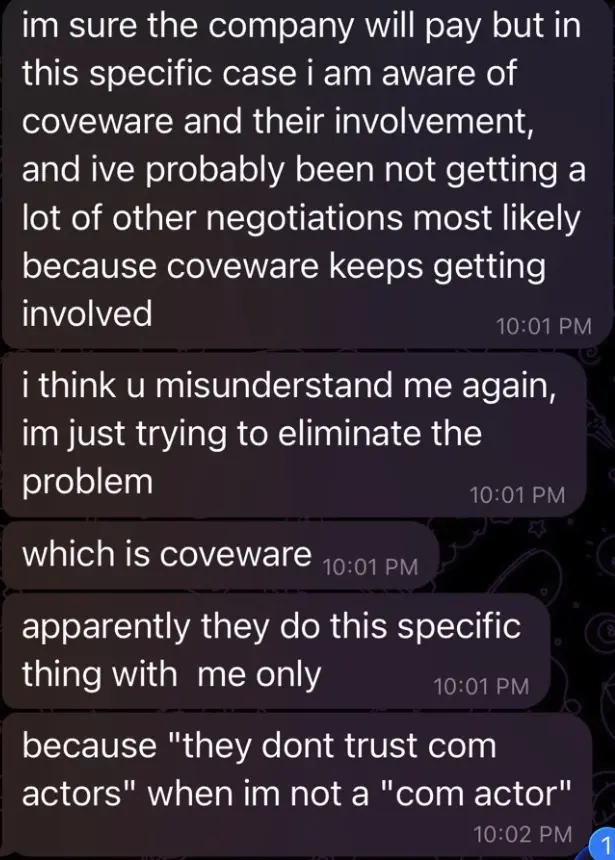
This inherent conflict of interest has led to a split in the industry. While some firms are willing to facilitate payments, others, such as Coveware and Unit 221B, have consistently advised against paying the ShinyHunters group, noting that there is no technical or legal guarantee that criminals will honor their word to delete stolen data. The frustration of the hackers themselves provides a window into the effectiveness of this advice; private Telegram chats between ShinyHunters operators show them lamenting the impact that companies like Coveware were having on their "business," with one operator specifically stating that they were "trying to eliminate the problem" of Coveware’s influence on victim decision-making.
Mark Camillo, CEO of CyberAcuView, an industry group representing major cyber insurers, underscored the need for greater transparency. He argued that the current structure, where negotiators profit from the scale of the payment, is fundamentally misaligned with the interests of the victims. As the Department of Justice continues to ramp up its efforts, recent prosecutions—such as that of MonsterCloud CEO Zohar Pinhasi for wire fraud and the 70-month prison sentence handed down to negotiator Angelo Martino for his collusion with the Blackcat/ALPHV group—signal a new era of federal oversight. For the cybersecurity industry, the lesson is becoming clear: firms that profit from facilitating the demands of extortionists may soon find themselves on the other side of a federal indictment.