







The global open source community may have noticed a distinct shift in rhythm lately across Opensource.com, marked by a quiet period on a platform that has long served as a daily hub for collaborative technology discussions. Behind the scenes, however, community members and contributors are hard at work building something entirely new. While specific details regarding the upcoming project remain under wraps for the moment, the underlying vision is already generating considerable discussion about the fundamental nature of the internet, digital networks, and the human connections that sustain open source software and culture.
For over a decade, Opensource.com has operated with the backing of a commercial entity, publishing stories, tutorials, and perspectives focused on creating, adopting, and sharing open source solutions. Yet, as the platform prepares for its next evolutionary step, organizers and contributors are taking a step back to reflect on what truly drives the ecosystem forward. Rather than beginning with corporate strategies or rigid software architectures, the community is choosing to start with the broadest possible canvas: the entire internet itself.
The Internet, and Top-Level Domains
To understand where the community is heading, it is helpful to examine where the digital world began. As many technology historians and internet users know, the internet is, at its foundational level, a network. By definition, a network is simply a group of interconnected connections. In fact, the very word "internet" is a portmanteau derived from "interconnected" and "network."
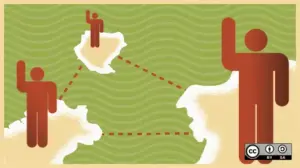
In its earliest incarnations, the internet was remarkably small and centralized around specific institutional needs, originally consisting of just two primary networks: the military network and the academic network. These early digital corridors served specialized personnel who required reliable communication tools for research and defense operations. However, as digital technology matured and the internet began to capture the imagination of the wider public outside of those initial, specialized groups, a practical challenge quickly emerged. It became starkly apparent that different designations were urgently needed to differentiate various types of digital entities operating online.

For instance, authorities and early architects needed a reliable way to visually and technically distinguish a commercial enterprise from a charitable organization, a university from a research laboratory, or a governmental department from an independent collective. These essential designations eventually became known as top-level domains, commonly abbreviated as TLDs.
Today, internet users navigate a vast and diverse landscape featuring countless top-level domains, ranging from country-specific extensions to hyper-specific industry markers. However, for a long time during the formative years of the web, there were only a handful of these foundational suffixes available. Those original top-level domains remain remarkably popular and culturally embedded in the architecture of the web today. Most internet users intuitively recognize that when they navigate to a web address ending in .com, they are visiting a commercial site, whereas a visit to a .org address typically signifies a non-profit organization dedicated to a public mission or community cause. These domain suffixes became shorthand for an organization’s underlying purpose and organizational structure.
Open Source Is a Network
This structural division of the web brings into sharp focus the unique character of open source. Open source can manifest in many different forms, serving myriad purposes across global society. It can be thoroughly commercial, driving multi-billion-dollar enterprise technology stacks and powering global cloud infrastructure. It can be entirely non-profit, maintained by foundations dedicated to keeping core infrastructure free and accessible. It can be strictly academic, advancing computer science research and theoretical models, or it can be deeply cultural, preserving digital heritage and fostering creative collaboration.
Yet, no matter what structural or economic form open source takes, it remains at its core a network. Sometimes, that network consists of physical computers, servers, repositories, and distributed version control systems routing data across continents. More importantly, however, open source is fundamentally a network of people.

Human connection is the lifeblood of the open source movement. Whether people are gathering physically at sprawling international conferences, meeting informally in local pubs to talk code, or collaborating asynchronously in online chat rooms and discussion forums, open source is, above all else, a vibrant community of human beings working toward shared goals.
For the past twelve years, the website Opensource.com has been supported by a commercial entity, acting as a dedicated publication platform for stories about collaboration, code, and community. But the people—the individual contributors, readers, advocates, and creators that make up the beating heart of the Opensource.com community—are not commercial entities. They are people.
The recognition of this distinction has sparked a broader conversation about alignment, independence, and the future of community infrastructure. As the platform looks toward the horizon, the focus is shifting squarely back to the human element that has always defined the open source ethos.
In just one month, Opensource.com is set to resolve that persistent bug and unveil the next chapter of its journey. Until then, the community remains invited to stay tuned as details about the new project continue to take shape.