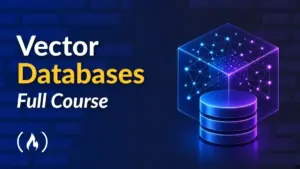










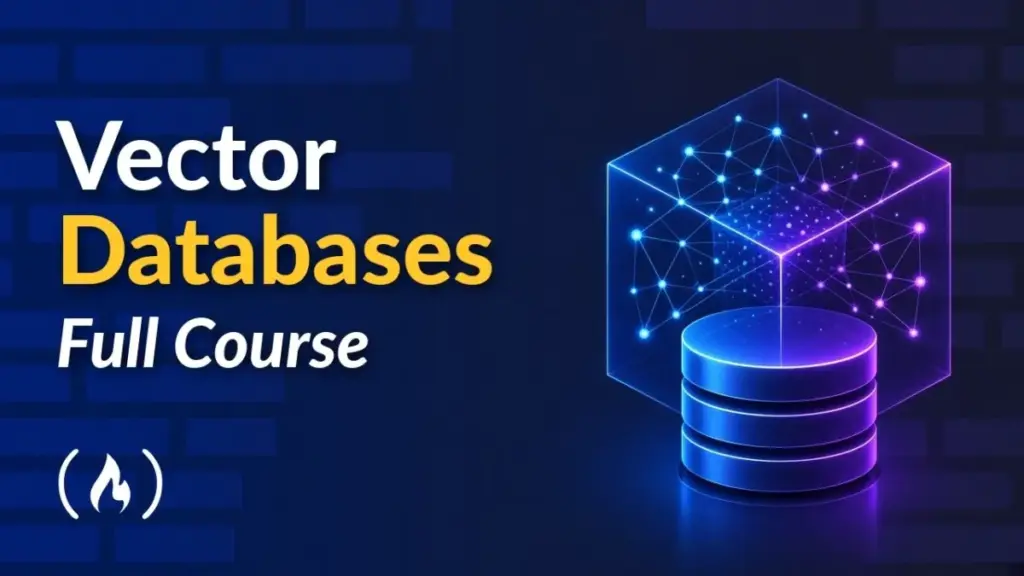
The freeCodeCamp.org organization has expanded its extensive catalog of developer education resources with the release of a comprehensive, beginner-friendly video course focused on vector databases, high-dimensional embeddings, and semantic search methodologies. Published to the platform’s widely followed YouTube channel, the new educational offering aims to demystify one of the foundational technologies currently powering modern artificial intelligence applications, including generative AI chatbots, sophisticated retrieval-augmented generation systems, and autonomous software agents.
Vector databases have rapidly emerged as a critical component in the modern software engineering stack. Unlike traditional relational databases that query data through exact keyword matching, relational joins, and structured parameters, vector databases store information as numerical representations known as embeddings. These embeddings map concepts, sentences, images, and other unstructured data points into multidimensional vector spaces where semantic proximity corresponds to conceptual similarity. This capability allows developers to build systems that understand context and meaning rather than relying solely on lexical matches.
The newly released curriculum is designed to make these advanced mathematical and architectural concepts accessible to developers with no prior experience in the field. The course material is taught by an industry veteran from codeEdx, an instructor who brings fifteen years of professional software engineering experience to the screen, including the last four years spent working specifically as a lead artificial intelligence engineer. By bridging the gap between theoretical mathematics and practical implementation, the course guides learners from the fundamental concepts of vector math all the way to the deployment of a fully functioning semantic search project.
Industry observers note that the timing of this educational release aligns with a massive surge in demand for AI integration skills across the technology sector. As enterprises race to incorporate large language models into their internal operations and customer-facing products, developers face a steep learning curve regarding how to manage external knowledge bases. Large language models possess vast general knowledge, but they frequently struggle with domain-specific queries, proprietary corporate data, and real-time updates. Retrieval-augmented generation, commonly referred to as RAG, solves this limitation by searching a vector database for relevant context and feeding that information directly into the prompt context window of the language model.
Throughout the one-and-a-half-hour runtime of the course, students are taken through a structured progression of topics that build upon one another logically. The curriculum begins with the foundational mathematics required to understand how text and other media are converted into vectors. Instructors explain the concept of embedding models, which translate human-readable language into long lists of floating-point numbers that capture semantic nuances. Following this theoretical introduction, the course transitions into practical demonstrations using modern tooling, specifically exploring how to utilize database solutions like ChromaDB to store, index, and query high-dimensional data efficiently.
The inclusion of ChromaDB in the syllabus reflects its growing popularity within the Python and AI developer communities. As an open-source embedding database designed specifically to make AI-native applications easier to build, it serves as an ideal entry point for programmers looking to experiment with semantic search without managing complex infrastructure. The course demonstrates how to integrate these databases into real-world software workflows, ensuring that learners finish the session with tangible coding experience that can be applied immediately to their own projects.
FreeCodeCamp, known globally for its massive open-source curriculum and interactive coding platform, has continuously adapted its offerings to reflect the shifting landscape of software development. Over the years, the organization has helped more than forty thousand individuals transition into professional software engineering roles through its free educational resources. By partnering with experienced industry practitioners like the engineering team at codeEdx, the platform ensures that its community receives up-to-date instruction on emerging technologies that are actively shaping the job market.
The release of this specialized course addresses a common educational gap in the current technology ecosystem. While numerous academic papers and dense documentation exist regarding vector spaces and similarity metrics, practical guides that connect these concepts to everyday software development remain relatively scarce. By breaking down the barriers to entry, the course empowers hobbyists, junior developers, and seasoned software engineers alike to experiment with state-of-the-art AI architectures without incurring financial costs for educational materials.
Interested learners can access the complete video course immediately through the freeCodeCamp.org YouTube channel, where the full-length presentation is hosted publicly and free of charge. As the technology sector continues to integrate artificial intelligence deeper into everyday software engineering practices, educational initiatives of this nature play a vital role in preparing the global developer workforce for the next generation of computing paradigms.