








In a landmark legal development that strikes at the heart of modern law enforcement surveillance tactics, a federal judge in Oklahoma has ruled that the warrantless use of the Flock Safety database to track a private citizen constitutes a violation of the Fourth Amendment. The ruling, delivered this week, marks one of the first instances in which a federal judiciary has explicitly categorized the use of automated license plate reader (ALPR) networks like Flock as an unconstitutional form of mass surveillance.
The case centered on a Tulsa, Oklahoma sheriff’s deputy who utilized the Flock Safety system to search for a woman’s license plate without obtaining a judicial warrant. As documented in a recent report by 404 Media, the presiding judge, Sara Hill, scrutinized the deputy’s rationale for the search, finding it entirely lacking in legal justification. According to the court’s findings, the deputy had “no apparent reason” to target the woman’s vehicle other than the fact that it bore a California license plate.
A “Poisonous” Precedent for Surveillance
The implications of the ruling extend far beyond the specific facts of this case. The deputy in question used the travel history generated by the Flock database to establish the justification for a subsequent vehicle stop and search. During that search, law enforcement officers allegedly discovered 91 pounds of methamphetamine. However, Judge Hill’s ruling effectively guts the prosecution’s reliance on that evidence. She determined that because the initial data collection was conducted in violation of the Fourth Amendment, all evidence derived from that search must be suppressed as the “fruit of a poisonous tree.”

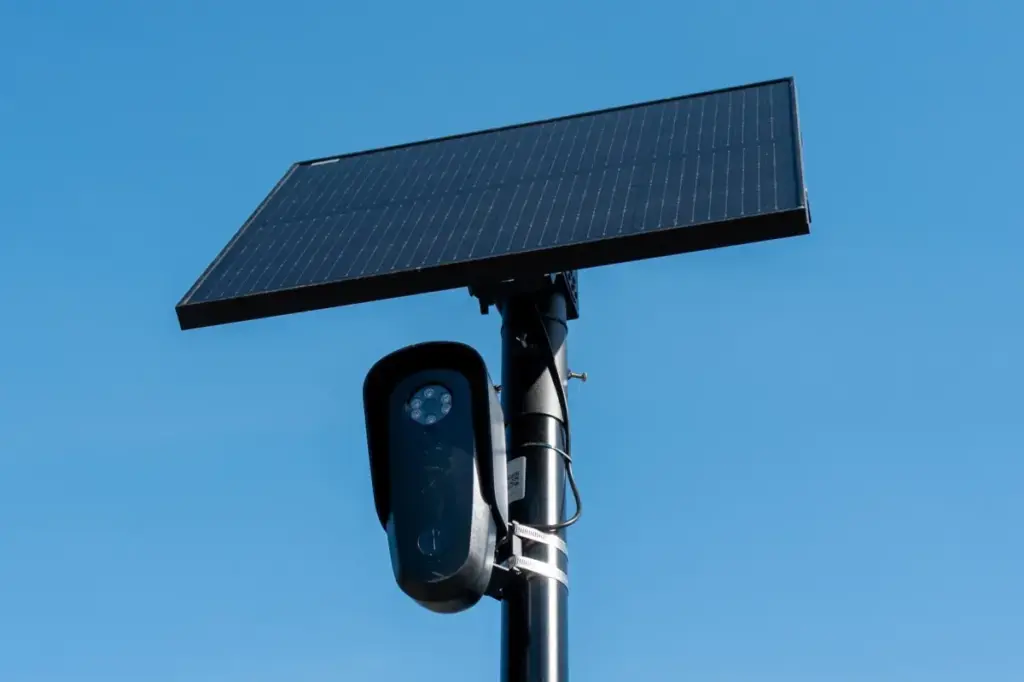
While legal experts note that this specific ruling does not create a binding nationwide precedent, its significance lies in the judicial reasoning applied to the technology itself. Judge Hill took a broad, critical view of how law enforcement agencies utilize Flock’s network of cameras, which are designed to capture and store data on every vehicle that passes within their field of view.
In her written opinion, Judge Hill argued that tracking an individual’s location—even when they are traversing public thoroughfares—becomes “constitutionally problematic” when law enforcement agencies are empowered to “indiscriminately and passively catalog your whereabouts over an extended period of time and then use that information for any purpose whenever convenient.”
The judge drew a sharp distinction between traditional, targeted surveillance and the systematic, automated nature of the Flock network. “This is a type of indiscriminate mass surveillance,” Hill wrote. “It is not targeted on a single individual, as in Carpenter v. United States,” she noted, referring to the pivotal Supreme Court case that established limits on how government agencies can access location data from cell phones. Instead, she characterized the Flock system as a pervasive tool that “collects information about all vehicles that pass by any network-connected camera at all times, and it serves up the information to law enforcement on demand.”
Growing Backlash and Legislative Scrutiny
The ruling by Judge Hill arrives at a time of intensifying skepticism toward the widespread adoption of ALPR technology. A growing coalition of privacy advocates, civil liberties organizations, and government officials from across the political spectrum has begun to push back against the integration of such surveillance tools into the daily operations of local police departments.
This friction has already resulted in tangible policy shifts. Several local and state jurisdictions, most notably Florida and Texas, have moved to restrict or outright block the use of Flock technology, citing significant concerns over privacy and the potential for abuse by law enforcement. The concerns are not merely theoretical; there have been documented instances where officers have misused the system to stalk individuals, leading to public outcry and calls for stricter oversight.
The legislative response has reached the highest levels of government. On Friday, Senator Bernie Sanders (D-VT) introduced the "Block Flock Act," a piece of legislation aimed at curbing the federal government’s reliance on this technology. The bill seeks to bar all federal agencies from utilizing automated license plate reader networks like Flock, signaling that the debate over privacy in the digital age is moving from the courtroom into the halls of Congress.
The Corporate Challenge: Navigating Privacy and Public Relations
For Flock Safety, the legal ruling and the legislative momentum represent a major hurdle. The company has found itself in the crosshairs of a national debate regarding the balance between public safety and the fundamental right to privacy.
Garretty Langley, the CEO of Flock Safety, has attempted to navigate this turbulent environment by advocating for a “compromise” between the needs of law enforcement and the privacy expectations of the public. Langley has publicly acknowledged the gravity of the situation, even going so far as to issue an apology to women who have been subjected to stalking by law enforcement officers using the company’s system. These comments are expected to be a central theme of his upcoming appearance at the TechCrunch Disrupt conference, where the tension between technological advancement and civil liberties will undoubtedly be a primary topic of discussion.
However, the corporate outlook remains complicated. Beyond the legal challenges and the loss of municipal contracts, the company has reportedly been forced to adjust its internal operations, including offering voluntary employee buyouts to shrink its workforce. These steps suggest that the company is bracing for a sustained period of reduced growth or operational restructuring as the legal and political landscape surrounding mass surveillance continues to evolve.
The Future of the Fourth Amendment in the Age of ALPR
The ruling in Tulsa serves as a stark reminder of the challenges the legal system faces in applying 18th-century constitutional protections to 21st-century technology. As cameras become more prevalent, data more granular, and search tools more efficient, the definition of what constitutes a "reasonable expectation of privacy" is being fundamentally rewritten.
Judge Hill’s decision highlights the discomfort within the judiciary regarding the “passive” nature of modern surveillance. When surveillance is no longer a human-led effort but an automated, data-driven process that records millions of movements per day, the traditional legal standards for warrants and probable cause are strained.
As the case makes its way through potential appeals and as federal legislators debate the Block Flock Act, the judiciary will likely face increasing pressure to provide clearer guidelines. For now, the Tulsa ruling stands as a significant warning to law enforcement agencies: the convenience of a high-tech database does not grant an exemption from the constitutional requirement of a warrant. Whether this sentiment will be echoed by higher courts remains to be seen, but the days of law enforcement accessing massive, persistent surveillance networks without judicial oversight may be coming to an end.
The convergence of judicial skepticism, political legislative efforts, and corporate restructuring suggests that the era of unfettered, automated surveillance is facing its most significant test to date. For privacy advocates, the ruling is a victory for the Fourth Amendment; for law enforcement, it is a sign that the tools they have come to rely on for investigative efficiency are now subject to the same constitutional scrutiny as any other form of search and seizure. As society continues to weigh the trade-offs of public safety, the legal status of tools like Flock will likely remain at the center of the national conversation for years to come.