







According to recent data quality research by Forrester cited by IBM, a quarter of organizations report that poor data quality costs them upwards of $5 million annually, while 7 percent estimate those losses exceeding $25 million. Perhaps more alarming is that a significant majority of this financial and operational damage never registers on standard executive dashboards or traditional monitoring tools.
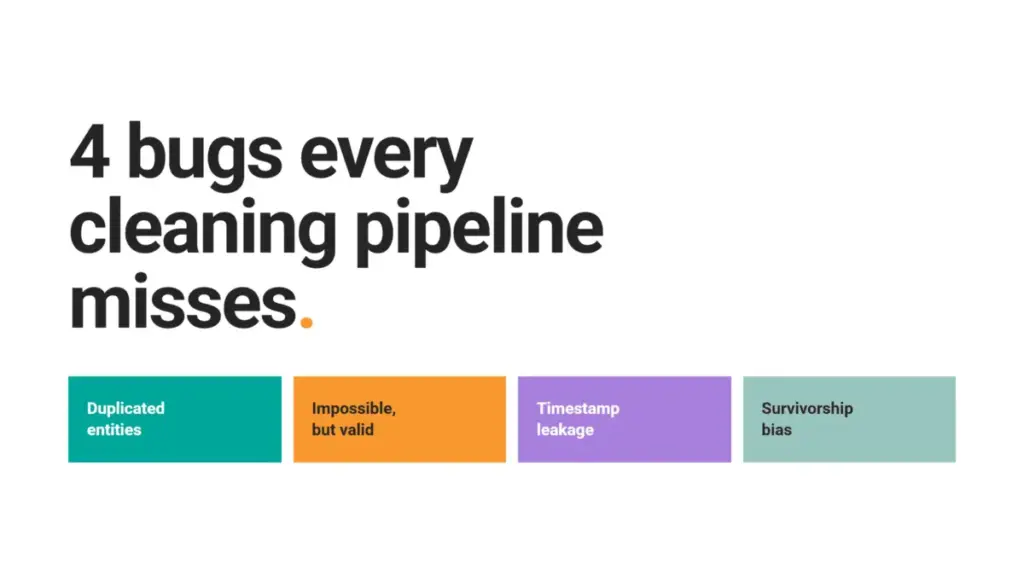
Standard data cleaning pipelines are engineered to quickly catch surface-level anomalies. They rapidly scan for null values, duplicate rows, and type mismatches. Once every column successfully passes these initial checks, the pipeline stops looking. However, industry data and technical evaluations reveal that four pervasive types of errors routinely clear these standard checks, slipping past automated defenses to ultimately corrupt predictive models, analytical dashboards, and critical financial reports.
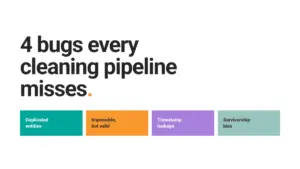
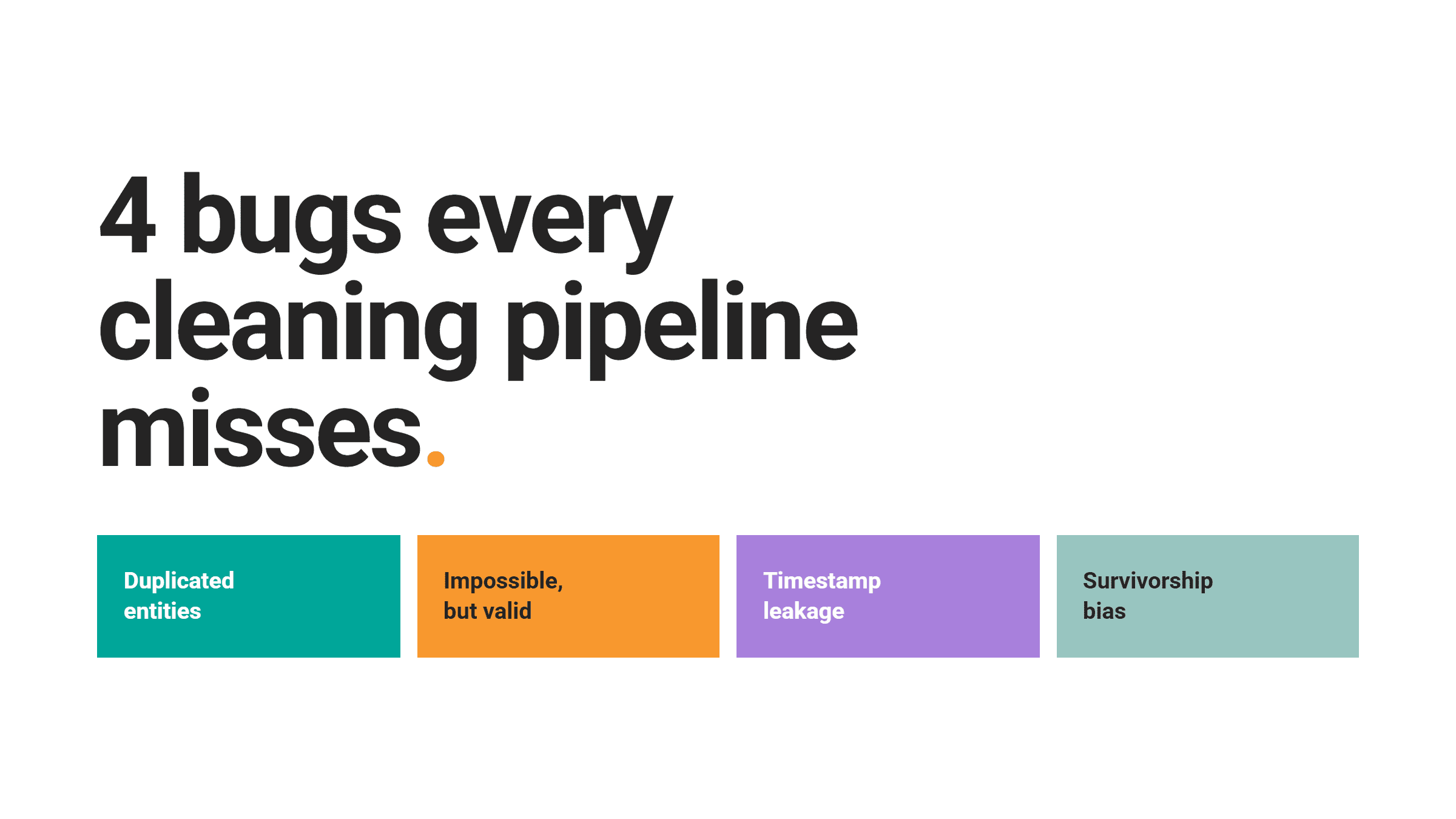
These hidden flaws—entities duplicated without ever looking identical, values that sit within valid numerical ranges but make no sense in context, timestamps that inadvertently leak future information, and denominators that silently drop vital populations—frequently appear in technical evaluations on platforms like StrataScratch. Understanding where naive validation fails reveals what data teams must check for instead to protect downstream systems.

The Syntax, Semantics, and Pragmatics Gap in Data Pipelines
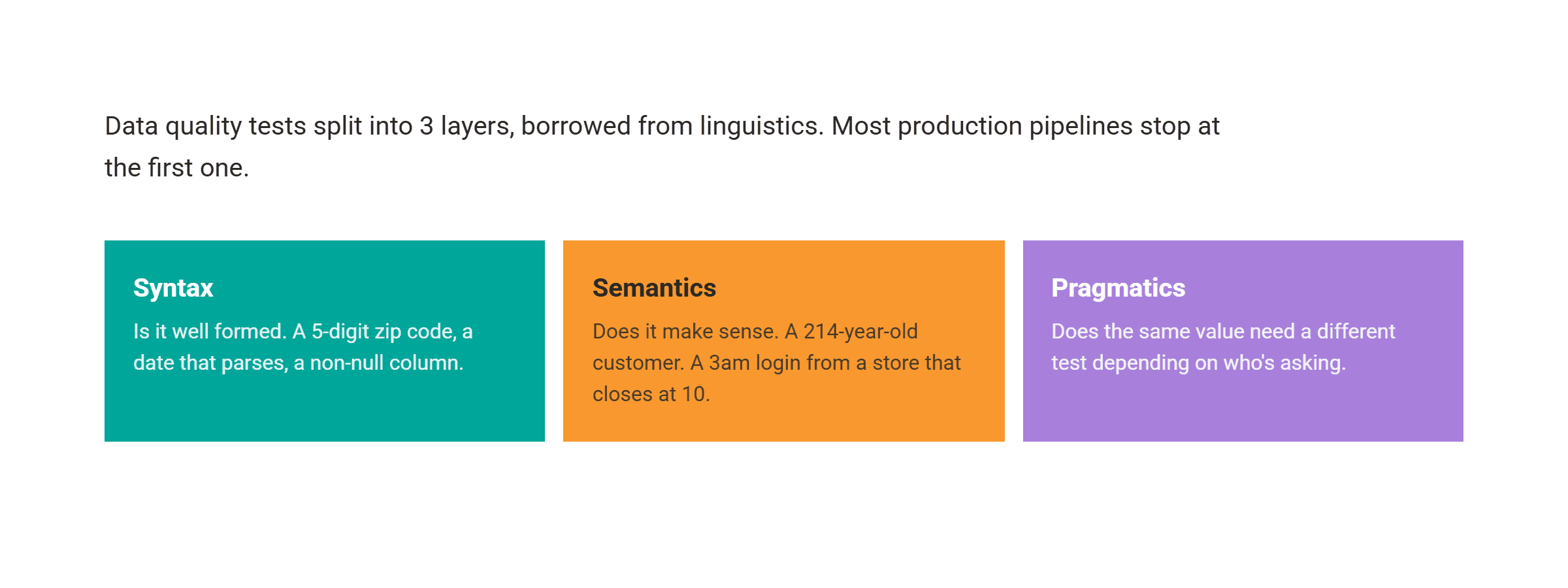
To understand why traditional tools miss these errors, data quality tests can be divided into three layers borrowed from linguistics: syntax, semantics, and pragmatics.
Syntax evaluates whether a value is well-formed. It asks straightforward questions: Is a zip code precisely five digits long? Does a date parse correctly? Is a required column non-null?
Semantics delves deeper, asking whether a value makes logical sense for what it represents. For instance, is a 214-year-old customer genuinely possible within a demographic dataset, or is a 3 AM login believable for a retail storefront that physically closes its doors at 10 PM?
Pragmatics evaluates whether the same kind of value requires different validation depending on who is using it. In a pharmaceutical enterprise, for example, a drug discovery team and a manufacturing team might look at the exact same category of record while holding entirely different standards for what constitutes a valid entry.
Despite these varying layers of complexity, most production pipelines stop entirely at syntax. Open-source validation libraries and standard SQL query data tests default to type, null, and range checks—the exact parameters a generic library can execute without understanding the underlying business model. Semantic checks, conversely, require human expertise and a deep comprehension of what the data actually represents. That conceptual gap is precisely where silent data errors thrive.
Silent Data Errors Involving Duplicated Entities
A standard duplicate check is usually designed to test whether two rows are byte-for-byte identical. A basic deduplication function will effortlessly catch two identical entries for "John Smith, 123 Main St," but it will completely fail to recognize "John Smith, 123 Main St" and "J. Smith, 123 Main Street" as the same person. These represent two differently written rows for a single customer that a lifetime-value model will subsequently count as two distinct individuals.
The validation check passes cleanly because the specific row itself is not technically duplicated; rather, the underlying entity is. This challenge frequently manifests in enterprise data environments when multiple source systems independently ship the same underlying table into a centralized data warehouse without a robust deduplication step executed prior to a join operation. Consequently, every downstream aggregation involving a sum or a count doubles, and no automated null check flags the discrepancy.

Similar failures occur in multi-user aggregation tasks where distinct counts are improperly substituted with standard row counts. When calculating monthly active users, substituting a distinct user identifier count with an unaggregated row count over the same table drastically inflates metrics, because a single active user firing multiple events appears as multiple distinct customers. Resolving this requires canonicalizing strings by lowering case, stripping punctuation, and standardizing addresses, while employing similarity scoring rather than rigid equality tests.
Impossible Yet Technically Valid Values
Another critical category of silent error involves values that comfortably sit inside their column’s designated data type and declared numerical range, yet remain entirely wrong for the specific row they occupy. A 214-year-old customer profile easily passes an integer check, just as a negative delivered quantity passes a standard numeric field validation. Catching these discrepancies requires business-aware rules rather than structural type checks.
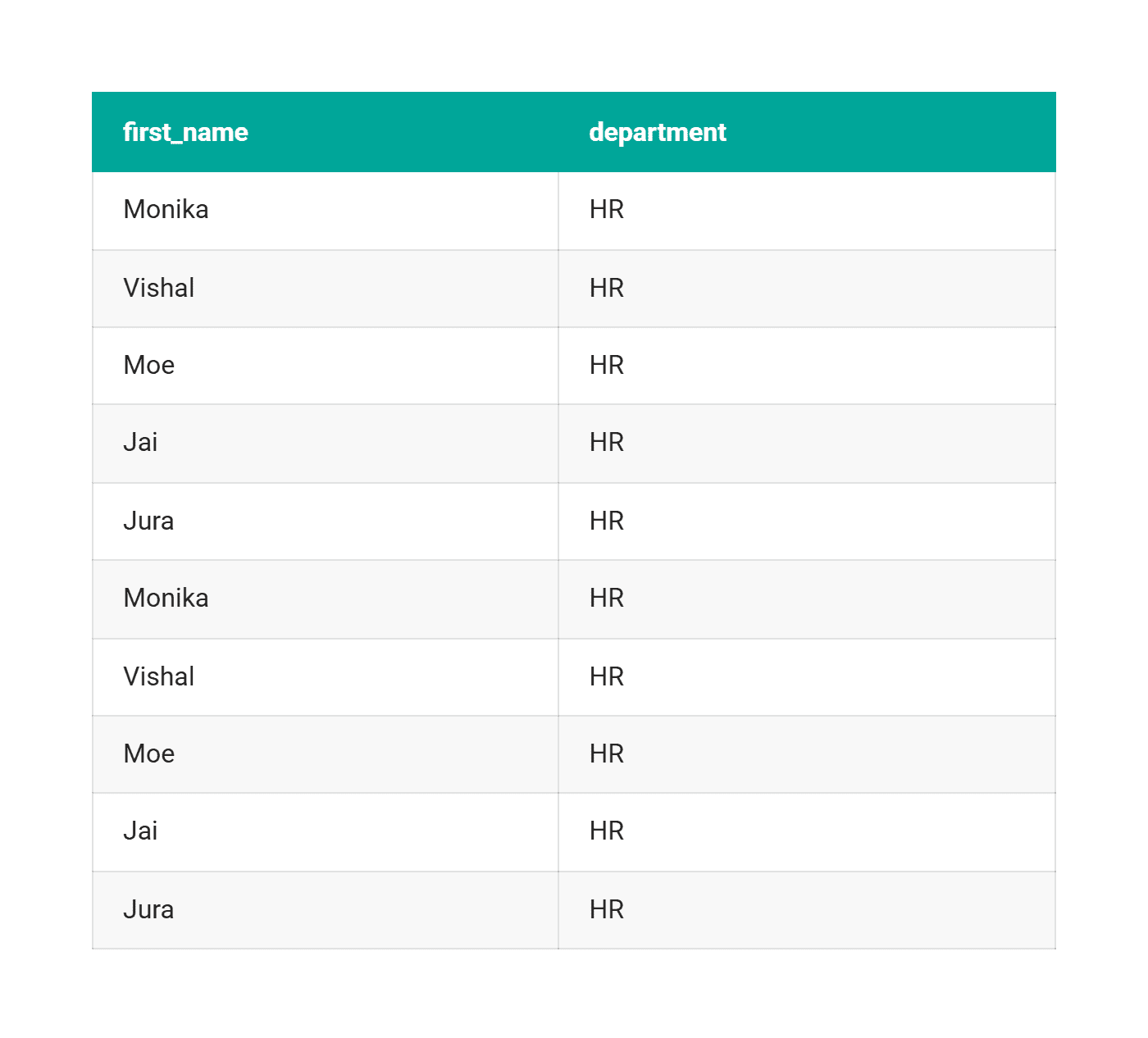
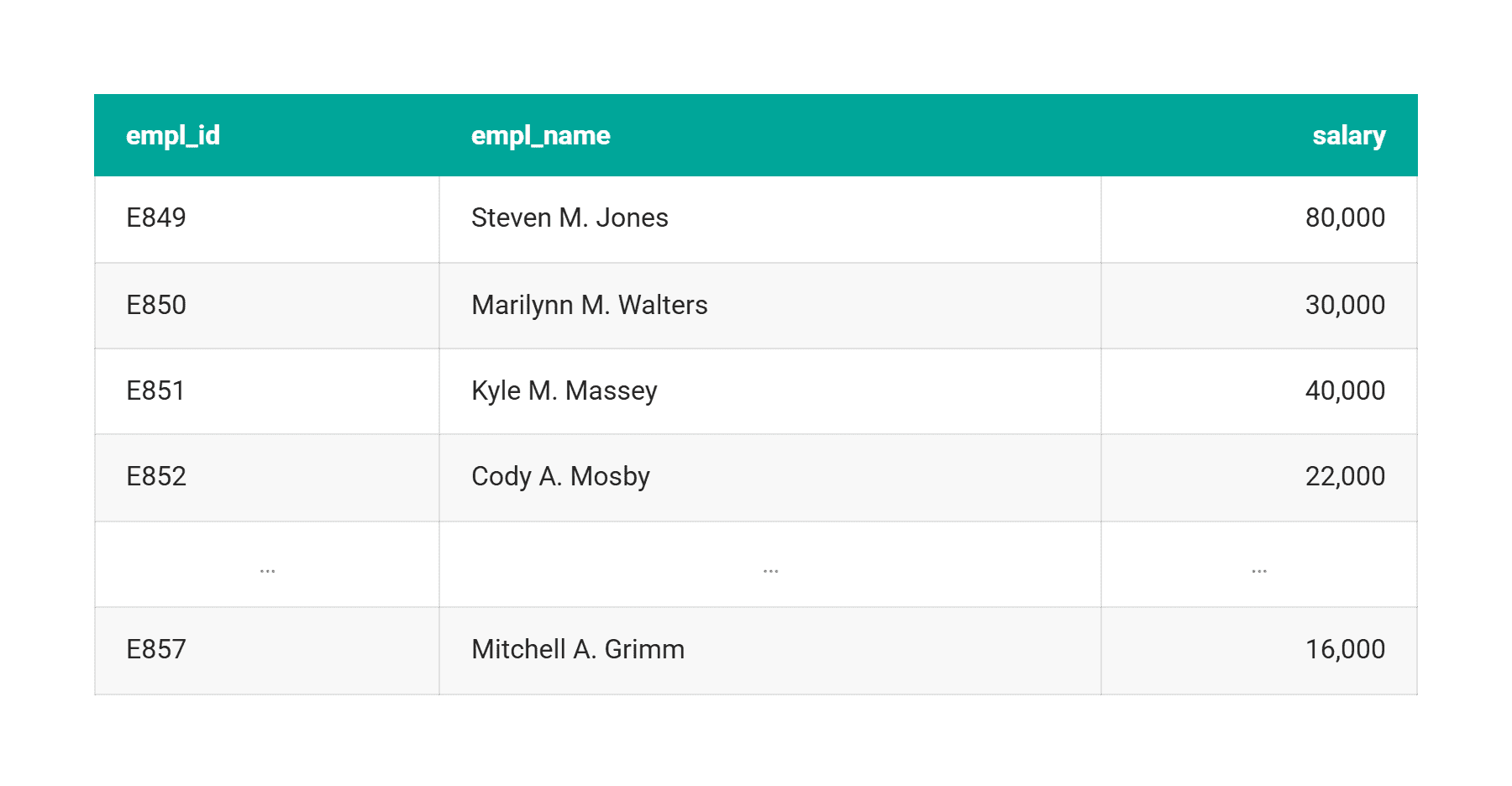
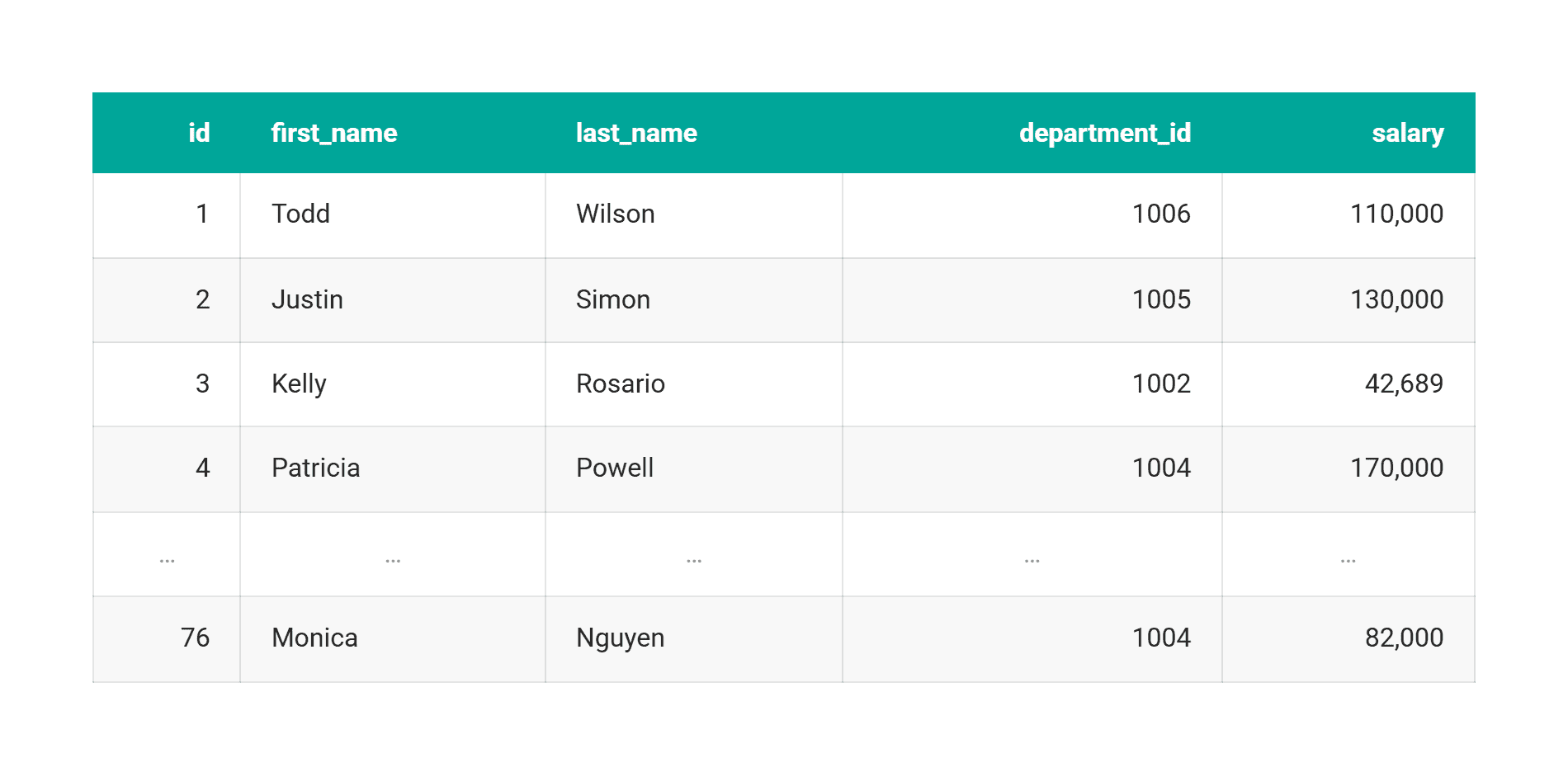
Consider employee hierarchies and salary metrics. A standard aggregation query verifying managerial compensation relative to direct reports can be structurally sound, yet a single erroneous salary entry—such as zero, a negative number, or a figure mistakenly typed in cents instead of dollars—will silently skew the calculated average. This single bad cell can silently drop managers from expected results or improperly include them, all while passing every technical syntax check along the way.
The remedy requires implementing business-aware constraints and peer-group plausibility checks during the data ingestion phase. Validating that an age falls between zero and 120 or that an order quantity exceeds zero enforces genuine business logic. Furthermore, comparing an employee salary against the distribution for the same professional level and geographic location catches values that may be plausible in isolation but are fundamentally incorrect for that specific row.
Timestamp Leakage in Predictive Modeling
Data leakage occurs when a feature carries unauthorized information originating from a timeline after the moment it is supposed to describe. In machine learning contexts, this means information that would not realistically be available at the prediction time ends up embedded within the training row.
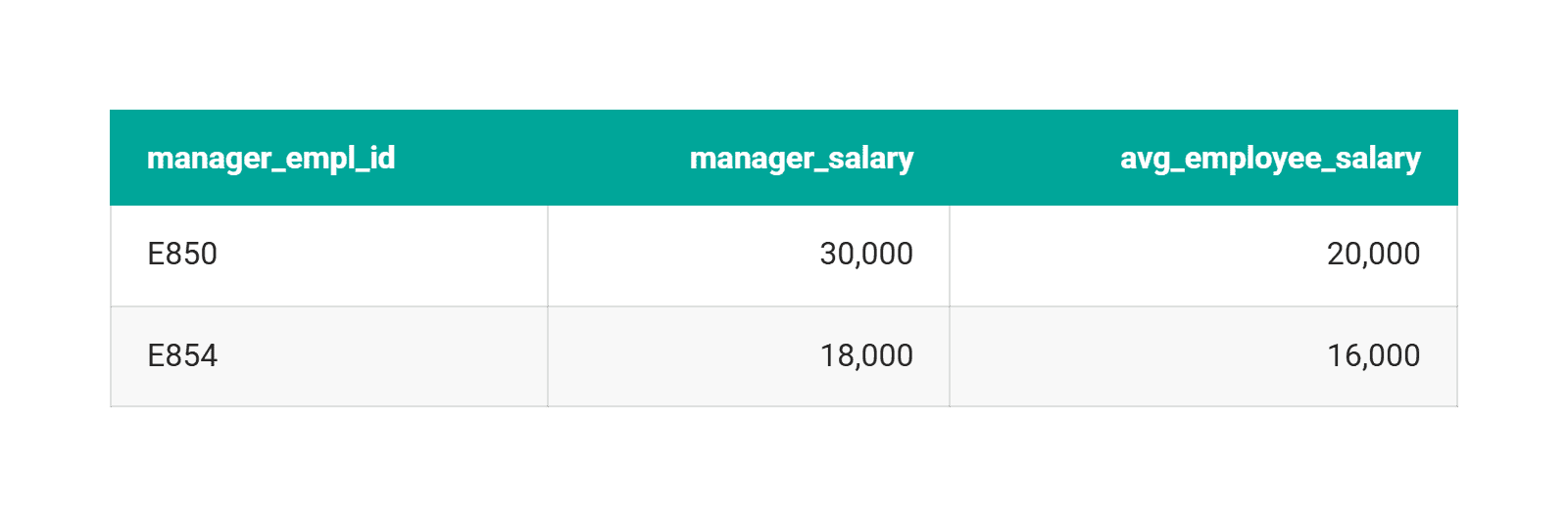
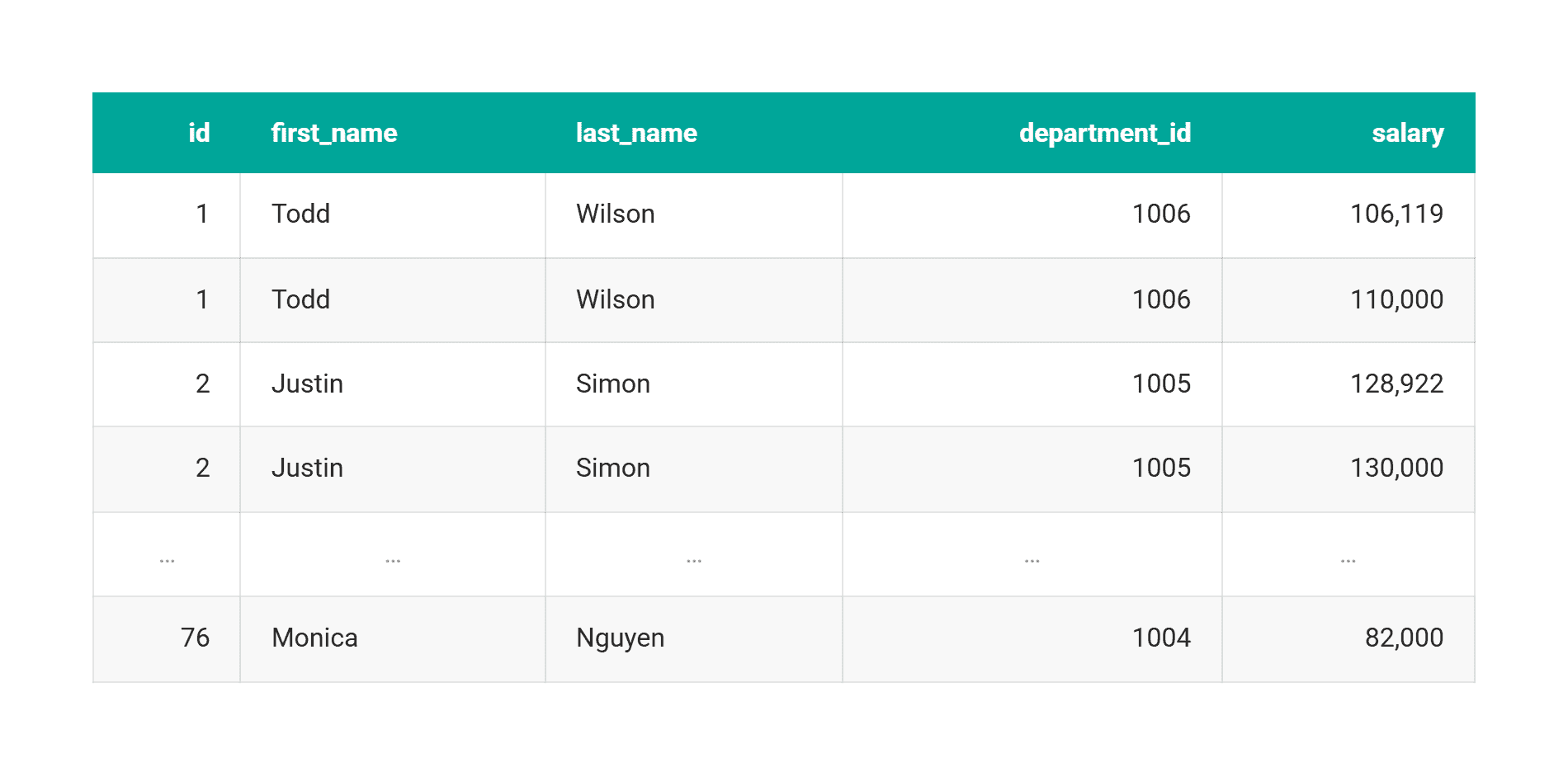
This issue frequently surfaces when processing tables that lack explicit timestamp columns, leaving analysts to infer current records through repeated historical entries under the assumption that values only increase. When a warehouse ingests a slowly changing dimension without an effective-dated column, determining the most recent entry becomes an educated guess. Any downstream feature joined on an entity identifier inherits this assumption. Recreating a historical prediction using an inferred current status inadvertently introduces future information into past rows, creating a severe leak.
Similar vulnerabilities appear in time-window queries designed to track user behavior, such as identifying secondary purchases occurring within a specific window after an initial transaction. Loosening strict temporal boundaries can inadvertently cause same-day, multi-item baskets to register as returning user visits, thereby artificially inflating retention numbers with transactions that never represented a genuine return visit. Addressing this structural vulnerability requires storing both the exact timestamp of when an event occurred and the precise moment the row was written, alongside strict temporal inequality joins rather than loose maximum aggregations.
Survivorship Bias in Analytical Reporting
Survivorship bias presents a classic denominator problem wherein the specific rows that would reveal the true state of a system are removed before a query is ever executed. This phenomenon is well-documented in financial indexes that calculate returns exclusively over funds that remain actively trading while ignoring every fund that previously closed. A parallel dynamic occurs whenever analytics teams report on metrics like active user shares or customer cohorts without realizing that their datasets have already pruned accounts that churned or deactivated earlier in the period.
When datasets exclude deleted accounts entirely rather than flagging them with a status identifier, aggregate counts default to a denominator comprised solely of survivors. Standard null checks fail to flag this omission because the missing records were purged long before the pipeline ingested the data. A practical safeguard against this form of bias involves tracking and plotting row counts at every single cohort filter step within a pipeline, establishing automated alerts whenever an unexpected share of a population disappears prior to final calculations.
Building Comprehensive Validation Layers
Addressing these silent errors necessitates moving beyond basic structural checks to build robust, business-aware validation layers. For duplicated entities, teams must implement uniqueness checks on canonicalized identities alongside join-cardinality assertions that trigger failures whenever a join yields more rows than its input tables. For impossible values, validation routines must enforce peer-group plausibility rather than simple type boundaries.
Preventing timestamp leakage requires strict temporal inequality joins to ensure features are never constructed using data that did not exist at the time of the event. Finally, countering survivorship bias demands continuous monitoring of row attrition across cohort filtering steps.
While null, duplicate, and schema checks remain essential components of any data pipeline, they represent only the foundational half of data quality assurance. They confirm whether a data value is structurally well-formed, but whether it is actually true requires contextual business logic written by teams who understand the domain.