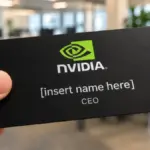










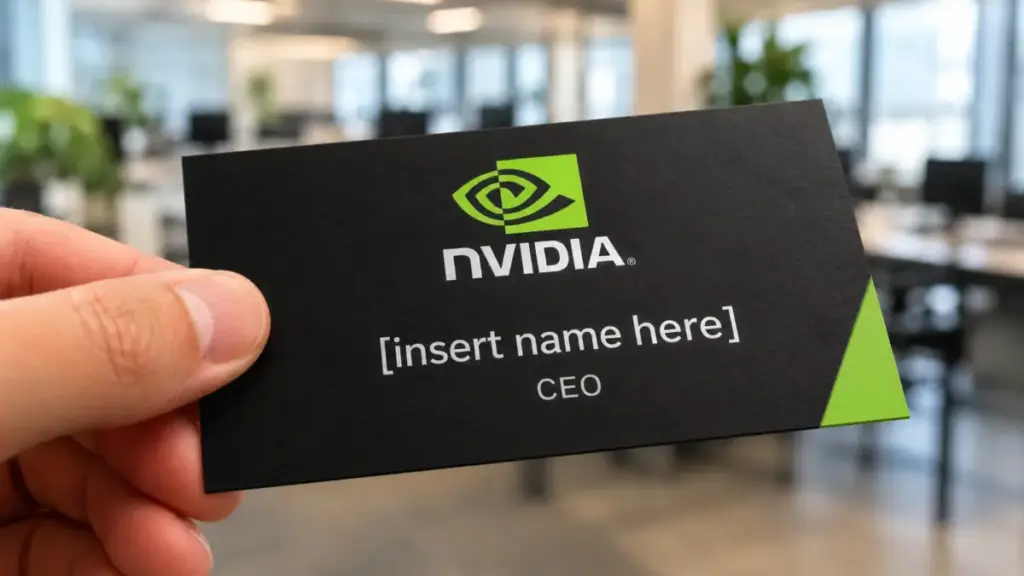
It is a scenario that would have been dismissed as pure fantasy only months ago: the potential departure of Jensen Huang, the visionary CEO who transformed Nvidia from a niche graphics card manufacturer into the indispensable engine of the global artificial intelligence revolution. Yet, the unthinkable has become a subject of urgent, high-stakes speculation. As of this week, the betting markets at Kalshi suggest the probability of Huang surviving in his role through the end of the week has plummeted to a precarious 30%.
The shift in sentiment is as sudden as it is profound. Huang is widely credited with building one of the most valuable and influential corporations in human history. Under his leadership, Nvidia’s hardware has become the backbone of modern AI infrastructure, a position of market dominance that has led some observers to describe the firm as dangerously powerful. However, the current crisis has less to do with quarterly earnings or semiconductor supply chains and everything to do with a brewing personal scandal that has left the company’s leadership in a state of suspended animation.
Huang has formally acknowledged his involvement in an extramarital affair, a confession that has sent shockwaves through Silicon Valley. The situation is further complicated by the ambiguity surrounding the identity of the other party involved. Reports have swirled around Alice Huang, an executive with ties to the Chinese corporate sphere who has faced intense scrutiny from U.S. intelligence officials over alleged espionage concerns. Simultaneously, a report from The New York Times has identified Kimberly Powell, a senior Nvidia executive who reports directly to Huang, as another individual with whom the CEO had a romantic relationship. The confluence of a high-profile executive scandal with potential national security implications has created a combustible environment for the Nvidia board of directors.
Even if the board concludes that Huang can no longer serve as the company’s chief executive, a complete severance of ties appears unlikely. The current board members owe much of their own prosperity to the growth Huang fostered, and it is probable that they would seek a solution that preserves his institutional knowledge. One potential path forward would be to transition Huang into the role of chairman—a position that does not currently exist at Nvidia—thereby removing him from day-to-day operations while keeping his strategic influence within the firm.
The central dilemma for the board, however, is the lack of a clear, pre-approved succession plan. With no designated heir apparent, the company is vulnerable, leaving analysts, investors, and industry insiders to engage in a speculative parlor game to determine who could possibly step into the role of CEO during one of the most critical junctures in the history of the tech industry.
Among the names circulating in industry circles is Lisa Su, the CEO of AMD. As the head of Nvidia’s most formidable rival, Su brings a proven track record of steering a chip giant through volatile market conditions. She also shares a familial connection with Huang, as they are distant cousins. While some reports have suggested her name as a potential candidate, the logic for such a move remains thin. Under Su’s leadership, AMD stands to gain significantly from every day that Nvidia remains paralyzed by internal investigations, congressional inquiries, and the myriad distractions currently plaguing its headquarters. For Su, the most strategic maneuver might be to maintain her current course, allowing her competitor to self-destruct from within while she focuses on capturing market share.
Another candidate frequently mentioned by leadership experts, such as Jeffrey Sonnenfeld of the Yale School of Management, is Eric Schmidt. Having served as the CEO of Google during its meteoric rise between 2001 and 2011, and later chairing the National Security Commission on AI, Schmidt possesses a unique blend of experience spanning software, government policy, and cutting-edge hardware through his current work at Relativity Space. While Sonnenfeld has noted that Schmidt could theoretically step into the role and stabilize the company immediately, the suggestion carries its own complications. Schmidt’s own history of extramarital affairs, which has been the subject of public reporting in the past, could make him an unpalatable choice for a board attempting to distance the company from scandal.
The list of potential successors also includes industry veterans who are currently grappling with their own corporate challenges. Lip-Bu Tan, who has been involved in the semiconductor sector for years, is often viewed as a candidate who understands the nuances of chip manufacturing. His current environment at Intel, however, is fraught with difficulty. Intel recently reported a sharp warning regarding its fourth-quarter outlook, following a period where the AI-driven memory chip shortage has hampered PC sales. A move to Nvidia, a company currently dominating the industry, would provide a high-profile exit for an executive navigating the headwinds of a struggling Intel.
For those who prefer a leader with a deep, intuitive understanding of the modern AI landscape, Bret Taylor remains a strong contender. A veteran of Salesforce and the former board chair of OpenAI, Taylor has established himself as a "fixer" in Silicon Valley. His resume includes instrumental roles at Google, Facebook, and Twitter, and he has consistently been the person organizations turn to when they require an unflappable, experienced hand to guide them through periods of intense turbulence. Given his extensive work in the AI space, Taylor would likely require very little onboarding to understand Nvidia’s customer base and strategic imperatives.
Should the board prioritize a "builder" who understands the technical foundations of Nvidia’s dominance, they might look inward to Ian Buck. As the Nvidia VP responsible for the development of CUDA—the software layer that has been essential to the company’s AI success—Buck is arguably the architect of the firm’s competitive advantage. While he lacks the public profile of a CEO like Huang, his technical pedigree is unmatched. Proponents of this path argue that if Huang were to take on a chairman role, he could effectively mentor a successor like Buck, ensuring technical continuity without the baggage of the current crisis.
Other insiders, such as Andrew Bell, the senior vice president of hardware engineering, have also been identified as potential candidates. Bell has been with Nvidia for a quarter-century, rising through the ranks since his time as a young graduate from Cornell. He represents the deep institutional memory of the firm. While CFO Colette Kress is frequently mentioned as a prominent executive, some analysts contend that she lacks the visionary, product-focused background typically associated with a company as innovation-driven as Nvidia.
Perhaps the most unconventional suggestion, and one that has yet to gain significant traction, is the potential role of Lori Huang. As Jensen Huang’s spouse, her involvement with the company dates back to its very inception; the two were lab partners at Oregon State before founding the firm. With a professional background as a microchip engineer at Silicon Graphics—where she notably earned a higher salary than her husband in the early days—and her current role as co-lead of the family trusts, she possesses both the technical foundation and the intimate knowledge of the company’s history. While such a transition would be unprecedented, a board looking for stability and continuity might consider the value of a leadership figure who has been a constant presence throughout the company’s decades-long evolution.
For now, the uncertainty continues. As the company faces the potential end of the Jensen Huang era, the eyes of the tech world remain fixed on Nvidia, waiting for a definitive statement from the board. Whether the leadership transition is handled through a clean break or a complex restructuring, the outcome will likely reshape the trajectory of the AI industry for years to come.