











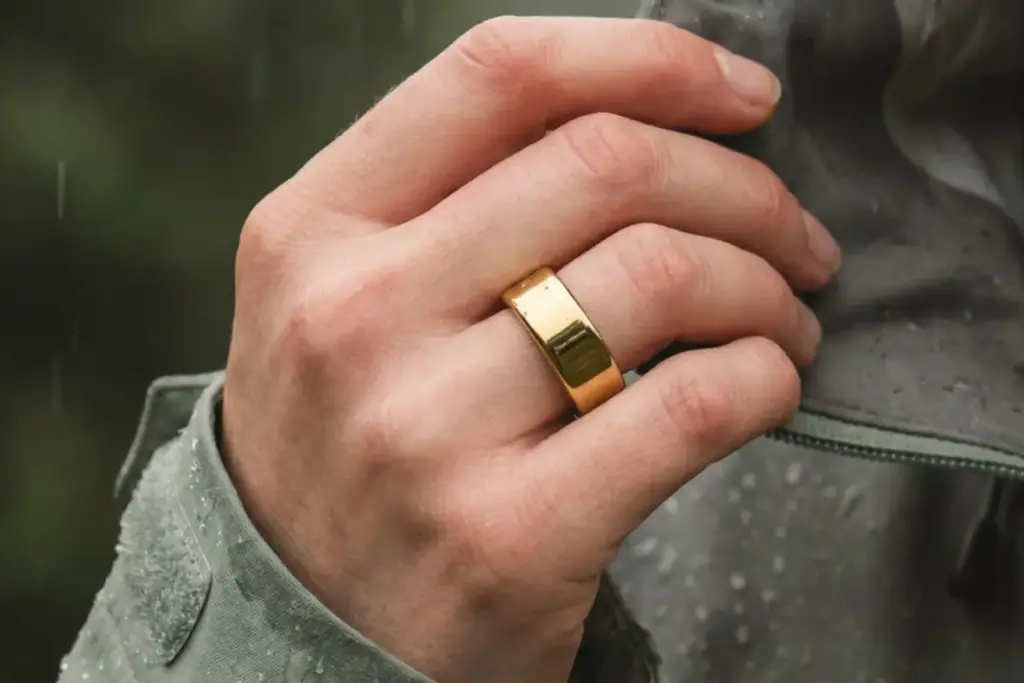
In a significant escalation of the ongoing legal hostilities within the wearable technology sector, Oura, the dominant player in the smart ring market, has initiated fresh litigation against its Indian rival, Ultrahuman. The lawsuit, filed in a federal court in Texas, represents a strategic move by Oura to block the U.S. sales of the Bengaluru-based startup’s flagship device, the Ring Pro. This legal challenge arrives only months after Ultrahuman successfully navigated an import ban to re-enter the American market with its redesigned product, underscoring the high stakes involved in the increasingly crowded health-tracking wearable industry.
The complaint, lodged on Thursday, alleges that Ultrahuman’s Ring Pro infringes upon two of Oura’s patents related to both the physical design of the device and its internal architecture, specifically citing components such as sensors and battery integration. Oura is demanding both monetary damages for the alleged infringement and a permanent injunction that would effectively strip the Ring Pro from U.S. retail channels.
This latest legal maneuver is far from an isolated incident. Oura has been aggressively asserting its intellectual property rights across the industry, having engaged in a string of patent-related disputes with various competitors, including major consumer electronics players like Samsung, as well as specialized wearable manufacturers such as RingConn, Circular, and Zepp Health.

The Background of the Conflict
The friction between Oura and Ultrahuman has been brewing since 2023. The initial point of contention centered on the Ultrahuman Ring Air, a device that was instrumental in building the startup’s reputation among American consumers. Oura’s campaign against the Ring Air culminated in a successful petition before the U.S. International Trade Commission (ITC), which resulted in an import ban on that specific model last year.
Following the setback, Ultrahuman shifted its focus toward innovation and compliance, launching the redesigned Ring Pro in February. This iteration was intended to bypass the design elements contested by Oura. In March, the startup received a favorable ruling from U.S. Customs and Border Protection, which determined that the redesigned ring did not violate the terms established in the previous ITC case. This decision was widely viewed as a lifeline for the startup, allowing it to resume its push into the U.S. market.
However, Oura’s latest filing suggests that the company is not satisfied with the Customs ruling, arguing that the decision was limited in scope and only addressed the specific patent involved in the earlier dispute. According to the complaint, the two new patents being asserted—identified as D804,471 and 12,769,363—were not part of the previous adjudication.
"Ultrahuman has a history of copying Oura’s innovations, as demonstrated by the 2025 ITC ruling against the company," an Oura spokesperson stated. "Ultrahuman introduced a redesigned ring but failed to address continued infringement of Oura’s patents, seeking instead to capitalize on our innovation and the market leadership we have built. To protect its patent rights, Oura is now forced to file this complaint of patent infringement."
A Fresh Patent and a Strategic Target
A critical detail in the current lawsuit is the recent issuance of one of the patents in question. Patent 12,769,363 was issued to Oura on October 20, a mere two days before the lawsuit was filed. This patent covers a smart ring design that incorporates internal components such as a curved battery, a specialized circuit board, magnets, and sensors—core elements that form the backbone of modern smart ring technology. By asserting such a recently granted patent, Oura is signaling a aggressive posture toward protecting its R&D investments.
The lawsuit also takes the unusual step of naming a manufacturing partner, SVTronics, as a co-defendant. Based in Plano, Texas, the electronics manufacturer is alleged to be producing the Ring Pro under the direct control and supervision of Ultrahuman. By targeting the manufacturer, Oura is effectively aiming to disrupt the entire supply chain responsible for the Ring Pro’s presence in the United States, alleging that both firms are collectively infringing on its intellectual property through the manufacture, importation, and distribution of the device.
Ultrahuman’s Stance and Market Outlook
Ultrahuman CEO and co-founder Mohit Kumar has remained defiant in the face of the new legal challenge. In a statement provided to TechCrunch, Kumar expressed confidence in the company’s position and signaled that they are prepared to engage in a vigorous legal defense.
"Oura has now chosen to assert different patents, including one that issued just two days before this lawsuit was filed," Kumar said. "We will address these claims through the appropriate legal process and will defend our position vigorously. There is no court order affecting Ring Pro, and it remains available to customers in the U.S."
The timing of this lawsuit is notable, as both companies are navigating a shifting landscape in the wearables market. For Oura, the legal pressure is being applied shortly after the company shelved its planned $2.2 billion IPO, citing "uncertainty" in the broader financial markets. Despite the pause in its public offering, Oura has continued to push forward with product development, recently introducing new fitness metrics designed to help users better understand the impact of exercise on their cardiovascular health.
Conversely, Ultrahuman has been on a growth trajectory. In September, the company successfully raised $70 million in a funding round that included participation from Qualcomm Ventures and Labcorp, bringing the startup’s valuation to approximately $365 million. The company is currently collaborating with Qualcomm on next-generation smart ring technology, aiming to integrate more software processing directly onto the device to facilitate advanced features like AI interactions and gaming.
A Broader Industry Trend
The conflict between Oura and Ultrahuman is emblematic of a broader "patent war" currently playing out in the smart ring category. As the sector matures, the competition has intensified, with established players and new entrants alike scrambling to secure and enforce intellectual property.
Industry analysts at IDC project that the smart ring market will continue to see strong momentum, with global shipments expected to grow by 12.8% this year to reach 4.9 million units. By 2030, this figure is forecast to climb to approximately 6.3 million units, as the devices move from niche fitness trackers to more comprehensive health-monitoring computers.
Oura’s strategy of legal attrition has already yielded results elsewhere. The company’s legal pressure has led to licensing agreements with competitors like RingConn and Circular, both of which have agreed to pay royalties to Oura in exchange for the right to continue selling their products in the U.S. market. Whether Ultrahuman will be forced into a similar arrangement or will succeed in invalidating the patents remains to be seen.
As the case moves through the federal court system in Texas, the industry will be watching closely. For Oura, the goal is to maintain its market dominance and protect the proprietary technology that has defined its brand. For Ultrahuman, the objective is to maintain its hard-won access to the American consumer base while proving that its engineering efforts are distinct from those of its rival. For now, the Ring Pro remains available to U.S. customers, but the legal clouds hanging over the device suggest that the battle for the finger-worn wearable market is far from over.