








In the rapidly evolving landscape of artificial intelligence, the software development community has become a hotbed for rapid-fire opinions. From social media feeds to industry conferences, "hot takes"—those bite-sized, highly confident declarations on complex topics—have become a defining feature of the discourse. While these statements are effective at generating engagement, they often prioritize provocation over nuance, leaving developers to grapple with the underlying reality of how AI is actually shifting the craft of programming.
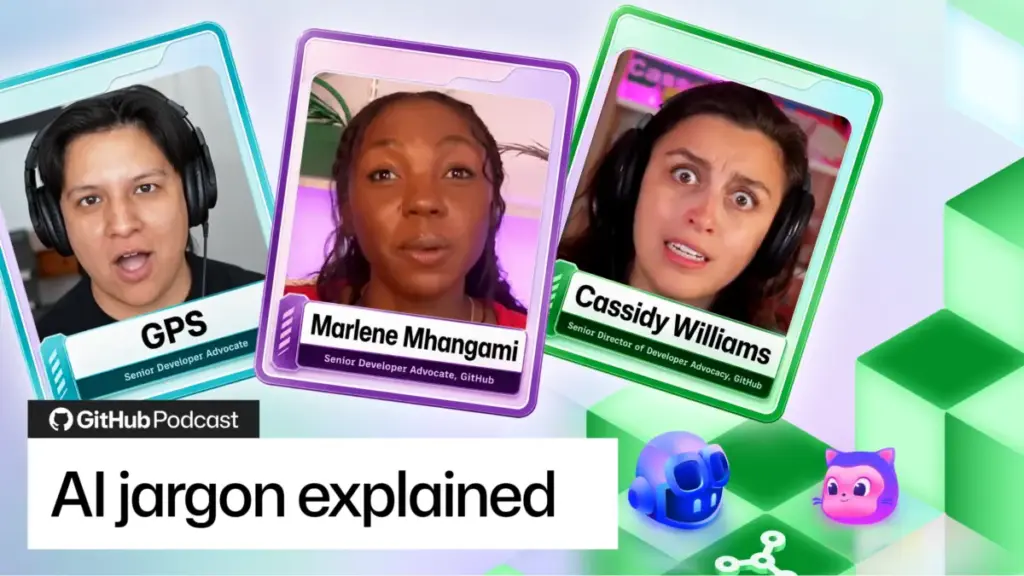
The latest episode of the GitHub Podcast takes a deep dive into these prevalent AI narratives, moving past the surface-level noise to dismantle the assumptions, risks, and practical realities that define modern engineering. The consensus among the experts is clear: the true value of a hot take is not in the reaction it provokes, but in the critical analysis it invites. By pulling these arguments apart, developers can uncover the context, conditions, and practical implications that determine whether an AI-driven approach is a genuine tool for productivity or a potential pitfall.
The Responsibility of Code Ownership
One of the most pervasive arguments in the current cycle is the assertion that developers no longer need to read AI-generated code. This perspective suggests that if the machine can write it, the machine can likely handle the maintenance, too. However, the reality is far more demanding. The responsibility for code execution, security, and long-term viability remains firmly with the human developer.

That said, the intensity of scrutiny should be contextual. A routine CSS adjustment does not require the same level of cognitive load as a mission-critical authentication refactor. Furthermore, the level of oversight depends heavily on the developer’s familiarity with the codebase. A system maintained for a decade allows for a different, more intuitive review process than one encountered for the first time. The goal is not to review every line with equal intensity—which would be a misuse of valuable time—but to exercise enough diligence to fully explain and own the final outcome.
This work often begins before the AI agent even initiates a draft. By mapping dependencies, identifying potential edge cases, and establishing a clear plan, a developer creates a roadmap that makes the final output predictable. If the generated code deviates from this plan, the developer is already equipped to identify the error. AI shifts where effort is expended—moving it from manual typing to high-level architectural oversight and rigorous inspection—but it does not remove the need for human expertise. The defining skill of the modern developer is the ability to identify where risk lives and allocate attention accordingly.
Judgment as a Professional Metric
As organizations continue to integrate AI into their development lifecycles, a new, more nuanced debate has emerged: the fear that developers will be sidelined if they do not adopt AI tools. While it is true that many companies are now screening candidates for their ability to leverage these technologies, the focus is rarely on universal adoption or specific tool preferences. Instead, the strongest signal to employers is a candidate’s judgment.
The modern hiring process is increasingly centered on how a developer justifies their workflow. A high-value candidate can clearly articulate when they choose to use AI, when they prefer to work manually, and how they bridge the gap between the two. They can describe their process for auditing AI output and speak honestly about the trade-offs between speed, quality, security, and long-term maintainability.
Total dependence on AI is just as much of a red flag as a dogmatic refusal to use it. A developer who cannot explain their tools is a liability, regardless of the technology stack. Consequently, fluency in AI—knowing exactly what to trust the tools to handle and where to intervene—has become an essential part of the professional craft. It is no longer about whether you use AI, but how you integrate it into a disciplined, maintainable workflow.

Navigating the Ecosystem: MCP, Skills, and RAG
The technical discourse around AI architecture has also produced conflicting views, particularly regarding the roles of the Model Context Protocol (MCP), "Skills," and Retrieval-Augmented Generation (RAG). Some suggest that newer innovations have rendered older methods obsolete, but the reality is that these technologies are designed to solve different, complementary problems.
The Model Context Protocol provides a standard interface for agents to connect to tools and data, ensuring that different systems can communicate reliably. This standardization is vital for creating robust, interoperable agents. In contrast, "Skills" function as packaged expertise—often documented in Markdown—that provides an agent with the context, process, and organizational best practices necessary to execute a task effectively. These two are not in competition; they occupy different layers of the development stack. MCP provides the access, while Skills provide the guidance on how to use that access well.
Similarly, the narrative that "RAG is dead" ignores the fundamental necessity of grounded information. Retrieval-augmented generation allows an AI system to tap into documentation, codebase context, and internal history that exist outside its base training data. Without this, an agent is forced to rely solely on its internal weights, which leads to inefficiencies, wasted tokens, and potentially incomplete or hallucinatory answers. In practice, a sophisticated workflow uses all these components simultaneously: an agent uses MCP to interact with the environment, follows a predefined Skill for project-specific logic, and uses RAG to pull in the necessary grounding information.
AI as a Mirror for Code Quality
Perhaps the most insightful observation in the current debate is the idea that AI serves as a powerful diagnostic tool for codebase maintainability. A common sentiment is that if a model struggles to interpret a codebase, it is a sign that the code itself is poorly structured. While fine-tuning a model for a specific repository is a valid technical choice, it should not be a requirement for basic comprehension.
Modern models have been trained on vast swathes of common frameworks and architectures. If a model cannot make sense of a codebase, it is highly likely that a new human hire will encounter the same friction. Clear naming conventions, logical structures, readable tests, and up-to-date documentation are not just "nice-to-haves"—they are the foundation of a maintainable project. AI-assisted development rewards codebases that make their intent obvious, effectively raising the standard for what constitutes "good" code. In this sense, the integration of AI is not a threat to traditional engineering practices; it is a catalyst for cleaner, more transparent, and more sustainable development.
Moving Beyond the Debate
The noise surrounding AI will continue, fueled by the rapid pace of change and the ongoing struggle to define best practices. However, the most productive path forward is not found in the debate itself, but in the practical application of these tools to real-world problems.
Experimentation remains the best way to separate hype from utility. Projects like Pollinations AI, which explores the intersections of generative AI and open-source incentives, or creative endeavors like the "Avian Visitors" project—which uses AI to catalog wildlife on a custom e-ink display—demonstrate the value of building. These projects provide concrete evidence of what is possible, expose the inevitable trade-offs, and offer a starting point for other developers to learn and iterate.
The ultimate takeaway for the developer community is to focus on ownership and fluency. Read enough code to own the result, build enough AI literacy to explain your process, and use the tools available—whether MCP, Skills, or RAG—when they provide a clear advantage. If the code is confusing, fix the code. Above all, the most effective way to engage with the AI revolution is to translate these heated debates into tangible projects, ensuring that what is learned translates into meaningful, functional results.