





The Fedora Design Team has demonstrated that running a virtual conference entirely on open source software is not only viable, but remarkably effective. The milestone was achieved during the inaugural Creative Freedom Summit, which took place over three days in January 2023. Organizers recently shared a comprehensive breakdown of the technical stack, the motivations behind avoiding proprietary platforms, and the lessons learned as they prepare for the next iteration of the event in 2024.
The summit originated from a surplus of creativity and design-focused talk submissions for Flock, the annual conference for Fedora users and contributors held in August 2022. Marie Nordin, reviewing submissions for Flock, noticed an overwhelming number of proposals centered on open source design and creativity—far more than the official schedule could accommodate. Recognizing a distinct community of creatives who rely on open source tools to produce their work, Nordin brought the idea of a dedicated spin-off event to the Fedora Design Team in the fall of 2022.
Planning moved swiftly, resulting in the Creative Freedom Summit running from January 17 through January 19, 2023. Given the short runway and the exploratory nature of the event, organizers curated the lineup by inviting speakers directly from the pool of previous Flock submissions and their broader personal networks within the open source community. The response was overwhelmingly positive, with nearly every invited speaker accepting. Because the initial roster was entirely curated by invitation, organizers did not deploy a Call for Papers management tool, a process they plan to refine and formalize for future summits.


Navigating the Open Source Dilemma for Conferences
Since the onset of the COVID-19 pandemic, the Fedora project has relied on Hopin, a proprietary online conference platform, to host its virtual iterations of the Flock conference. While Hopin is not open source, it accommodates open source workflows and delivers a polished conference experience complete with virtual exposition halls, multi-track capabilities, hallway chat modules, and robust moderation controls. Because the Creative Freedom Summit operated under the Fedora umbrella, organizers had access to this existing Hopin infrastructure.
However, utilizing a proprietary platform to host a conference specifically celebrating open source ideals presented a philosophical challenge for veteran contributors. Weighing the decision required a careful balancing act. The organizing team operated with zero financial budget, relying instead on volunteer hours and pre-existing infrastructure, such as the Fedora Matrix server and a hosted WordPress environment. Furthermore, team members possessed hands-on technical experience running weekly live video calls for the Fedora Design Team using PeerTube. With a shared desire to keep the event informal, single-track, and low-key, the team embraced a minor tolerance for technical rough edges in exchange for the freedom of an entirely open source stack.
Building and Deploying an Open Source Conference Stack
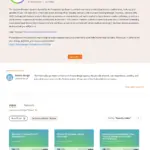
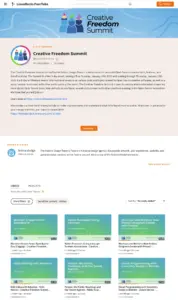
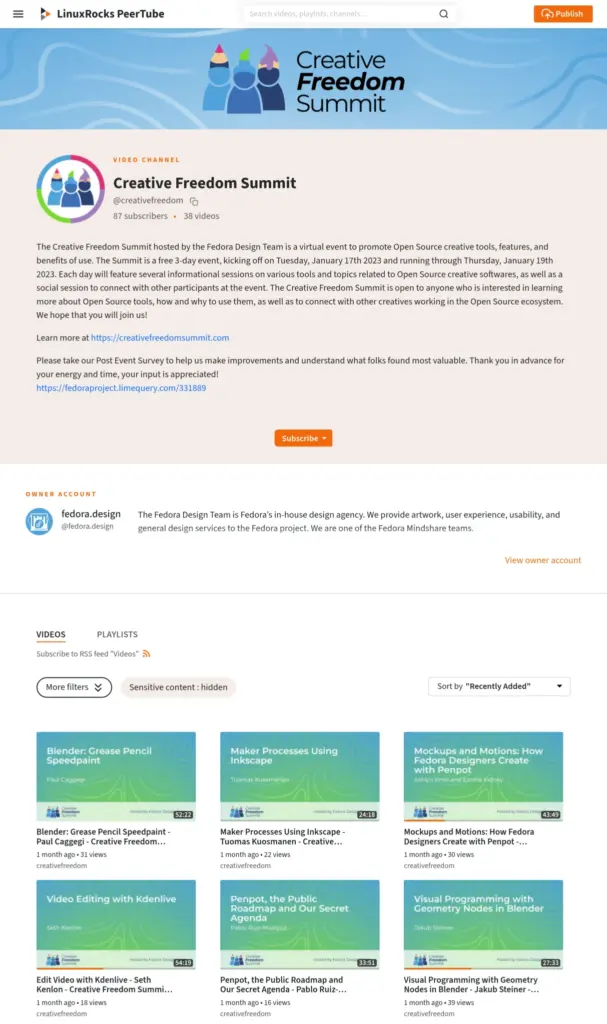
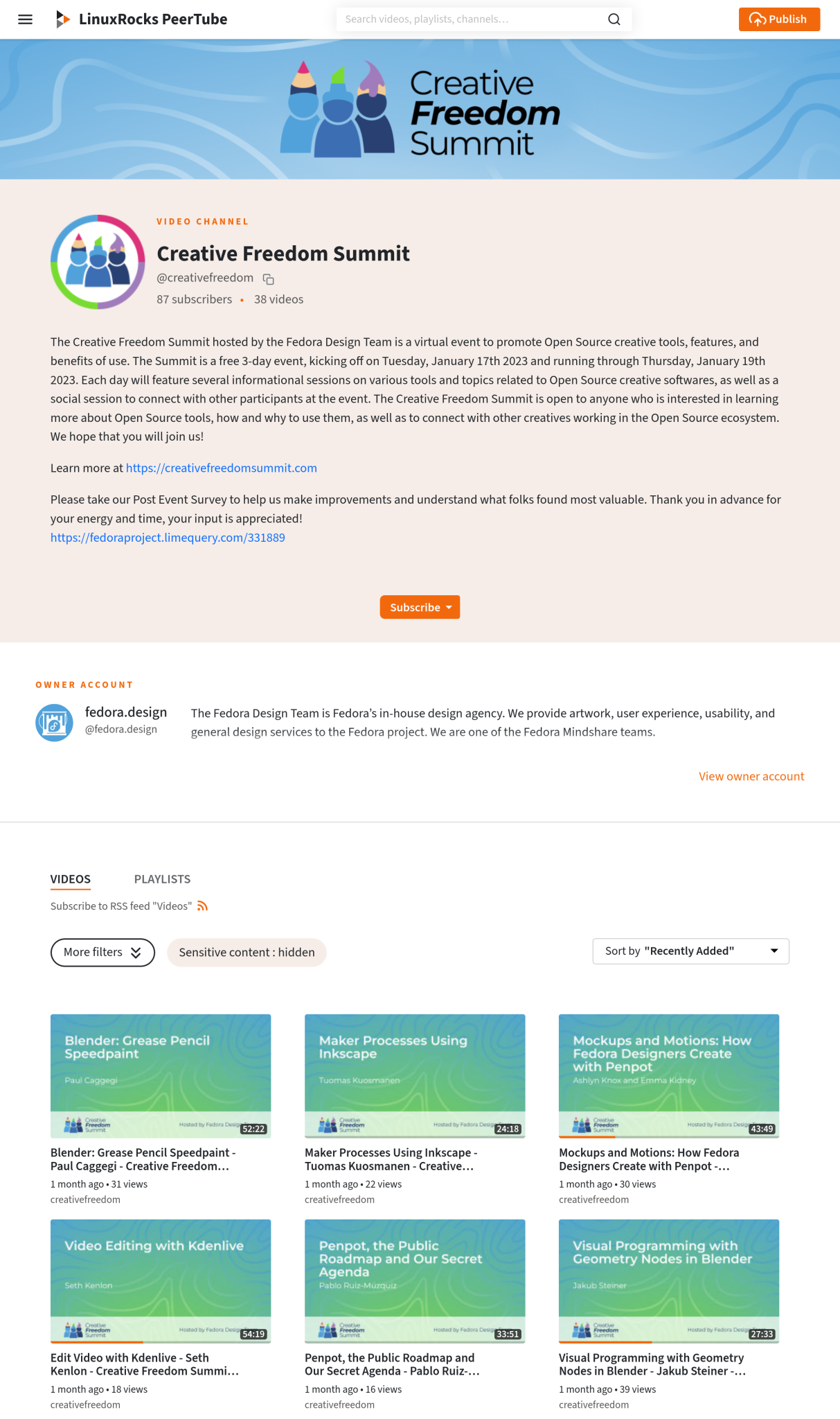
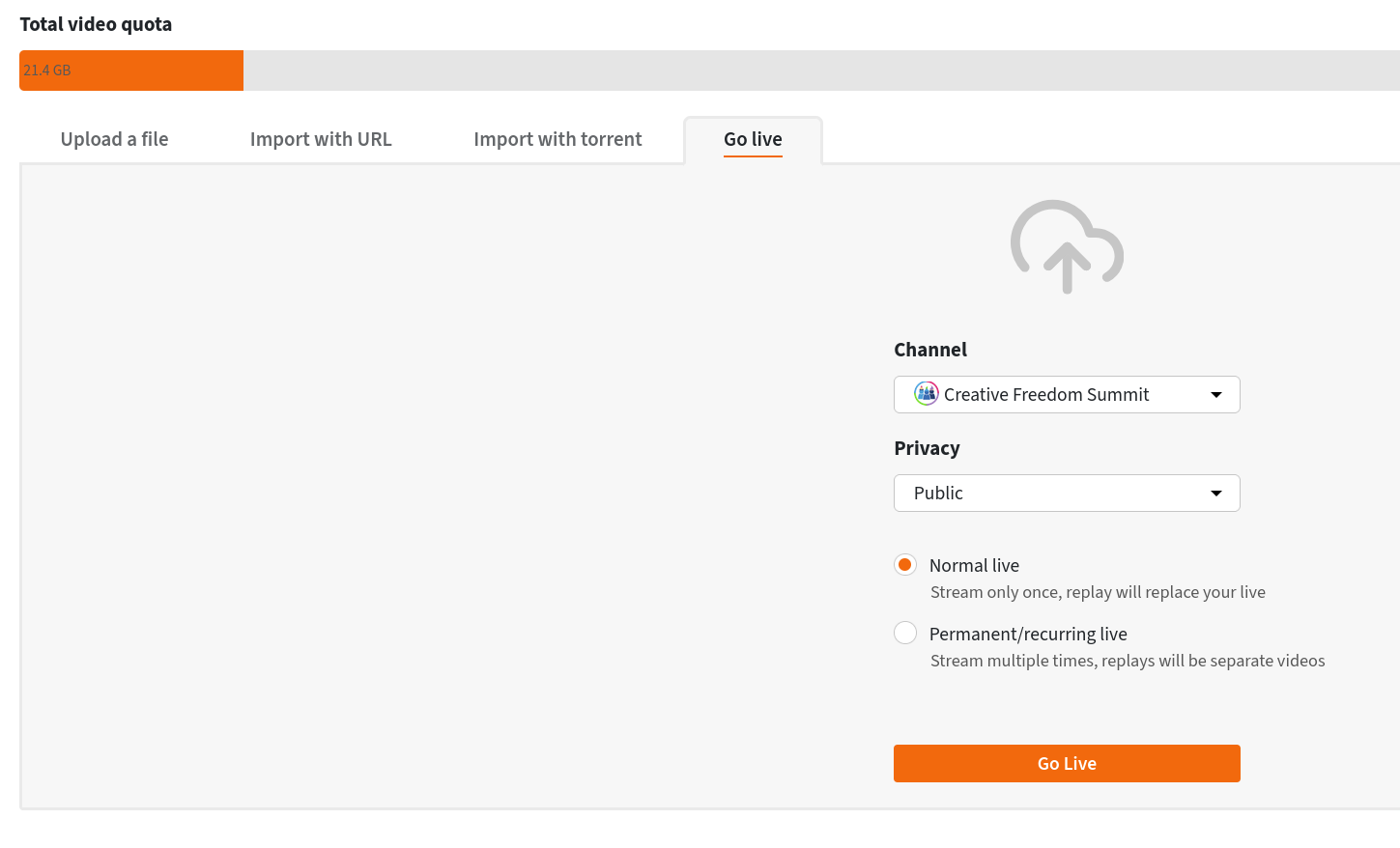
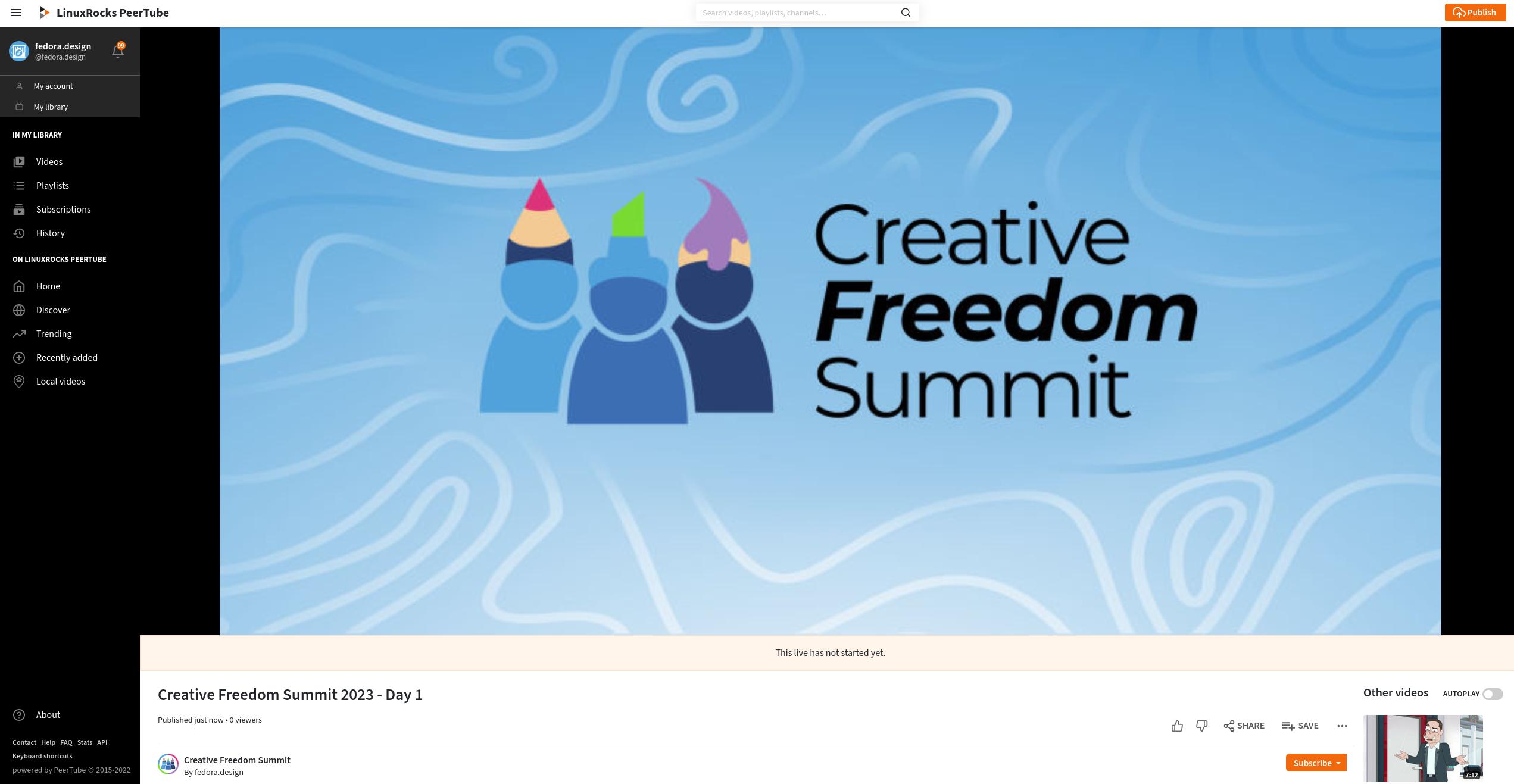
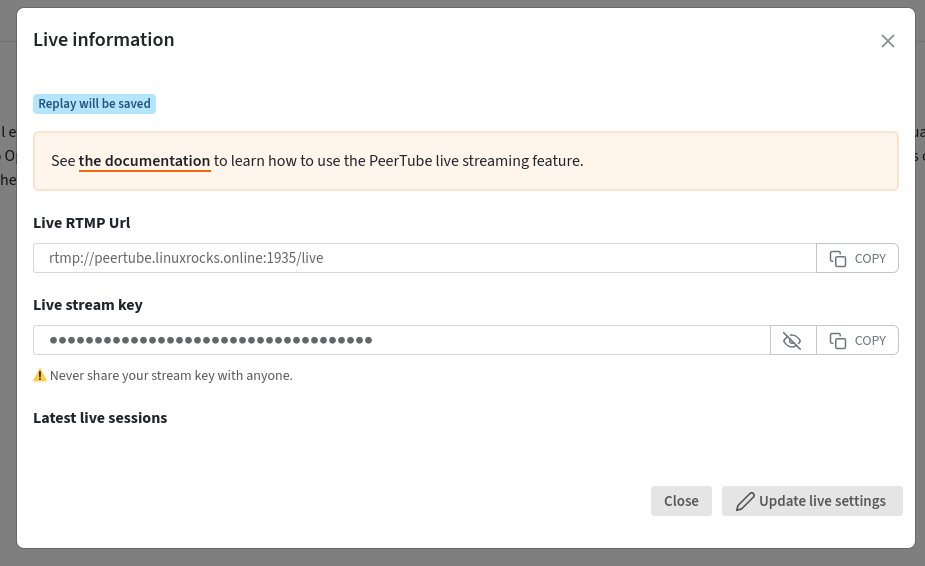
The technical infrastructure of the Creative Freedom Summit was divided into live components during the event and post-event archiving tools. For the live broadcast, the team utilized LinuxRocks PeerTube, a free and decentralized video platform integrated into the Fediverse, generously hosted by LinuxRocks.online.
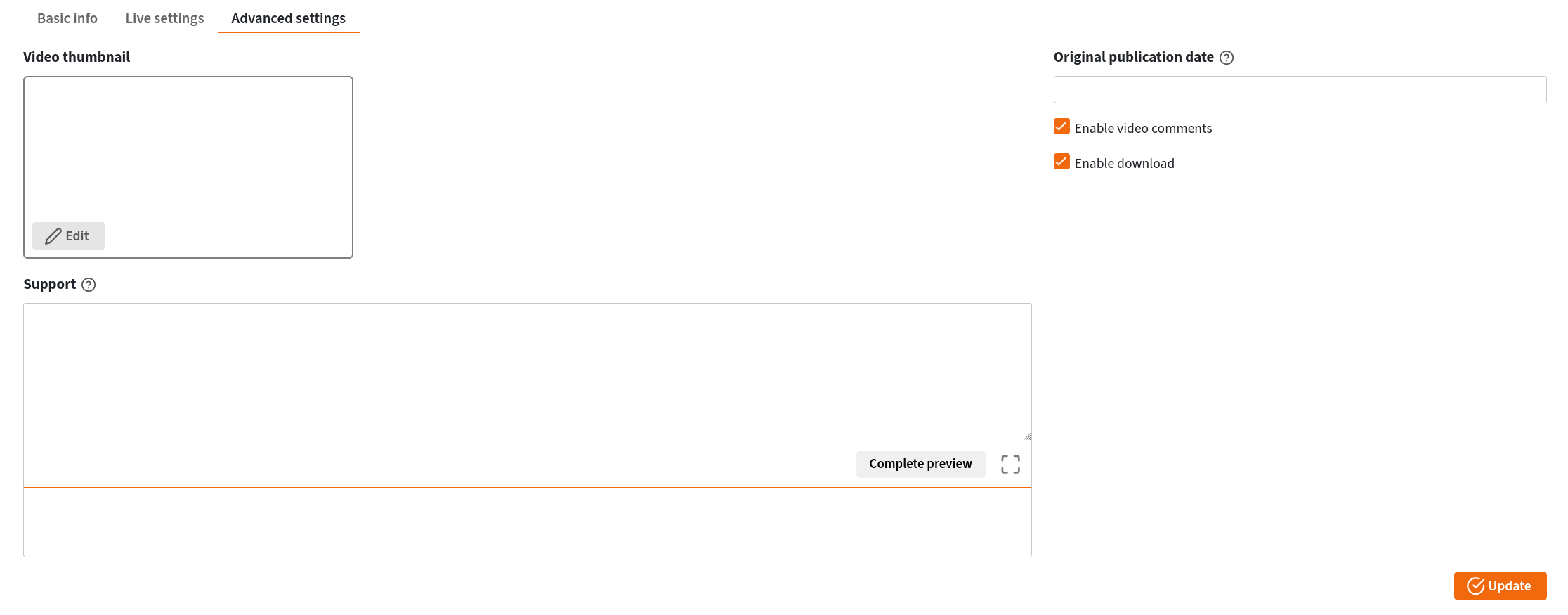
PeerTube offered a standout advantage that distinguishes it from many mainstream video platforms: automated, near-instant replay generation. Once a livestream concluded, the platform automatically published the recording directly to the event channel without requiring any manual intervention, file uploads, or coordination from the volunteer organizing team. Attendees in the chat room quickly identified this as a major benefit, as they could revisit sessions within minutes of a talk’s conclusion.
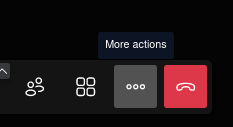
To manage the live stage where speakers presented their slides and video demos, organizers utilized Jitsi Meet, a free and open source video conferencing platform. By creating a custom Jitsi meeting room and distributing the URL exclusively to speakers and moderators, the team established a secure broadcasting environment. They enabled a waiting room lobby feature to ensure incoming speakers could prepare without interrupting ongoing sessions. To prevent moderation permissions from resetting unexpectedly when users dropped out, organizers maintained an active connection in the primary meeting room for the duration of the entire conference.
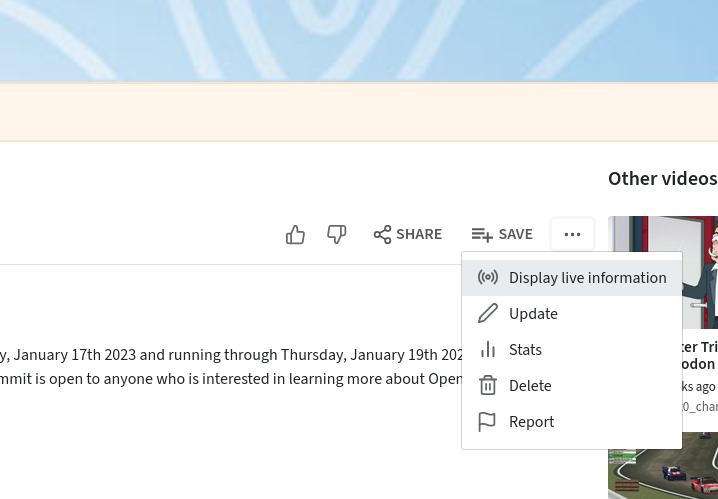
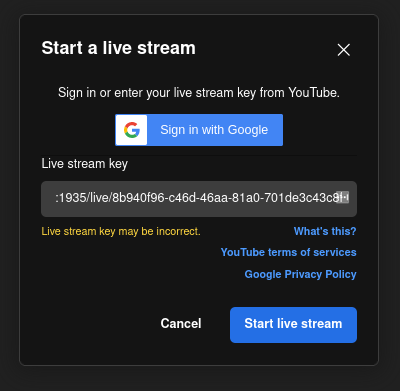
The Jitsi platform’s built-in livestreaming feature allowed hosts to pipe the video directly into the PeerTube channel via RTMP configuration keys. While this pipeline functioned smoothly, organizers quickly realized operational adjustments were necessary. During the first day of the conference, the live stream was left running continuously across multiple sessions, resulting in lengthy video files containing several distinct presentations. For subsequent days, organizers manually toggled the Jitsi stream on and off between talks, producing clean, individual recording files for each presentation.
Backstage Coordination and Centralized Engagement
Behind the scenes, organizers established a dedicated, invite-only chat room on Element, utilizing the Matrix protocol, to communicate with speakers prior to and during the event. This backstage channel proved invaluable for running audio-video checks, confirming presentation readiness, and managing schedule adjustments in real time, such as quickly reassigning speaking slots when emergencies arose.
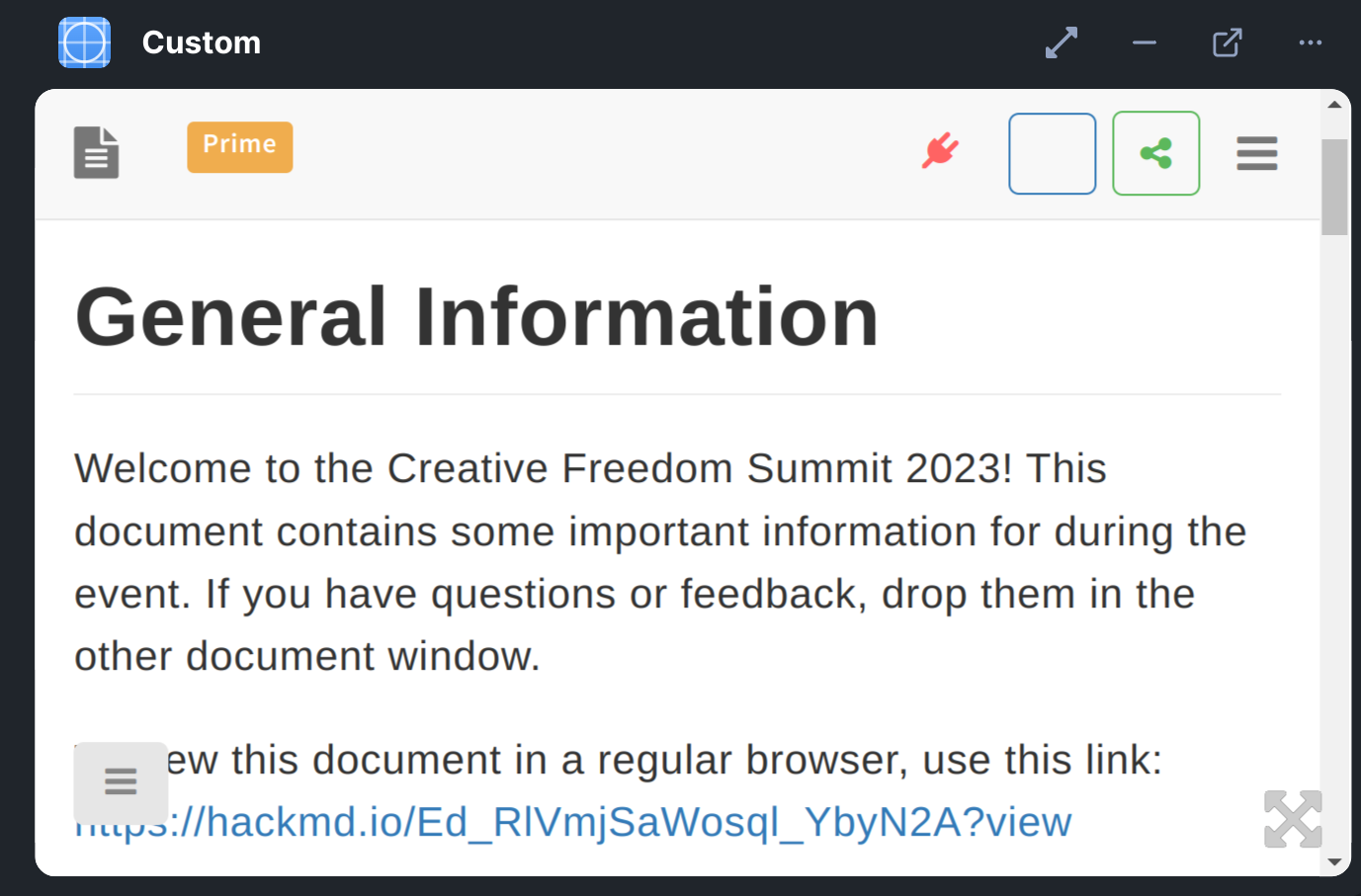
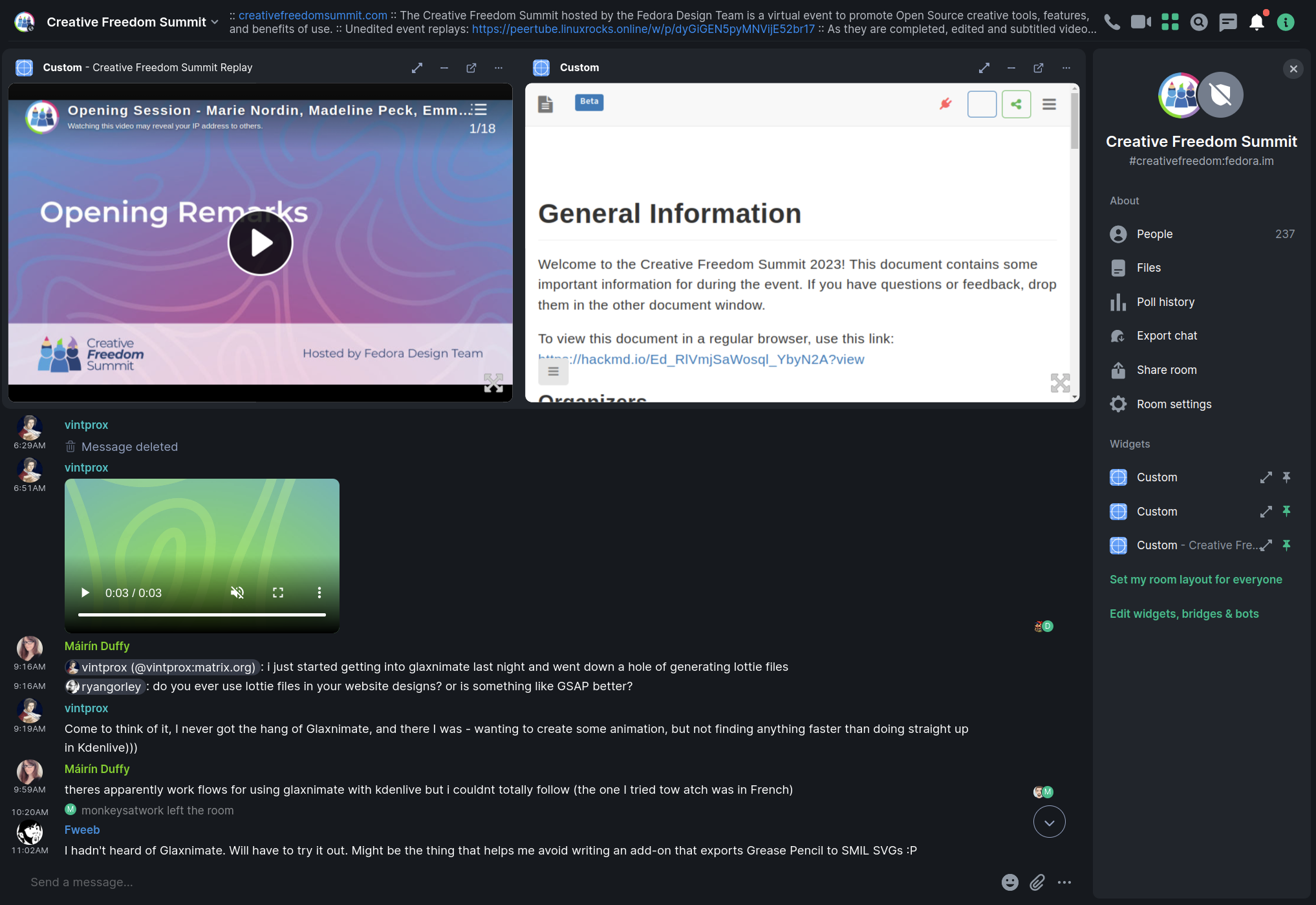
To create a centralized hub for attendees, the team leveraged the widget system within Matrix and Element, which allows external websites to be embedded directly into chat rooms. Organizers embedded the PeerTube livestream alongside an interactive document hosted on HackMD.io. This embedded document displayed daily schedules, important announcements, and dedicated sections for attendees to submit questions for the live Q&A sessions, which hosts read aloud to the speakers.
The conference website itself was developed by Ryan Gorley using WordPress, hosted on WPengine, and featured a clean, single-page layout with an embedded schedule from sched.org.
Post-Event Operations, Surveys, and Video Refinement
Following the conclusion of the summit, organizers gathered feedback by distributing surveys via LimeSurvey through the Element chat channels and PeerTube. The organizing team continued meeting regularly to review feedback and refine their approach for future events.
A significant post-event undertaking involved video cleanup and editing. Because some raw recordings contained multiple talks or split files, a dedicated group of volunteers from the conference community rallied to polish the recordings. Using GitLab to track tasks, organize FAQs, and assign custom labels based on video status, volunteers downloaded raw files from PeerTube, edited them to include title cards and intro music using the open source video editor Kdenlive, and uploaded the polished files to a shared repository.
Additionally, the team explored accessibility improvements for future events, noting that automated subtitle generation features within Kdenlive could significantly streamline the process of adding accurate captions to archived recordings. By documenting their workflows and sharing them publicly, the Fedora Design Team hopes to provide a reliable blueprint for other open source communities looking to orchestrate virtual events using entirely open infrastructure.