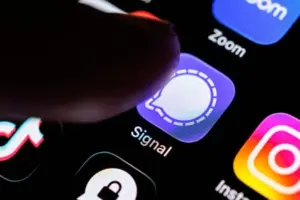










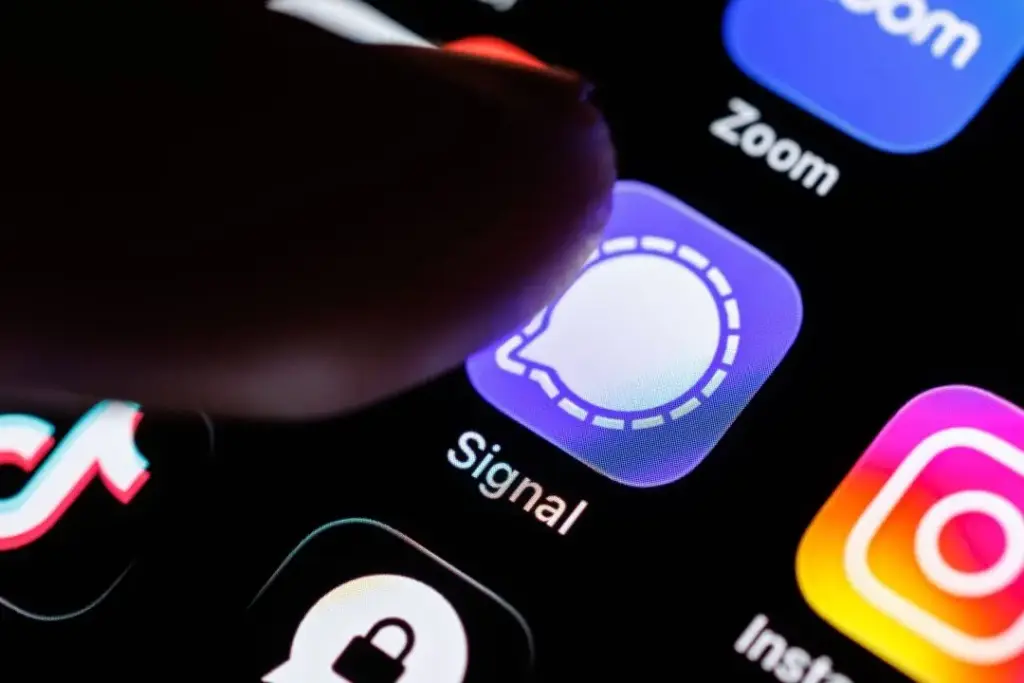
In a significant move to reinforce user privacy against the rising tide of automated data collection, the secure messaging app Signal announced on Friday that it is implementing stricter limitations on screenshot functionality across its mobile and desktop platforms. This policy shift represents a direct response to what Signal President Meredith Whittaker characterizes as an "existential threat" posed by operating systems that increasingly integrate agentic AI.
The update, which expands existing protections already present in the company’s Windows application, aims to prevent AI agents integrated into mobile and desktop operating systems from "scanning" and harvesting information directly from users’ screens. By restricting the ability to take screenshots, Signal is attempting to create a technological barrier that keeps private conversations within the encrypted confines of the app, preventing them from being ingested by the underlying operating system’s AI processors.
The Privacy Risks of Agentic AI
The core of the issue, according to Whittaker, lies in the evolution of modern operating systems. As tech giants integrate advanced AI agents into platforms like Windows, Android, and macOS/iOS, these systems gain new, sweeping permissions to "see" and interpret the user interface. While these features are marketed as tools to enhance productivity and streamline user experiences, Signal argues they fundamentally undermine the privacy model that the messaging service is built upon.

In a detailed post outlining the rationale behind the update, Whittaker explained that by granting AI agents the capability to scan the information displayed on a user’s screen, these operating systems are effectively creating a new vector for data leakage. When an AI agent is empowered to observe the screen, it can capture, store, and transmit sensitive conversation data to local databases or remote servers controlled by the OS provider.
"Now, in service of AI agentic capabilities, your sensitive data is being captured, stored, and made accessible to whatever local database or remote server an OS-level AI agent is using at that moment," Whittaker wrote. "All of this is outside of Signal’s control once the data has been captured, and it imperils the privacy of all the participants in a conversation."
This creates a paradox for privacy-conscious users. Even if a message is encrypted with the Signal Protocol—which ensures that only the sender and the recipient can read the contents of a message—the security is effectively bypassed if the operating system itself is taking "snapshots" of the decrypted text as it appears on the display. Once that data is in the hands of the operating system’s AI layer, it is subject to the data retention and privacy policies of the OS vendor, which may be vastly different from Signal’s strict "no-data" philosophy.
Expanding Protections Across Platforms
Signal has long been a proponent of limiting screen capture as a privacy best practice. For years, the app has offered features to prevent screenshots on Android, and more recently, it implemented default screenshot blocking on its Windows desktop client. The move announced on Friday represents an intensification of this strategy, extending these restrictions to the broader ecosystem of iOS and Android devices, as well as reinforcing the desktop protections.
The decision to limit screenshots is a deliberate attempt to force a "privacy-first" interaction model. By disabling the ability to easily capture the screen, Signal is attempting to prevent the incidental or malicious collection of data by background processes. In an era where AI models are constantly being trained on vast datasets of user information, these "scraps" of data—often containing personal identifiers, sensitive business discussions, or private thoughts—are increasingly valuable to developers of large language models and other AI systems.
However, the implementation of these restrictions is not absolute. Signal is providing users with the ability to manually override these settings, acknowledging that some users may have legitimate needs to take screenshots of their own conversations. Yet, Whittaker was clear about the trade-offs involved in this choice. She emphasized that disabling these protections would "break our privacy guarantees," signaling to the user base that any action taken to lower these barriers is a deliberate step away from the secure environment Signal is striving to maintain.

An Incomplete Solution for a Growing Problem
Despite the rollout of these new restrictions, Signal is being transparent about the limitations of its approach. Whittaker candidly admitted that this is an "incomplete" solution. While blocking screenshots prevents one of the most straightforward methods for AI agents to "read" a screen, it does not address the myriad of other ways in which sophisticated, deeply integrated AI systems might gain access to application data.
Modern operating systems are highly complex, and as they evolve to become more "intelligent," they gain deeper hooks into the software running on top of them. Potential vulnerabilities could include accessibility services, screen-recording permissions that might be exploited by malicious or overreaching software, or even direct inter-process communication that allows one app to query the state of another.
"This doesn’t address other more sneaky ways AI agents could potentially access application data," Whittaker noted. The comment highlights the asymmetrical nature of the battle between privacy-focused developers and the owners of the underlying hardware and software platforms. When the platform itself is designed to facilitate AI surveillance, the application developer is often fighting an uphill battle, attempting to patch holes in a foundation that may be fundamentally porous.
This latest update also underscores the growing tension between the "platformization" of AI and the fundamental right to private, secure communication. As companies like Microsoft, Google, and Apple race to embed AI agents into every corner of their ecosystems, privacy advocates and developers are increasingly forced to choose between functionality and security. For Signal, which has built its reputation on being the "gold standard" for private communication, this is not just a feature update; it is a defensive maneuver in a much larger struggle to protect the integrity of human communication.
The Broader Implications for Tech Privacy
The move to limit screenshots is consistent with Signal’s long-standing strategy of minimizing the surface area for potential data exposure. By limiting what can be extracted from the app, the organization hopes to prevent the "data leakage" that occurs when information leaves the secure, encrypted environment of the Signal application.
The debate surrounding these changes touches on a wider conversation about the role of operating systems in the age of AI. As these systems move from being passive conduits for software to being active participants in data processing and analysis, the traditional boundaries between an app and the system it runs on are blurring. For users, this means that the "private" apps they choose to use are no longer solely responsible for their privacy; the OS vendor now plays a critical, and often opaque, role in how that data is handled.
For many, this highlights the necessity of "hardened" communication tools. While mainstream messaging apps are increasingly moving toward integrating their own AI assistants, Signal has taken a diametrically opposed path, focusing instead on shielding its users from the AI-driven data hunger of the platforms they use. By restricting functionality like screen capturing, Signal is signaling to its users that their privacy is a proactive endeavor, requiring both technological safeguards and an awareness of the environment in which they are communicating.
As the industry moves forward, it is likely that other privacy-oriented services will face similar pressures to adopt restrictive measures. Whether through technical blocks or updated policies, the fight against "invisible" data collection by AI agents is shaping up to be one of the defining challenges of the next few years. For now, Signal’s latest update serves as both a practical security patch and a warning to its users about the changing nature of the digital world they inhabit.
The decision to limit screenshots, while potentially frustrating for some, is part of a broader, ongoing effort to maintain the integrity of private messaging in an era of mass surveillance and automated intelligence. As Signal continues to refine its approach, it remains to be seen how operating system developers will respond, and whether the battle for control over user data will necessitate further, more extreme measures to ensure that a private conversation remains, truly, private.