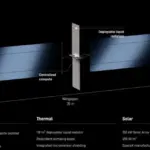









SpaceX has secured crucial initial clearance from the Federal Communications Commission (FCC) to construct and deploy a massive constellation of up to 1 million Starmind satellites. The ambitious initiative is designed to bypass the mounting terrestrial bottlenecks—such as limited land space, immense electricity consumption, and complex thermal cooling requirements—that increasingly constrain modern artificial intelligence data centers built on Earth.
Despite facing sharp pushback and formal petitions to deny the project from industry competitors and scientific organizations, including Amazon Leo, Viasat, and the American Astronomical Society, the FCC ultimately greenlit the monumental endeavor. The regulatory victory marks a definitive step forward in SpaceX’s broader strategy to establish high-performance computing infrastructure directly in Earth’s orbit, capitalizing on unhindered solar power and the cold vacuum of space.
Under the terms of the FCC order, the Starmind constellation will be deployed into distinct orbital shells. Each shell will span 50 kilometers, operating across altitudes ranging from 500 kilometers (310.68 miles) up to 1,002 kilometers (622.61 miles). The regulatory body stated that it thoroughly reviewed and approved SpaceX’s orbital debris mitigation plan for the Starmind network, concluding that it fully complies with federal standards. Furthermore, SpaceX has formally committed to specialized satellite designs and operational protocols to ensure that all Starmind hardware fully disintegrates during atmospheric reentry at the end of its operational lifecycle.


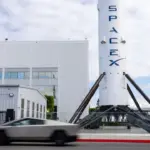
With the rapid development and maturation of Starship—SpaceX’s fully reusable heavy-lift launch system—industry observers note the company should face minimal logistical difficulties in meeting its first mandated FCC deployment deadlines leading up to 2033. Elon Musk previously predicted that actual deployment of SpaceX’s orbital AI data centers will commence in the fourth quarter of 2027, with the network scaling up to reach "significant scale" by 2028.
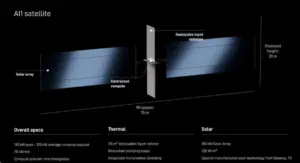
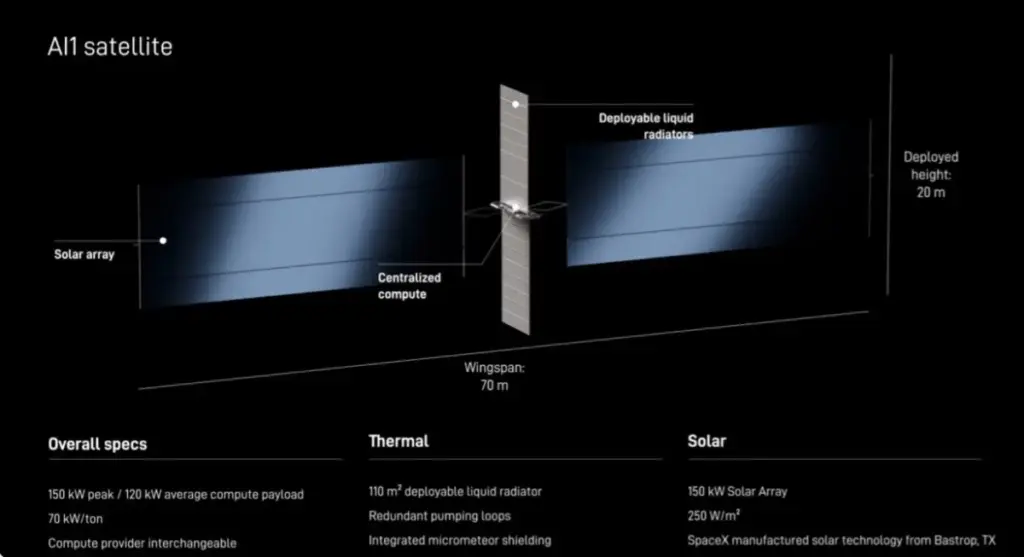
The technical architecture behind the initiative is already taking shape. SpaceX’s first-generation Starmind satellites are set to be built upon an optimized Nvidia Vera Rubin NVL 72 system. In addition to its deep partnership with Nvidia, SpaceX plans to develop a comprehensive reference design tailored for tensor processing units (TPUs)—specialized application-specific integrated circuits originally designed by Google to accelerate heavy AI workloads and machine learning training processes.
To maintain regulatory compliance, SpaceX is subject to rigorous ongoing oversight. The company is required to submit detailed semi-annual reports to the FCC. These mandatory updates must include comprehensive logs of "conjunction events"—instances where orbiting objects experience close approaches—alongside precise figures detailing how many satellites were actively removed or screened from further deployment to prevent potential collisions. SpaceX must also report the exact number of operational satellites successfully launched into orbit, as well as the count of spacecraft actively communicating with Earth-based ground stations utilizing authorized Ka-band frequencies.
While the FCC has officially cleared SpaceX to move forward, the venture has not been without controversy. Rivals such as Amazon have openly expressed skepticism regarding the commercial and technical viability of orbital data centers, viewing the grand vision with considerable doubt.
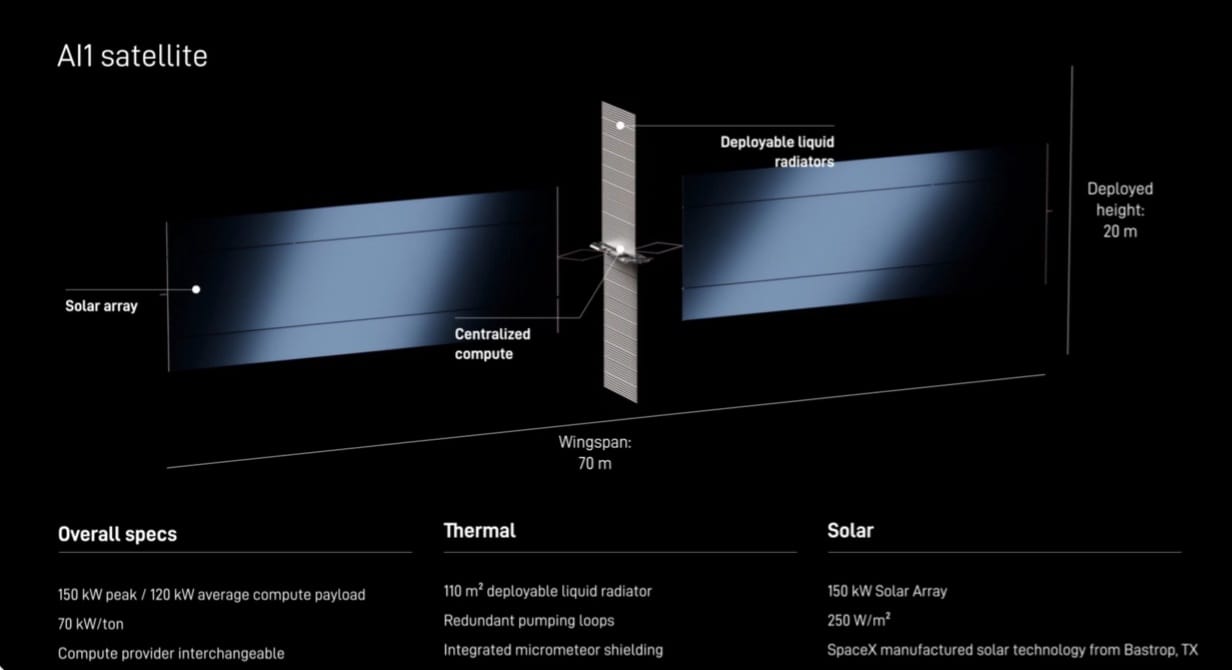
Proponents of the technology, however, frame the shift toward orbital computing as a necessary evolutionary leap for human civilization. Musk has frequently championed the concept of harnessing orbital, sun-powered computing networks to elevate human society on the Kardashev Scale. Introduced in the 1960s by the late Soviet astronomer Nikolai Kardashev, the theoretical framework categorizes civilizations based on their energy consumption capabilities. A Type I civilization utilizes all available energy on its home planet, a Type II harnesses the total energy output of its host star, and a Type III commands the energy output of an entire galaxy. Current scientific estimates place Earth as a Type 0 civilization—progressing gradually toward Type 1, but currently hovering at approximately 0.73. By tapping directly into uninterrupted solar power in space, proponents argue that orbital data centers could provide the massive energy scales required to accelerate humanity’s technological maturity.
SpaceX is not alone in exploring the final frontier for heavy computing infrastructure. The FCC noted that it is actively reviewing a growing slate of alternative orbital data center proposals submitted by other industry players. Among these competitors are Orbital Inc., Google with its Project Starcatcher initiative, the Nvidia-backed Starcloud venture, and Jeff Bezos’ Blue Origin, which has steadily been carving out its own footprint in the emerging orbital data center space race.