








Two years after the initial introduction of the Model Context Protocol (MCP), Anthropic is significantly expanding the standard’s reach by launching "Skills over MCP" into public beta. This move marks a pivotal evolution in how AI agents interact with external tools and data, moving beyond simple connectivity toward a model where standardized, reusable, and self-updating workflow instructions are baked directly into the infrastructure.
The beta is currently enabled by default for users on Claude Pro, Max, and Ultra plans, signaling a clear push to integrate these advanced capabilities into the core user experience. For teams utilizing enterprise-level configurations, the feature requires administrator activation, while support for full Enterprise plans is slated for release in the near future. This development represents a shift toward more autonomous, context-aware agents that do not require complex, separate installations to function effectively within a professional environment.
Bridging Tools and Workflow Logic
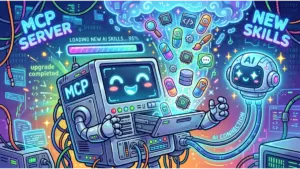
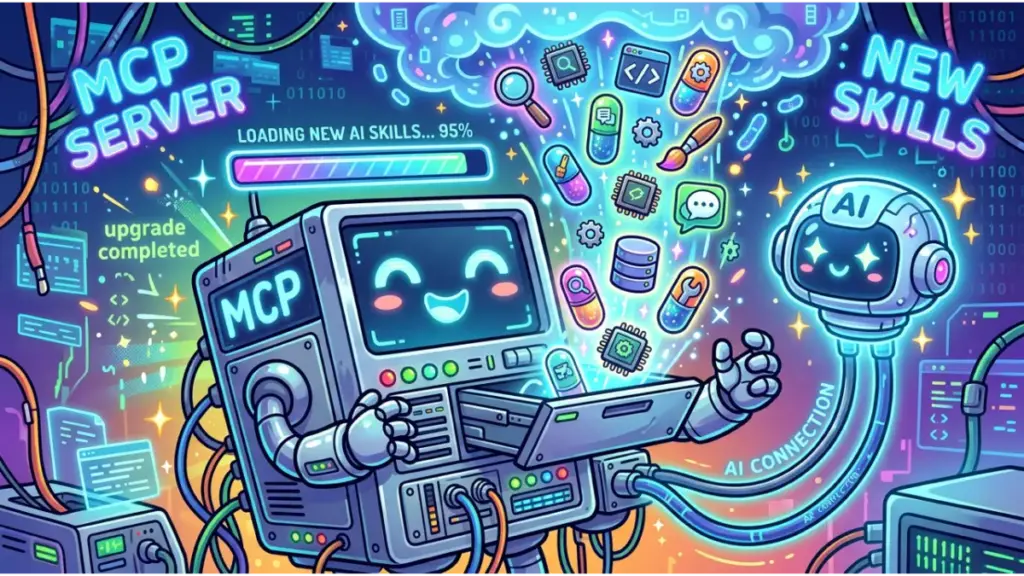
At its heart, the Model Context Protocol was designed to solve the "last mile" problem of AI integration—the difficulty of getting LLMs to talk to the vast array of private and public databases, tools, and services developers use daily. Previously, an MCP server functioned primarily as a bridge, giving an AI agent the ability to execute specific tools or read from specific data sources. With the introduction of the Skills over MCP extension, those same servers can now transmit standardized, high-level workflow instructions alongside the raw tool definitions.

The practical implication for developers is profound: instead of maintaining a set of tools in one repository and the associated documentation, best practices, or "playbooks" in a separate wiki or internal guide, these elements are now unified. A skill is essentially a packaged set of instructions—stored as a directory containing a SKILL.md file and any necessary supporting files—that provides an agent with the institutional knowledge required to perform a task correctly. Because these skills reside on the MCP server, they are inherently version-controlled and synchronized with the tools they govern. When a DevOps engineer or a software developer updates a server to include a new API endpoint, they can simultaneously update the instructions for how the AI should interact with it. Users, consequently, always have access to the latest guidance without needing to manually refresh or reinstall local configurations.
This architecture builds directly upon the Agent Skills format that Anthropic opened as a standard in December 2025. By embedding these skills into the existing MCP framework, Anthropic is fostering an ecosystem where agents can "discover" their capabilities upon connection, loading the full, detailed instructions only when the specific task at hand requires them.
Expanding the MCP Ecosystem
The launch of Skills over MCP coincides with the general availability of two other critical components of the MCP specification for Pro, Max, and Ultra subscribers. The first, known as "Tasks," is an official MCP extension designed to solve the problem of long-running operations. By allowing a server to manage and execute long-duration jobs independently, it ensures that Claude remains responsive and available for other queries, preventing the user interface from locking up during heavy processing.
The second feature, "Elicitation," addresses the nuance of human-AI collaboration. It allows an MCP server to proactively ask the user for specific information or clarification while processing a request. This creates a more fluid, conversational loop that mimics how human colleagues interact, where a request for data is met with a clarifying question rather than a failure or a hallucination.
Looking ahead, Anthropic has confirmed that "File Uploads" is the next feature in the pipeline. Currently, users are often constrained by the limits of an AI’s context window when dealing with large datasets or complex documentation. The upcoming extension will enable Claude to send files directly to servers for processing, bypassing the context window entirely. This is expected to significantly improve the efficiency of agents tasked with analyzing large, private, or proprietary documents.
The broader adoption of these standards underscores the industry’s desire for interoperability. Since Anthropic released MCP as an open-source project in November 2024, it has garnered substantial backing from industry giants including OpenAI and Microsoft. The project’s formal integration into the Linux Foundation’s Agentic AI Foundation (AAIF) in late 2025 further cemented its status as a foundational standard for the next generation of AI-driven automation.
Real-World Applications and Industry Impact
The versatility of the Skills over MCP framework is already being demonstrated through several high-profile integrations. Anthropic has highlighted that a Shopify skill is being developed to assist merchants in designing and updating their online stores, effectively guiding the AI through the entire lifecycle of a site modification. Similarly, HubSpot is leveraging skills to streamline the onboarding process for new customers, allowing the AI to handle initial configuration tasks automatically. Atlassian is also working on integrations that draw upon a company’s internal context to analyze project workflows and surface actionable insights. Furthermore, a forthcoming Carta skill is expected to assist users in drafting and issuing equity, automating a traditionally complex and documentation-heavy administrative process.
For infrastructure and DevOps teams, the benefit is primarily one of operational consistency. As noted by Filipe Motta, a senior DevOps engineer, the ability to co-locate runbooks with the tools they govern is a significant win. "The server that exposes your Terraform or Kubernetes tools can also carry the runbook for using them well," Motta explained. "When it changes, there is nothing separate to update on each laptop." This reduction in configuration drift is expected to be a major selling point for enterprise environments where maintaining uniform standards is often a significant challenge.
Balancing Convenience with Security and Control
While the promise of "zero-setup" automation is compelling, it has also sparked a necessary conversation regarding security. Because Skills over MCP allows a server to dictate how an agent operates, there is a clear risk of prompt injection or the accidental execution of unintended commands. Industry developers, such as Jeff Allen, have noted that while the ease of use is a "real product win," there is an ongoing need for strict control. "I still care about control, because auto-loading the wrong stuff into context gets expensive fast," Allen observed.
To address these concerns, the extension specification includes explicit security guardrails. For instance, any skill provided by a server is treated as a potential security risk, and the system mandates explicit user approval before a skill can initiate any form of local code execution. Furthermore, if a client detects that a previously approved skill has been modified or updated on the server, the system is designed to trigger a re-authorization request, ensuring that the user is always aware of the instructions the AI is following.
Client-side controls are also evolving to accommodate these features. Claude Code, for example, employs a classifier in its default "auto" mode that determines whether a skill can be loaded without prompting the user, while also allowing users to set granular permission rules to block specific servers or require manual approval for every skill load. Similar logic is being applied across the ecosystem; Microsoft has already implemented support for these skills in VS Code 1.147, providing its own set of setup and approval controls to ensure that developers working in integrated environments maintain oversight.
As Guillaume Lebedel, co-founder and CTO at StackOne, noted, this represents a fundamental change in the way security is perceived in the age of agentic AI. "Approving an MCP server mostly meant approving what it can do," Lebedel said. "Now it also means approving what it tells the agent to do."
As the public beta continues, the focus for both Anthropic and the broader developer community will remain on refining these security protocols and expanding the capabilities of the SDKs. With the formalization of these standards, the industry appears to be moving toward a more mature, reliable, and standardized future for AI agents—one where "skills" are as portable and interoperable as the tools they are designed to operate.