







As children, we spent countless hours in a state of perpetual experimentation—tinkering with blocks, deconstructing toys, and observing the fundamental mechanics of movement and structure. There is a profound, almost innate wisdom in that childhood play, a process that inherently sharpens our problem-solving abilities and refines our capacity to communicate complex ideas. For many in the professional software industry, the modern era of development is beginning to mirror that sense of unbridled exploration. With code shipping faster than ever, developers are finding themselves with more breathing room to pursue projects purely for the sake of curiosity and fun.
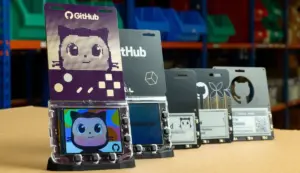
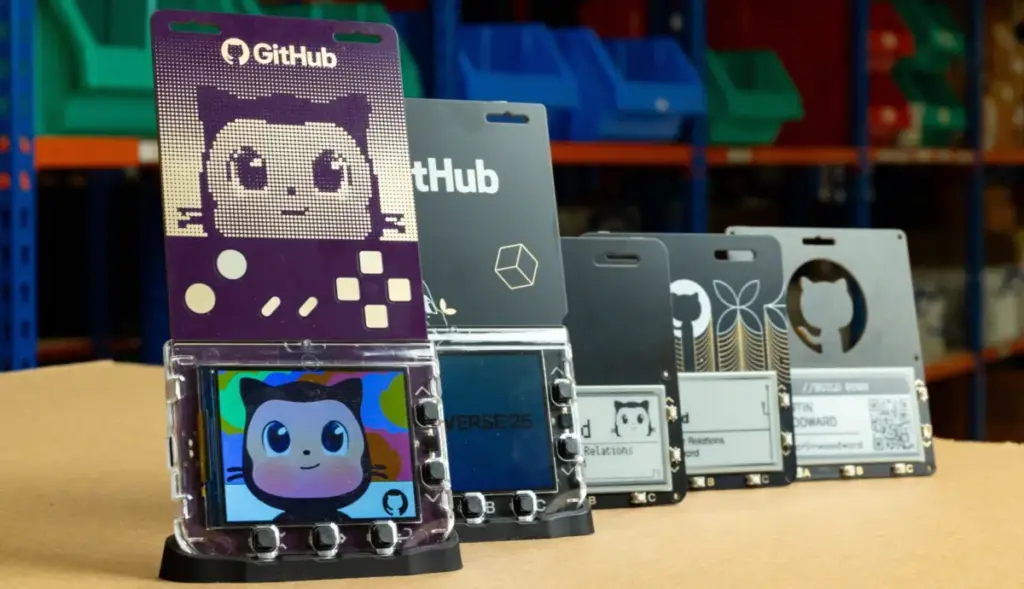
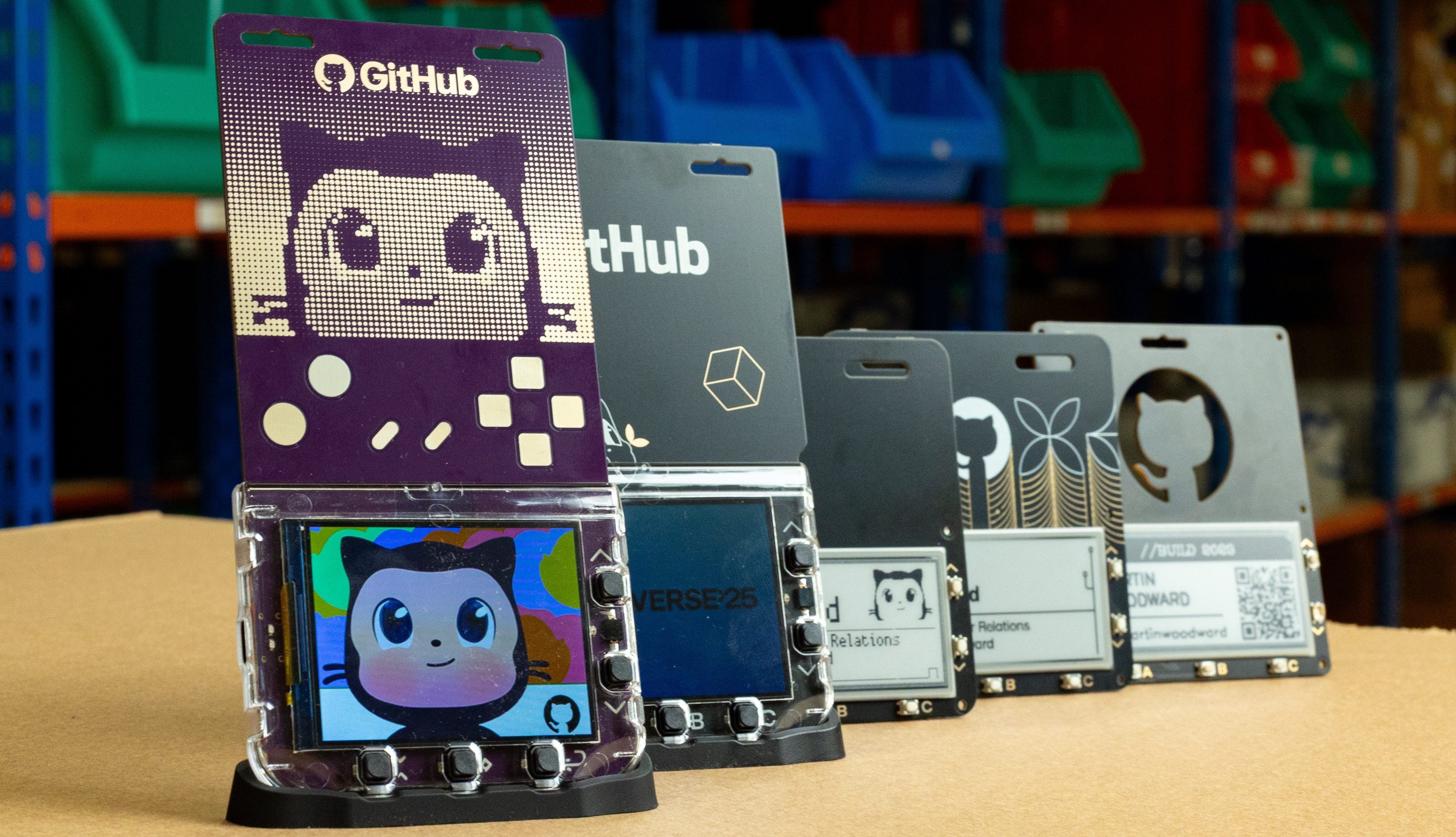
This shift toward experimental development is perhaps best exemplified by the evolution of the GitHub Universe conference badge. Over the past four years, what began as a functional, static e-ink display for attendee names and job titles has undergone a remarkable metamorphosis. Under the guidance of Martin Woodward, VP of Developer Relations, the badge has evolved into a sophisticated, hackable device equipped with a high-resolution color screen, a rechargeable battery, integrated accelerometer sensors, and touch-sensitive gaming controls.
The community response to this hardware has been nothing short of extraordinary. Attendees have treated the badge not merely as an access credential, but as a blank canvas for software ingenuity. From custom-built applications to retro-gaming ports, the breadth of creativity displayed by the developer community proves that when the barrier to entry for hardware interaction is lowered, innovation flourishes. Social media has been flooded with examples of developers porting classic games or creating novel utility apps for the device, illustrating a vibrant ecosystem of play that exists entirely outside the pressures of corporate deadlines.

Coding Needs Room for Play
The current state of the industry suggests that this culture of play is becoming more important than ever. According to the 2026 Octoverse report, the landscape of software development is undergoing a seismic shift in velocity: by September of this year, 40% of all pull requests were initiated by AI agents. This figure represents a significant leap from the 17% observed in March, signaling that the integration of AI into the developer workflow is not just a trend, but a fundamental change in how software is architected and deployed.
For many professionals, this rapid pace of change can induce a sense of professional vertigo. We have spent decades honing specific skills, only to see the tools and methodologies of our craft evolve at an exponential rate. However, there is a compelling counter-argument to this anxiety: these very tools offer unprecedented opportunities for creativity. AI-driven development allows programmers to bridge the gap between an abstract idea and a functional prototype faster than ever before. We no longer need to spend weeks calculating the minutiae of a project before we see a result; instead, we can engage in a high-speed feedback loop where the learning happens during the act of building.
Martin Woodward has frequently emphasized this philosophy, suggesting that developers should give themselves permission to view play as a form of rigorous learning. The key, he notes, is effective time-boxing. While the temptation to endlessly iterate and perfect a hobby project is strong, the true value lies in the cycle of building, shipping, and sharing. By setting clear boundaries on how long one spends on a side project, developers can avoid the trap of "analysis paralysis" and instead embrace the iterative nature of modern creation.
You Don’t Need a Big Idea to Start
One of the most significant shifts in the developer mindset is the move away from the "universal" application. Previously, the industry default was to build software with a massive, generalized audience in mind. Today, the rise of specialized AI tooling has made it feasible to build for specific, personal use cases. A project does not need to scale to millions of users to be considered "feature-complete"; it simply needs to solve a problem for its creator.
This was highlighted during the GitHub Universe closing keynote, where Woodward demonstrated his own journey into machine learning. Rather than attempting to tackle a massive, complex dataset, he focused on a singular, tangible goal: teaching a badge to recognize his own physical activity. By using Copilot to process data from the badge’s accelerometer, he was able to train a simple machine-learning model directly in his browser and deploy it to the device. The result was a wearable that could accurately distinguish between walking, standing still, and fidgeting.
This experiment serves as a powerful reminder that the threshold for exploring complex domains like machine learning or embedded systems has plummeted. For the average developer, these fields were once considered daunting and inaccessible. Now, with the aid of modern tooling, the barrier to entry is low enough that an afternoon of tinkering with a conference badge or a smart home device can yield a genuine, working proof-of-concept.
AI with Oversight
While the capabilities of AI are impressive, it is vital to remember that the human element remains the most critical component of the development story. The integration of AI does not replace the developer; rather, it changes their role to that of an editor, curator, and architect. As we scale our output using AI, we must maintain a high degree of human judgment.

The "tells" of AI-generated work—the repetitive prose styles, the stylistic quirks in imagery, or the sudden inclusion of comments in code that has historically been undocumented—serve as reminders that automation requires oversight. The responsibility of the developer is to inspect, debug, and test the output of these agents. By treating AI as a collaborator rather than a replacement, we ensure that the final product remains authentic and tailored to the specific needs of the project. A commitment to this feedback loop is what separates a successful developer from someone who merely generates code without understanding the underlying logic.
Be Kind, Keep Maintainers in Mind
The democratization of coding through AI also brings with it a responsibility toward the broader open-source community. Sharing experiments is a hallmark of developer culture, but contributing to existing, long-standing projects requires a different level of consideration. The industry has seen a marked increase in the volume of AI-generated contributions, which, while well-intentioned, often place a significant burden on project maintainers who are tasked with reviewing and integrating these changes.
Open source thrives on the freedom to inspect, remix, and share. However, as Woodward pointed out, this does not grant a license to impose one’s will on others. Before pushing changes to a primary repository, it is essential to ensure that the contribution is genuinely additive and respects the existing standards and workflows of the project. Forking a repository remains one of the best ways to explore and iterate on personal ideas without disrupting the efforts of those who manage the main codebase. By practicing patience and restraint, we ensure that the open-source ecosystem remains a collaborative and enjoyable space for everyone involved.
Now It’s Your Turn
The spirit of innovation that fueled the development of the GitHub Universe badge is something that is now available to every developer. The question that has followed the badge throughout its development cycle—"But can it run Doom?"—has been answered with a definitive "yes." For those who wish to explore the possibilities of the hardware, a virtual version of the badge is available for experimentation, allowing developers to test their own code in a sandbox environment.
For those eager to get their hands on the hardware, additional units of the hackable GitHub Universe badge are available for purchase. As the industry continues to move toward a future where AI handles the heavy lifting of routine coding, the time reclaimed by these tools is best spent on the things that brought us to this field in the first place: the joy of making, the thrill of solving, and the continuous pursuit of knowledge. Whether it is a pedometer, a game, or a custom tool, the only requirement for the next big project is the curiosity to start.