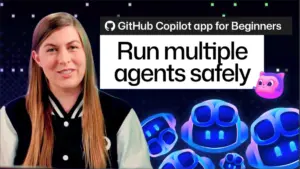








For software developers integrating artificial intelligence into their daily workflows, the promise of automation has always been balanced by the necessity of oversight. Historically, the process of verifying AI-generated code has been a fragmented experience, often requiring developers to switch constantly between their integrated development environment (IDE), terminal windows, and web browsers. This "tab-hopping" not only breaks concentration but can also lead to fragmented oversight, making it harder to track how a specific change ripples through a codebase. GitHub is now addressing this friction directly within the GitHub Copilot app, introducing a unified interface that allows developers to review code diffs, execute terminal commands, and preview web applications all from a single, centralized location.
The introduction of these built-in panels marks a significant shift in how developers interact with AI agents. By keeping these essential tasks side-by-side, GitHub aims to simplify the verification process, ensuring that checking an agent’s work is a seamless extension of the coding process rather than an interruption to it. This evolution in the Copilot app ecosystem is designed to foster a more cohesive development environment, effectively closing the loop on the AI-assisted coding cycle without requiring the developer to abandon their workspace.
Navigating Code Changes with the Diff Panel
At the heart of the verification process is the ability to understand exactly what an AI agent has proposed. The GitHub Copilot app now features an integrated diff panel, which provides a comprehensive before-and-after comparison of the code. This visual representation is crucial for maintaining transparency in AI-assisted development. By highlighting additions in green and deletions in red, the interface allows developers to scrutinize changes at a granular level.
This level of clarity is fundamental to the concept of human-in-the-loop development. Because the diff panel provides such explicit feedback, it empowers developers to exercise complete authority over their codebase. Rather than simply accepting AI suggestions at face value, developers can engage with the output, leave specific comments, request further modifications, or reject changes entirely. The goal of this tool is not to automate away the developer’s decision-making power, but to provide the necessary insights to ensure those decisions are informed and precise. This puts the developer firmly in the driver’s seat, ensuring that every line of code that enters the production environment has been vetted and approved.
Bridging the Gap Between Code and Execution
While reading code is a necessary first step, it is rarely sufficient for verifying functionality. To bridge the gap between static code review and active testing, the GitHub Copilot app has incorporated a dedicated terminal panel. This feature allows developers to run commands directly within the session, mirroring the functionality of a standalone terminal without the need to switch applications.
For many developers, the prospect of managing terminal environments can be a source of anxiety, particularly when working with complex projects. However, the Copilot app simplifies this by allowing users to run a project’s native commands directly. Whether it is launching a development server, running a test suite, or executing custom scripts, the terminal panel provides a direct conduit for verifying that the AI’s suggestions behave as intended in a live environment. The interface supports multiple concurrent terminal windows, providing the flexibility to switch between different processes, monitor output in real-time, and manage the project’s runtime environment with ease. By integrating these capabilities into the app, GitHub reduces the cognitive load associated with context switching, allowing developers to maintain focus on the code rather than the mechanics of the environment.
Real-Time Previews and the Iterative Loop
The final component of the workflow is the browser panel, which completes the development loop for web-based projects. By enabling developers to preview their applications directly within the Copilot app, the platform ensures that the user interface can be tested immediately after changes are implemented. If a developer makes a modification to a feature, they can observe the impact in the browser panel, verifying that the visual output matches the functional requirements.
This integration is particularly powerful when combined with iterative tools such as the "Pick & Polish" feature. This tool allows developers to select specific elements on a rendered page and instruct the agent to make adjustments. Once the adjustments are applied, the developer can immediately re-run the development server script within the terminal panel to see the results. This tight, integrated cycle—reviewing the diff, running the server, and previewing the interface—transforms what was once a laborious process into a fluid, efficient loop.
Closing the Loop on AI-Assisted Development
The primary objective of these enhancements is to make the integration of AI-generated code feel safe, predictable, and transparent. By consolidating these tools, GitHub is removing the friction that often makes AI assistance feel disjointed or risky. When a developer can review, test, and preview changes side-by-side, they can effectively prove that the code they are merging functions as expected. Once the developer is satisfied with the outcome, they can accept the changes and create a pull request directly from within the Copilot app.
This unified approach is essential for scaling AI adoption in professional software engineering. The transition from "scary" to "safe" is largely a matter of visibility and control. By providing the tools to verify changes in a localized, manageable environment, GitHub is enabling developers to maintain high standards of code quality while still benefiting from the speed and efficiency of AI automation.
Maintaining Vigilance in the AI Era
Even with the most advanced tools, the responsibility for code quality remains with the developer. GitHub emphasizes that these built-in panels serve as a framework for the three critical questions every developer should ask before merging AI-generated work: Is the code correct? Does it perform as expected? And does it integrate seamlessly with the existing project?
These questions serve as a safeguard against the potential pitfalls of AI-assisted coding. By walking through these verification steps—reviewing the diffs, confirming the terminal output, and visually inspecting the results in the browser—developers can ensure that they remain in total control of their project’s evolution. This methodical approach to review, bolstered by the efficiency of the Copilot app’s new interface, allows developers to embrace the power of artificial intelligence without sacrificing the rigor or the craftsmanship that defines professional software development. As the technology continues to evolve, these integrated workflows will likely become the standard for how developers manage the balance between automated assistance and human oversight.