










What began in November 2025 as a humble weekend experiment by software engineer Peter Steinberger has transformed into a watershed moment for the open-source movement. OpenClaw, an innovative personal AI assistant designed to run locally on user hardware while integrating seamlessly with existing messaging channels, has achieved a level of growth unprecedented in GitHub history. By August 26, 2026, just nine months after its inception, the project had amassed a staggering 388,000 stars, 81,000 forks, and over 80,000 individual commits.
This meteoric rise has turned OpenClaw into a living laboratory for the future of software development, where human maintainers and autonomous AI agents coexist in a complex, high-velocity ecosystem. In a recent video interview reflecting on the project’s first six months, Steinberger and a team of core maintainers discussed the profound shifts in contributor dynamics, the necessity of rethinking code review, and the intricate balancing act of managing agent-driven capabilities alongside rigorous security standards.
The Shift from Pull Requests to Prompt Requests
The sheer scale of participation in OpenClaw has fundamentally altered the day-to-day responsibilities of its maintainers. The traditional model of open-source contribution—where a developer submits a thoughtful pull request—has been largely superseded by an influx of automated activity. Maintainers describe a landscape where they are inundated by hundreds of simultaneous pull requests, many of which appear to be generated by automated pipelines rather than individual human effort.

Steinberger aptly characterizes this new reality, noting that the team no longer refers to these submissions as pull requests, but rather as "prompt requests." Fellow maintainer Josh Lehman echoes this sentiment, describing the emergence of automated software factories that methodically mine projects for issues. This shift has forced the team to rethink their triage processes, moving away from simple participation metrics toward a more qualitative assessment of what actually drives value in a project that is scaling at such an aggressive pace.
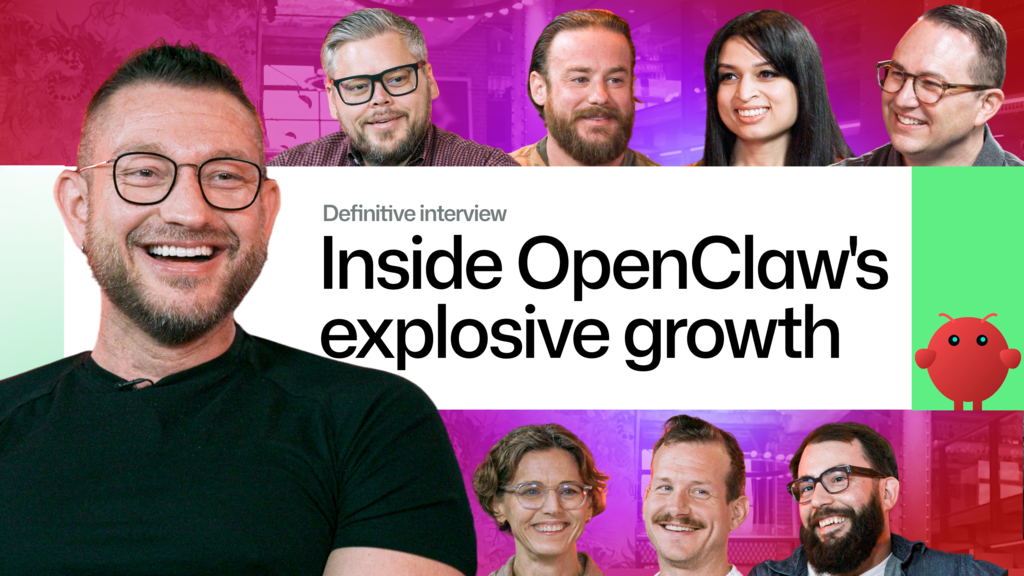
Despite this flood of automated noise, the OpenClaw team remains deeply committed to keeping the project accessible. They view the barrier to entry as a critical component of their success, intentionally fostering a culture where first-time contributors—including those without formal development backgrounds—are welcomed. The maintainers prioritize finding promising ideas buried within imperfect submissions, often choosing to collaborate with contributors to refine and complete the code themselves. For Steinberger, this approach is a nod to his own early experiences, where the acceptance of his first pull request served as a catalyst for his career. Vincent Koc, another core maintainer, highlights that a significant portion of their successful merges come from non-developers who simply have a specific problem to solve and are leveraging AI tools to bridge the gap.
Navigating the Human Cost of Agent-Driven Development
The integration of AI agents into the development lifecycle has introduced a paradoxical effect on the project’s workforce. On one hand, agents provide developers with the ability to reclaim time, allowing them to automate tedious tasks and focus on higher-level architectural challenges. On the other hand, the constant availability of these tools creates a "never-off" culture that threatens work-life balance.
Val Alexander notes that the allure of productivity can lead contributors to work through the night, driven by the realization that they can accomplish a week’s worth of work in mere hours. Conversely, for others like Josh Lehman, these agents are a lifeline that allows them to manage complex tasks while balancing the demands of family life. The maintainers themselves are not immune to these pressures, with reports of team members having to consciously set boundaries and "touch grass" to step away from the relentless churn of the repository. Ultimately, the team views AI agents as tools that amplify both the capacity for innovation and the necessity of personal discipline.
Earning Trust in an Automated Ecosystem
As the volume of contributions has rendered traditional metrics like "number of commits" less meaningful, the OpenClaw team has had to develop new signals for trust. They are increasingly looking for evidence of intent and deep understanding, rather than just the code itself. To stand out, contributors are now encouraged to provide agent transcripts, comprehensive screenshots, and detailed explanations of their thought process. Steinberger emphasizes that the core question is not whether a human or an agent wrote the code, but whether the contributor has truly grappled with the feature’s integration and its impact on the wider project.

This new standard of evidence is paired with a more hands-on approach to review. Maintainers are increasingly utilizing AI tools like GitHub Copilot to accelerate their review processes, while also taking a more proactive role in editing and perfecting submissions. Josh Lehman describes this as a shift toward a more collaborative editing culture, where maintainers no longer merely reject subpar code but actively shape it into a production-ready state.
Security Challenges and the Supply Chain
With such rapid expansion, OpenClaw has also become a target for those seeking to exploit the project’s visibility. The maintainers have observed instances where contribution history is manufactured to build false credibility, with users duplicating existing pull requests to "game" the project’s reputation system. This has forced the team to reconsider the social signals they rely on, recognizing that trust must be earned through consistent, valuable engagement rather than surface-level metrics.
Security has also become a primary concern regarding the project’s "safe by default" philosophy. Finding the middle ground between ease of use and restrictive security is an ongoing struggle, as tighter workspace controls often lead to friction for the end-user. The team acknowledges that secure defaults must be dynamic, constantly evolving to account for the increasing sophistication of agent capabilities and the varying needs of the user base. Furthermore, the team has taken a hard look at their supply chain, reducing core dependencies and fostering direct relationships with the maintainers of the projects they rely on.
Learning from the Broader Community
A pivotal moment for the OpenClaw team was their participation in the GitHub Secure Open Source Fund. This program offered more than just resources; it provided a much-needed human connection to other maintainers navigating similar, overwhelming challenges. Josh Avant recalls the calming influence of the program, which encouraged maintainers to prioritize their own well-being—a lesson he summarized as, "take a breath."
Beyond the emotional support, the program provided essential training on security practices and the art of "prompting" agents effectively. For Vincent Koc and his colleagues, the fund served as a vital community bridge, allowing them to exchange strategies for securing open-source projects in the AI era. As OpenClaw continues to set the pace for the industry, the lessons learned from this collaborative effort remain central to their strategy.
The journey of OpenClaw is far from over. As they continue to adapt to the realities of a project that scales faster than human systems can naturally manage, the team remains a testament to the potential of open-source collaboration in the age of AI. Their experiences highlight a future where the most successful projects will be those that master the balance between automation, human intuition, and a steadfast commitment to security and community health.