Naming is one of the most persistent challenges in digital design and software development. The language professionals use shapes not only how they think about digital products, but also the conversations they have during the creation process. From colors, icons, UI components, and features to design tokens, HTML classes, and variables, naming confusion frequently leads to miscommunication across cross-functional teams.
Often, the names chosen during the design and development phases are either too generic, making it difficult to understand what is actually meant, or too specific, leaving little room for flexibility, scalability, and reuse. Choosing the right names and establishing robust naming conventions can streamline workflows and reduce friction between designers, developers, and product managers.

How To Name Things
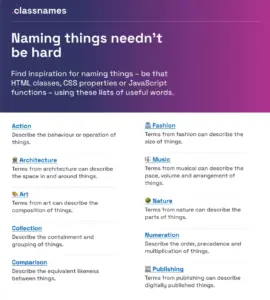
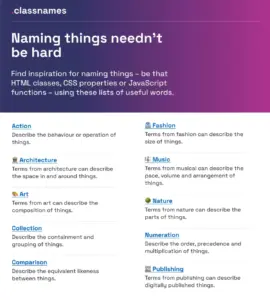
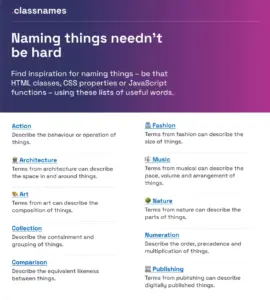
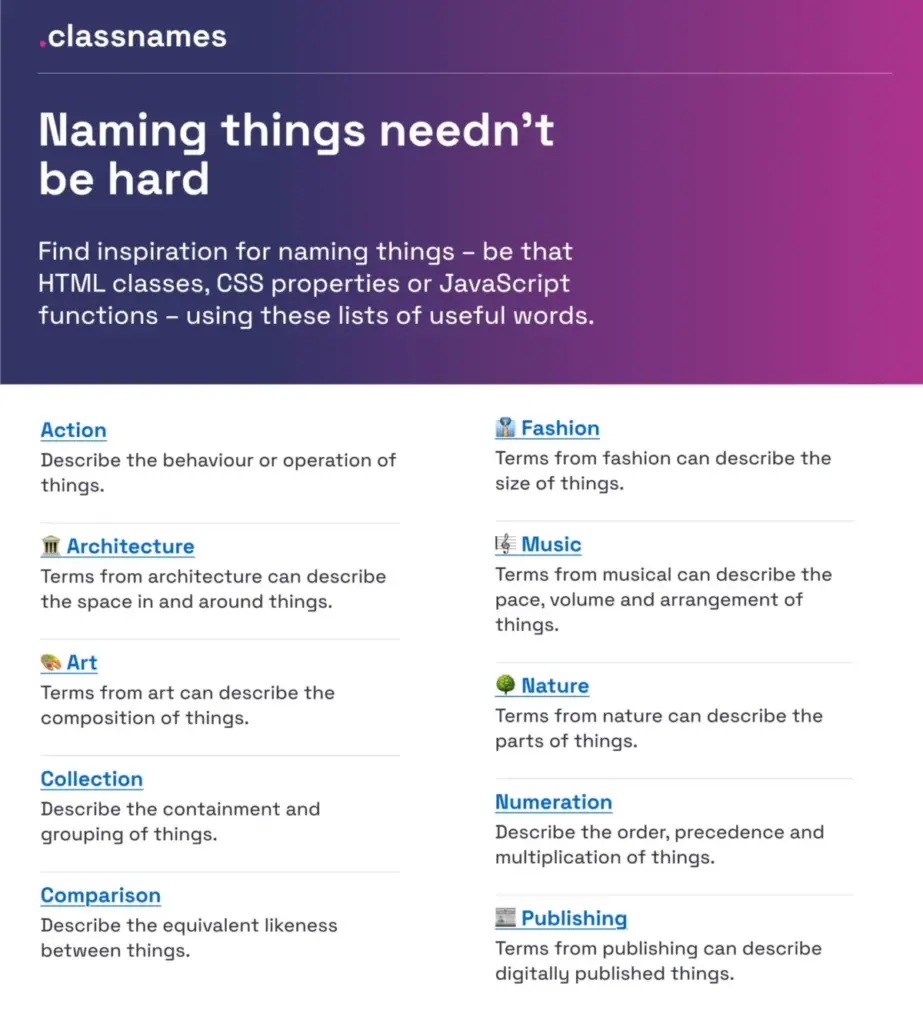
Finding inspiration for naming HTML classes, CSS properties, or JavaScript functions can often feel like a roadblock. Resources like Classnames, created by Paul Robert Lloyd, offer a fresh perspective designed to get teams thinking outside the box.
The platform provides thematically grouped lists of words tailored for coding and design naming conventions. Users can find terms that describe behavior, likeness, order, grouping, and association, alongside themed collections drawn from nature, art, theater, music, architecture, fashion, and publishing. These alternative vocabularies help teams move away from tired, repetitive naming patterns and adopt more descriptive labels.

How To Name Colors
Establishing a consistent color palette often raises the question of how to properly name specific shades. David Aerne addresses this challenge by maintaining a massive repository of color names known as Color Names. Featuring over 30,000 unique color names sourced from diverse references and thousands of user contributions, the database serves as an invaluable reference tool.
The repository includes tools like a color picker and name search functionality, alongside various implementations hosted on platforms like CodePen. Having a standardized yet creative approach to color naming prevents teams from resorting to arbitrary hex codes or confusing numeric scales that lack context.

How To Name Layers and Groups
For digital designers working in environments like Figma or Sketch, establishing consistency across layers, groups, and components is critical for scalable design systems. Javier Cuello has summarized a comprehensive set of naming best practices aimed at establishing order in design files.
According to Cuello, an effective name possesses a logical structure, remains concise yet meaningful, is universally understood across the team, and avoids being tied directly to temporary visual properties. By establishing clear do’s and don’ts, designers can address the fine details required when organizing sizes, colors, groups, layers, and components for handoff to engineering teams.

How To Name Design Tokens
Building a flexible design token taxonomy that functions seamlessly across multiple products and brands presents a massive architectural challenge. This was the exact hurdle faced by the team at Intuit, the parent company behind major financial and productivity products such as Mailchimp, QuickBooks, TurboTax, and Mint. To solve this, the company developed a flexible token system designed to extend far beyond a single brand theme, acting as a foundational system for a wide array of digital products.
Nate Baldwin detailed this initiative in a comprehensive case study outlining the creation of Intuit’s design token taxonomy. The report explores the pain points of legacy taxonomy systems, the criteria established for the new architecture, and the implementation process, offering valuable lessons for organizations seeking to build robust and adaptable token structures.

Frequent Names For UI Components
When struggling with nomenclature, looking at how other established products and design systems label similar interface elements is often the most effective starting point. To help teams avoid falling down the research rabbit hole, Iain Bean developed the Component Gallery, an exhaustive catalog of UI components drawn from real-world design systems.
The gallery includes practical examples for more than fifty distinct UI components—ranging from basic accordions to utility patterns like visually hidden elements—while also cataloging alternative names used across the industry. Supplementary resources, such as Name That UI, provide visual dictionaries to help align terminology between design and engineering.

How To Name New Features
Low feature adoption is frequently tied to poor discoverability rather than a lack of utility. Feature adoption requires a deliberate sequence of events: first, a feature must be discovered, then understood, tried, learned, and ultimately integrated into a user’s existing workflow. Product strategist Erin Gannon addressed these hurdles in a practical guide focused on feature naming.
According to these guidelines, effective feature names should be driven by genuine user needs and problem spaces. Names should signal the value or outcome of a feature—often referred to as the job-to-be-done—while tapping directly into the language users naturally employ. Soliciting feedback where users explain a feature in their own words helps product teams align technical naming conventions with real-world user mental models.

How To Name Variables (Taxonomy Map)
Complex multi-brand and multi-themed ecosystems require sophisticated governance, as demonstrated by the Vodafone UK Design System team. Their publicly shared Variables Taxonomy Map breaks down the anatomy and categorization of design tokens into a structured system of interconnected collections.
The mapping framework illustrates the four core collections required to support a modern design system, tracking connections across brands, primitives, semantics, and page-level implementations. Building upon foundational work by design system experts like Nathan Curtis, this approach ensures that stakeholders can instantly identify where a token is used and what it represents simply by reading its identifier. Additional frameworks, such as Romina Kavcic’s Design Token Names Inventory spreadsheet, offer bird’s-eye structural views to help teams filter and manage tokens across evolving themes and modes.

Naming Products or Services
Beyond code and design systems, finding the right name for a product or service remains a high-stakes endeavor. Resources like Onym serve as open-source repositories organizing tools, methodologies, and brainstorming frameworks for naming initiatives. These collections guide teams through vetting processes, sprint frameworks, etymologies, and industry resources to help navigate the complexities of brand identity.
Wrapping Up
Ultimately, the most effective name is one that is universally understood and actively utilized by both the product team and the end users. Significant amounts of time are frequently lost when cross-functional teams speak about the same concepts using disparate dialects—the designer’s dialect, the developer’s dialect, the product manager’s dialect, and the user’s dialect.

Recognizing that low feature or component adoption can stem from nomenclature issues allows organizations to address friction points proactively. By cataloging and resolving naming conflicts in dedicated backlogs, product teams can reduce confusion, eliminate ambiguity, and foster more efficient collaboration across the entire development lifecycle.