The United Kingdom has launched a significant crackdown on the illicit digital economy, announcing formal economic sanctions against the cryptocurrency platform Cryptomus. The move marks a strategic escalation in the international effort to dismantle the financial pipelines fueling Russia’s wartime economy, as authorities move to cut off a major conduit for ransomware syndicates, narcotics traffickers, and darknet marketplaces that have long utilized the platform to circumvent global financial restrictions.
On October 8, the U.K. government published a formal sanctions notice targeting Cryptomus, an entity that has operated under a variety of aliases, including Certa Payments and Xeltox Enterprises. The sanctions represent a robust response to the platform’s role in processing payments that directly benefit the Russian government and its associated financial institutions. Under the new restrictions, any assets belonging to Cryptomus held within U.K. banks are immediately frozen. Furthermore, British companies and individuals are strictly prohibited from engaging in any business dealings with the platform, whether through virtual asset services or traditional financial channels.
The U.K. directive also extended its reach to several other virtual payment platforms suspected of facilitating similar illicit activities, specifically naming VexPay, TokenSpot, and the Tsunami Payments service. By targeting this ecosystem, the U.K. is attempting to systematically degrade the infrastructure that allows criminal organizations and sanctioned Russian entities to move value across borders with relative impunity.

The notoriety of Cryptomus is well-documented. As detailed in previous investigations, the platform has functioned as a primary payment processor for a wide array of Russian cryptocurrency exchanges and websites specializing in cybercrime-as-a-service. The company’s operational history is characterized by a "chameleonic" strategy, involving multiple name changes and corporate rebrandings since it first emerged in 2022. Most recently, the platform rebranded itself as "Heleket" in late 2025. This transition followed a landmark decision by Canadian authorities, who imposed a record CAD $176 million fine against the platform for severe anti-money laundering violations.
Blockchain analytics firms have provided the empirical data necessary to understand the scale of the operation. Chainalysis, which has been tracking the platform’s activities, noted that the U.K. sanctions are a direct strike at the broader financial network supporting Russia’s war efforts. In a blog post released on the day of the sanctions, Chainalysis described Cryptomus and its successor, Heleket, as primary hubs for global illicit activity. The firm reported that these services collectively processed a higher volume of illicit funds across tracked categories than many of the specialized "mixers" previously monitored in their dataset. By late 2025, the number of identified illicit counterparties interacting with these platforms had surged to more than 900 in a single month, illustrating the massive scale of the operation.

The evidence against Cryptomus extends beyond its role in state-sponsored evasion. In April 2026, the blockchain intelligence firm TRM Labs released a report finding that Cryptomus had facilitated more than $7 billion in transactions since its 2022 launch. This volume included payments associated with some of the most heinous forms of digital crime, including the distribution of child sexual abuse material (CSAM), the operation of terrorist financing networks, and large-scale human trafficking operations.
TRM Labs also observed a distinct shift in the platform’s operations following the scrutiny from Canadian regulators. While the company initially attempted to adopt "know your customer" (KYC) requirements—a move that saw its transaction volume crater—it simultaneously launched Heleket as a parallel service. This new iteration allowed the organization to continue its high-volume, no-KYC payment processing, effectively bypassing the compliance measures it had ostensibly adopted.
Richard Sanders, a blockchain analyst and investigator who spent months mapping the complex infrastructure behind Cryptomus, suggests that the U.K. sanctions represent a turning point in international enforcement. According to Sanders, the Canadian fine, while historic in its amount, ultimately proved to be unenforceable and uncollectible.
"A fine doesn’t stop a cryptocurrency payment processor from processing payments," Sanders wrote in an analysis on LinkedIn. "Sanctions kill the operation. The distinction matters."
The significance of the U.K. action is compounded by the fact that it is the first known instance of a "Five Eyes" nation—the intelligence alliance comprising Australia, Canada, New Zealand, the United Kingdom, and the United States—sanctioning a cryptocurrency operation that is formally incorporated within the jurisdiction of another Five Eyes partner. This cross-jurisdictional pressure highlights the growing frustration among Western regulators regarding entities that exploit legal loopholes to provide financial services to criminal actors.

The corporate structure of these platforms remains one of the most opaque aspects of their operations. Investigations have revealed that the entities behind these services often rely on a web of "fake" financial institutions and phony regulatory bodies based in regions that lack international recognition or sovereign authority.
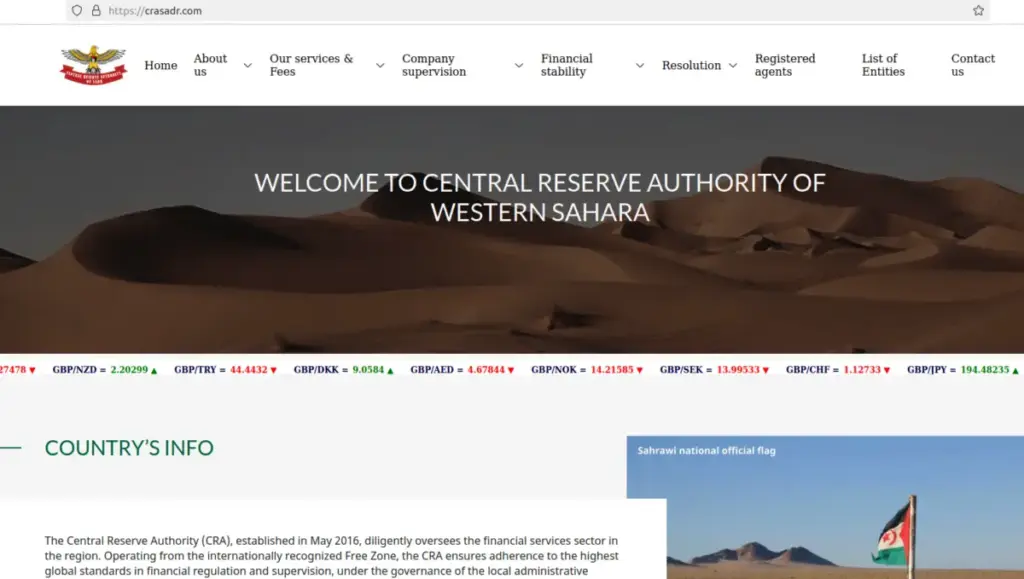
In an investigation into the parent company of Cryptomus, Certa Payments, researchers identified the sole shareholder as a 25-year-old Ukrainian woman who also held leadership roles in several other firms. One of these firms, the WS Management and Advisory Corporation, billed itself as an exclusive regulatory body overseeing licenses for cryptocurrency, foreign exchange, and online gaming businesses in the Western Sahara—a disputed territory in northwest Africa.
The website for this self-styled regulator, crasadr.com, marketed services to businesses seeking bank setups, gaming licenses, and the formation of foreign exchange brokerages. The digital footprints of these entities were inextricably linked; for instance, the domain for Certa Payments previously shared a server with 12 other domains, including one dedicated to the "Central Reserve Authority of the Western Sahara." This elaborate facade allowed platforms like Cryptomus to maintain a veneer of legitimacy, providing a pseudo-regulatory stamp of approval that deceived both users and, at times, unsuspecting financial partners.
The sudden move by the U.K. to sanction these entities has left many users and associated services in limbo. On October 8, the same day the sanctions were announced, the Cryptomus support bot on Telegram began issuing automated responses to users, confirming that the platform was suddenly unable to process transactions. For the operators behind the platform, the era of operating with relative impunity appears to be drawing to a close as international authorities move to sever their access to the global financial system. The sanctions signal a more aggressive, coordinated approach to policing the intersections of crypto-assets and organized crime, ensuring that platforms attempting to hide behind complex, shell-driven structures are no longer insulated from the consequences of their financial facilitation.