












Meta’s annual showcase, Meta Connect 2026, has once again signaled a massive pivot in the company’s strategy. As the lines between social networking, artificial intelligence, and physical hardware continue to blur, Mark Zuckerberg and his team have unveiled a suite of devices that prioritize ambient, AI-first interactions. The announcements, which range from ultralight VR spectacles to a palm-sized "holdable" AI assistant, suggest that Meta is moving aggressively to define the post-smartphone landscape.
The Rise of Muse: An AI-First Ecosystem
The centerpiece of this year’s event was undoubtedly the integration of Muse, Meta’s newly launched personal AI agent. Since its release earlier this month, the Muse app has seen a meteoric rise, currently holding the number one spot on both the U.S. App Store and Google Play. It is this momentum that has driven the development of the "Muse Charm," a specialized hardware companion designed to bring the agent out of the phone and into the palm of your hand.
Developed by Meta’s internal design lab—now under the leadership of former Apple interface design chief Alan Dye—the Muse Charm is a testament to the company’s newfound focus on industrial design and user experience. The device is a compact, palm-sized "holdable" featuring a roughly 2-inch OLED touchscreen. At the center of its interface is a customizable, virtual Muse character. Users are encouraged to personalize this avatar, adjusting its visual style, outfits, and voice, effectively creating a persistent, digital companion.


The Muse Charm is far more than a decorative accessory. It houses a sophisticated array of hardware, including front- and rear-facing cameras, high-fidelity speakers, sensitive microphones, and 5G connectivity. While it possesses the ability to snap photos and record videos, the primary function of these sensors is to provide Muse with visual context. By analyzing the world through these lenses, the AI can offer real-time assistance, identify objects, and perform context-aware tasks that a traditional smartphone might struggle to handle with the same immediacy. Furthermore, the device supports proximity-based social interaction, where two Charms can recognize and interact with each other. Meta plans to bring the Muse Charm to market in December, with industry analysts estimating its price point will be comparable to that of a high-end smartwatch.
Expanding the Smart Glasses Portfolio
Meta’s smart glasses division remains the company’s most successful hardware venture. Following the widespread success of the Meta Ray-Ban Display, which introduced users to a heads-up display capable of showing navigation, messages, and AI responses, Meta reported that shipments for its AI-powered glasses surged by an impressive 263% during the first half of 2026. With over 7 million units sold across the lineup this year, it is clear that consumers have embraced the wearable form factor.
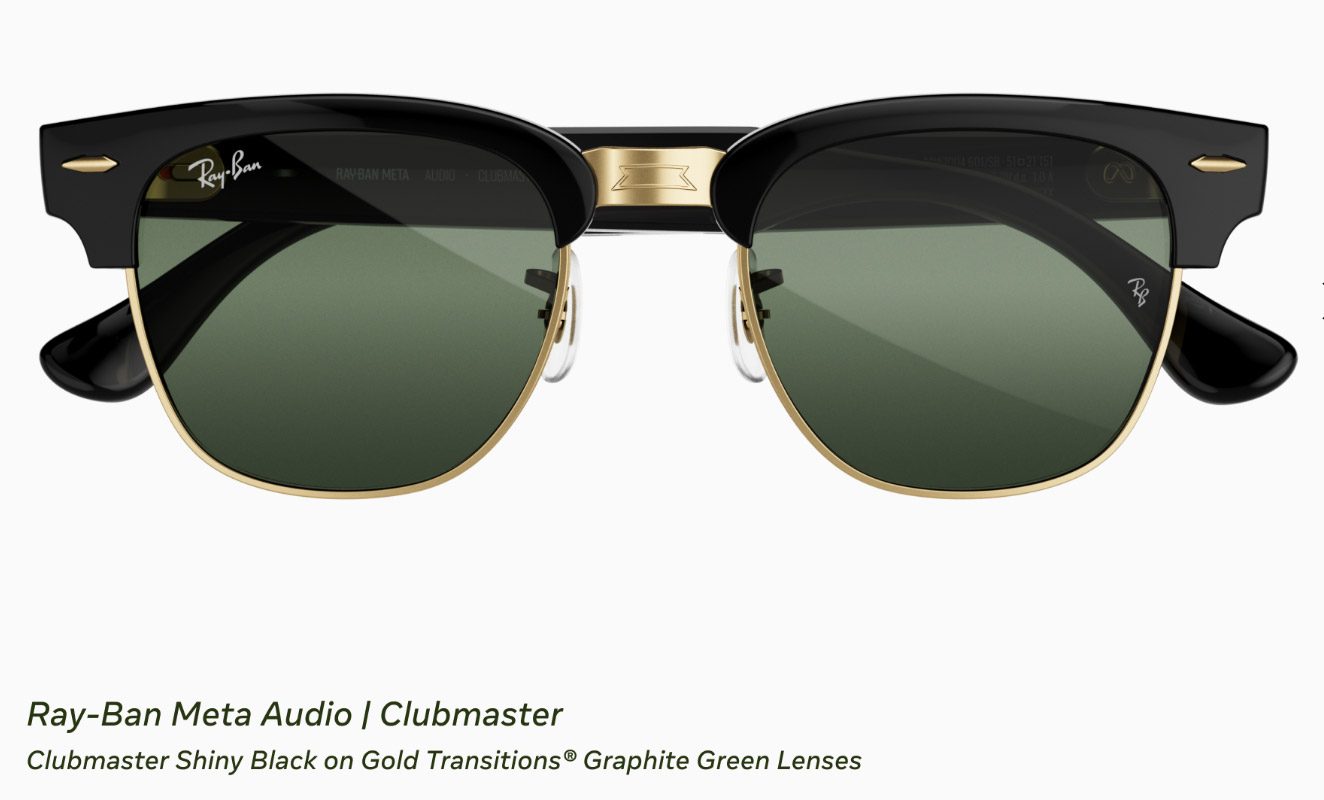
However, this growth has not been without its challenges. The company has faced mounting pressure regarding privacy, ethics, and the societal implications of always-on cameras in public spaces. In a move that appears to be a direct response to these concerns, Meta announced the Ray-Ban Meta Audio, its first pair of camera-free smart glasses. Starting at $349 and arriving on October 13, these glasses retain the core audio functionality of their camera-equipped counterparts, including music playback, podcast streaming, and live translation. Crucially, they are fully integrated with the Muse AI agent, allowing users to interact with their personal assistant without the need for visual recording features.
For those who prefer the full functionality of the previous generation, Meta also unveiled the Ray-Ban Meta (Gen 3). This new iteration features a significantly slimmer profile and an improved battery life that reaches up to nine hours on a single charge. It retains the powerful 12MP camera and 3K video recording capabilities while introducing a new, customizable action button. Users can map this button to one-touch interactions with Meta AI or specific functions like live translation, streamlining the interface further. The Gen 3 model is available immediately, with a starting price of $449.
Expanding the accessibility of the brand, Meta also introduced the "Meta Adventurer," its most affordable smart glasses to date at $249, along with two new frame styles, Capri and Nova. A limited-edition "Fury" model and a new Ivory colorway for the existing Kylie Jenner collaboration were also presented, underscoring Meta’s strategy to position its hardware as a fashion-forward accessory as much as a piece of high-end technology.
The Future of Immersive Reality: Meta VR Glasses
Perhaps the most ambitious hardware announcement of the evening was the Meta VR Glasses. Designed to bridge the gap between traditional VR headsets and everyday eyewear, the device weighs in at approximately 100 grams. This radical reduction in mass is achieved by offloading the processing, battery, and storage to a separate, pocketable "puck."

The headset itself is a marvel of miniaturization, boasting what Meta calls a "5K Infinite Display" powered by micro-OLED panels. The device features integrated Meta AI, along with sophisticated eye and hand tracking. Meta is marketing these glasses as a versatile, personal entertainment hub—a private cinema for 3D movies, a courtside seat for immersive live sports, and a portable, distraction-free workspace. Notably, these are the first IMAX Enhanced-certified VR glasses, setting a new standard for image fidelity in wearable displays. The Meta VR Glasses are expected to launch in the spring of 2027 with a retail price of $1,299.99.
Holograms and the Next Generation of Communication
Complementing the hardware reveals was the announcement of a new "hologram" feature. This technology allows users to generate a photorealistic avatar that mirrors their real-time expressions and reactions during video calls. This feature is not limited to the new VR glasses; Meta confirmed that a version is coming to the existing Meta Ray-Ban Display, enabling users to present a digital representation of themselves during hands-free video calls, starting with WhatsApp.
This development marks a significant step forward in Meta’s long-term goal of creating more authentic and immersive communication tools. By utilizing the company’s advanced AI and sensor fusion, the hologram feature aims to overcome the "flatness" of traditional video conferencing, making digital interactions feel more grounded in human emotion.

As the event drew to a close, it was evident that Meta’s roadmap for the coming year is heavily anchored in the idea of "ambient intelligence." By diversifying its hardware—from the camera-free audio glasses that address privacy concerns to the high-performance VR glasses and the intimate, palm-sized Muse Charm—Meta is attempting to weave its AI agents into every facet of daily life. Whether consumers are ready to adopt these devices on such a scale remains to be seen, but the sheer breadth of today’s announcements confirms that Meta is not slowing its efforts to lead the next generation of personal computing.