








The community behind Opensource.com is hard at work on something new, signaling a major upcoming transition for the long-running publication. While specific details regarding the upcoming project remain under wraps for the moment, the quiet period observed on the site recently is directly tied to these behind-the-scenes developments. Rather than offering a traditional announcement with a full slate of particulars, organizers are opening up a broader conversation about the future—starting with a look at the foundational structures of the internet itself and the human networks that drive open source forward.
For the past twelve years, Opensource.com has served as a central hub for stories about creating, adopting, and sharing open source solutions, supported throughout its history by a commercial entity. However, as the platform prepares for its next evolution, organizers are drawing attention to the distinct nature of the community that has sustained the site over more than a decade. To understand where the project is heading, the community is reflecting on how networks, domain structures, and human collaboration intersect in the digital age.
The Internet, and Top-Level Domains
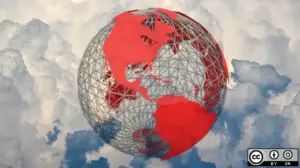
To appreciate the scale of digital connectivity, it helps to look back at how the internet was built and named. The internet is, by definition, a network, which is fundamentally a group of connections. In fact, the very word "internet" is a portmanteau combining "interconnected" and "network."
In its earliest days, the internet consisted of just two primary networks: a military network and an academic network. As the digital landscape expanded and grew in popularity far beyond those initial groups, it quickly became apparent that different designations were necessary to help users identify the nature of various digital entities. Authorities needed a way to visibly differentiate a commercial enterprise from a charitable organization, a university, or a governmental department.

These critical designations are known as top-level domains, or TLDs. While a vast array of TLD extensions are available across the web today, the infrastructure of the internet relied on only a handful of original designations for a long time. These original TLDs remain remarkably popular and culturally embedded in how people navigate the web. Most internet users intuitively understand that when they visit an address ending in .com, they are navigating a commercial site, whereas visiting a .org address directs them to a non-profit organization.
These domain endings do more than just route traffic; they tell a story about the purpose and governance of the digital space being visited. They categorize intent, funding models, and organizational structures at a glance, providing a visual shorthand for trust and classification in a vast sea of information.
Open Source Is a Network
Just as the internet is built on layers of interconnected networks, the open source movement operates on a similar structural philosophy. Open source can take many different forms and serve many different purposes. It can be commercial, non-profit, academic, or cultural. It can drive massive enterprise infrastructure or preserve local community archives.
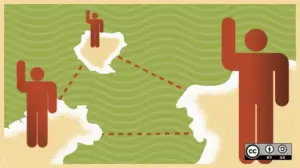
No matter what form it ultimately takes or what industry it serves, open source is always a network. Sometimes, that network consists of physical computers communicating across global infrastructure. More importantly, however, open source is fundamentally a network of people.

Whether community members are gathering in person at a major software conference, catching up at a local pub, or collaborating asynchronously in an online chat room, the heartbeat of open source is its community of human contributors. Code, documentation, and governance models matter immensely, but they are all driven by individuals working together toward shared goals.
This human element highlights an important distinction in how digital platforms are operated and sustained. The website Opensource.com has enjoyed the backing of a commercial entity for twelve years, providing the institutional support necessary to publish stories, essays, and news about the open source world. Yet, the people who actually make up the Opensource.com community—the writers, editors, commenters, advocates, and readers—are not commercial entities. They are individuals brought together by a shared passion for open principles, collaboration, and shared knowledge.
Recognizing the gap between institutional backing and community identity has set the stage for the current transition. Organizers view the upcoming project as an opportunity to better align the platform with the organic, human-centric network that has powered it from the beginning.
While specific announcements have been held back while the groundwork is laid, the timeline for this next phase is already in motion. In just one month, Opensource.com is set to resolve this long-standing operational puzzle and unveil the next iteration of the project. As the community waits for the official reveal, the conversation remains focused on the fundamental connections—both technical and human—that make open source resilient, collaborative, and enduring.