In a move that underscores the insatiable investor appetite for high-performance artificial intelligence, TypeSafe AI, the developer of the rapidly emerging "Jev" model, has successfully closed an $870 million funding round. The investment, which values the burgeoning startup at an impressive $7.5 billion, was spearheaded by Andreessen Horowitz. This monumental injection of capital also saw participation from major venture firm Sequoia and returning investor DCVC, signaling a massive vote of confidence in the company’s alternative approach to machine intelligence.
The funding news arrives barely three weeks after the public release of Jev, a platform that has quickly become a sensation within the developer community. Since its debut on September 15, 2026, Jev has defied the typical slow-burn trajectory of new enterprise software, achieving rapid, widespread adoption. According to company reports, approximately one-third of Fortune 500 companies have already begun integrating the model into their internal workflows, a pace of enterprise penetration that is virtually unheard of in the current software market.
Moving Beyond the Large Language Model Paradigm
The excitement surrounding TypeSafe AI is rooted in a fundamental departure from the status quo of modern artificial intelligence. While the industry has spent the last four years obsessed with Large Language Models (LLMs)—systems designed to mimic human fluency, generate creative text, and write code—TypeSafe AI has pivoted toward a more utilitarian architecture.

Jev is built upon a transformer architecture, similar to its contemporaries, but it avoids the traditional generative output associated with LLMs. It does not produce conversational prose, nor does it attempt to engage in human-like dialogue. Instead, the model is designed to produce what the company calls "calibrated decisions." By focusing on outputting probabilities rather than semantic tokens, Jev is optimized for the hard, analytical heavy lifting that modern enterprises require to automate complex, data-driven tasks.
The technical distinction is significant. For years, the industry has labored to make AI "speak" like a human, but as TypeSafe co-founder Diogo Almeida noted in a recent interview, that human-centric focus has often been a bottleneck for genuine industrial utility. "We have been super good at human language for four years, but it’s not useful for automation because computers speak a different language," Almeida explained.
By streamlining the model to focus on machine-readable probabilities, TypeSafe has achieved dramatic efficiencies. The platform reportedly functions with significantly higher speed than conventional LLMs and consumes far fewer tokens. For large enterprises dealing with massive datasets, the reduction in token consumption translates into lower operational costs and faster inference times, positioning Jev as an engine for automation rather than just a content creation tool.
A Rapid Rise to Market Prominence
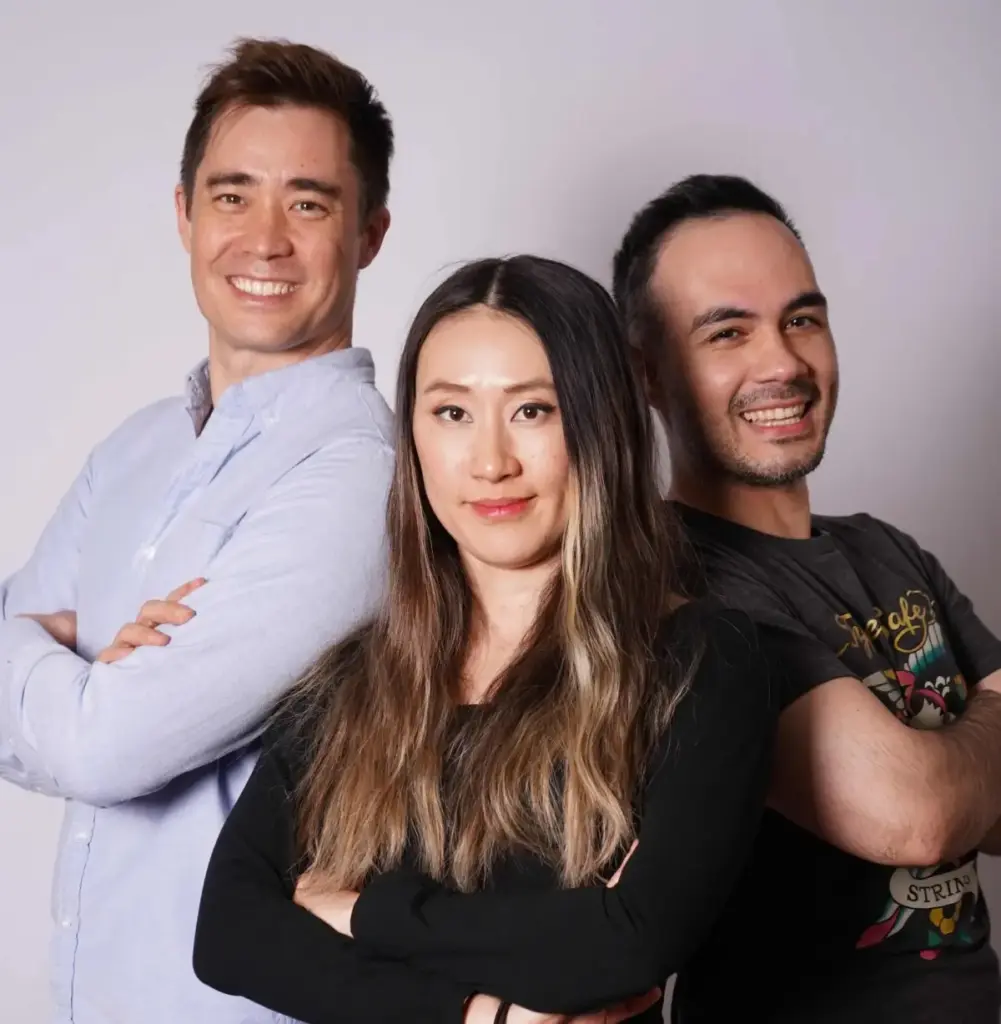
The meteoric rise of TypeSafe AI is the result of a strategic vision formed by a trio of industry veterans. The company was co-founded in 2024 by Diogo Almeida, a researcher who previously honed his expertise at OpenAI; Sasha Sheng, a former research engineer at Meta; and Erik Gafni, an accomplished engineer and entrepreneur.

The team’s collective experience provided the technical foundation necessary to recognize the limitations of current generative AI in the enterprise sector. By the time they launched Jev in mid-September 2026, the technology had already been subject to rigorous testing. The model’s September 15 launch served as a catalyst that transformed a promising research project into a must-have tool for corporate IT departments.
The speed of Jev’s adoption among the Fortune 500 is a testament to the pent-up demand for AI that is "safe" and reliable. Unlike LLMs, which are prone to hallucinations and unpredictable linguistic drifts, Jev’s probabilistic framework is designed to provide consistent, repeatable results. This reliability is the "TypeSafe" in the company’s name—an allusion to the programming concept of type safety, where data structures are strictly enforced to prevent errors, mirroring the company’s commitment to building a model that provides predictable, structured, and accurate outputs.
Investor Enthusiasm and the Future of Enterprise AI
The decision by Andreessen Horowitz to lead an $870 million round—a massive sum even by the standards of the current AI boom—highlights the shifting priorities of Silicon Valley venture capital. Investors are moving away from general-purpose chatbots and toward specialized, high-efficiency models that can be directly mapped to bottom-line enterprise performance.
The inclusion of Sequoia and the continued support from DCVC further solidify the narrative that TypeSafe is building a foundational layer for the next wave of industrial automation. As companies look to move beyond the experimental phase of Generative AI, they are increasingly searching for platforms that can be integrated into existing software stacks without the volatility inherent in traditional language models.
For TypeSafe AI, the challenge moving forward will be maintaining this velocity while scaling the infrastructure required to support its massive, rapidly growing user base. The capital influx will likely be deployed toward expanding the company’s engineering headcount, scaling its compute resources, and refining the Jev model to handle even more complex, high-stakes decision-making tasks.
As the industry watches, the success of TypeSafe raises a broader question about the future of AI: will the next major breakthrough be found in even larger language models, or will it be found in specialized architectures that abandon the pretense of "speaking" in order to excel at "doing"? For now, the market’s response to TypeSafe suggests that the latter is a highly attractive proposition for the world’s largest companies.
The rapid trajectory of TypeSafe AI serves as a stark reminder of how quickly the AI landscape is evolving. In less than a month, the company has transitioned from a new entrant to a multi-billion dollar entity, backed by the most influential investors in the sector. Whether Jev remains the definitive solution for enterprise automation will depend on its performance at scale, but the early signals from its widespread adoption suggest that the industry is ready for a shift in focus—from models that talk to models that make the right decisions.