









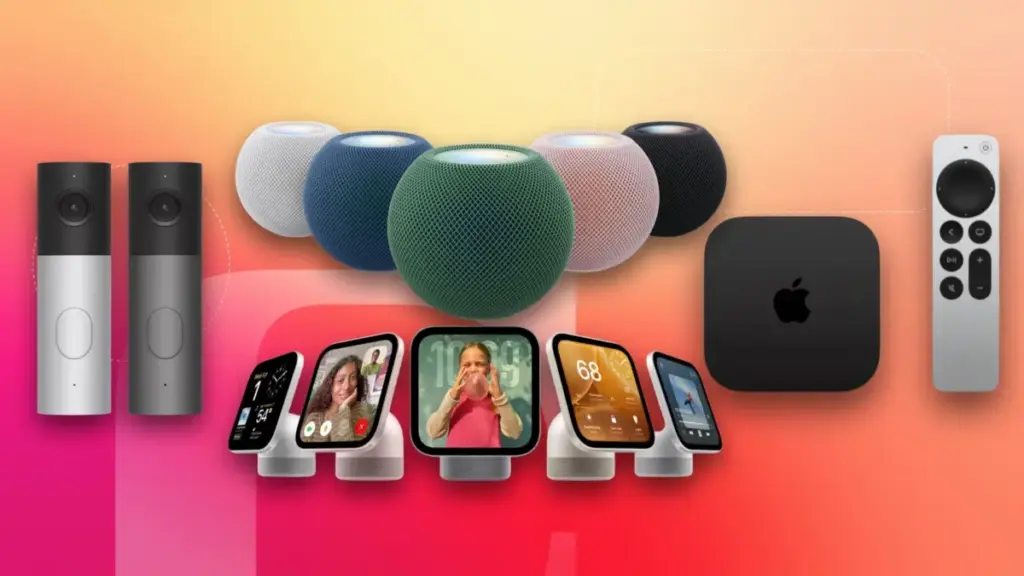
Following Apple’s major product announcements in October, consumers are finally getting their first opportunity to purchase the company’s latest ecosystem-expanding hardware. Ranging from brand-new form factors to substantial internal upgrades for long-running household favorites, Apple’s autumn release cycle places a heavy emphasis on ambient computing, smart home integration, and localized artificial intelligence. With nearly the entire portfolio now open for ordering across major retailers, shoppers are navigating a shifting landscape of availability, bundled service promotions, and targeted retail discounts.

The centerpiece of Apple’s newly launched smart home hardware is the Apple HomeView, a 7-inch smart display engineered to serve as the central nervous system for connected residences. Designed with versatility in mind, the HomeView is available in both a countertop configuration and a wall-mounted variation intended for permanent integration in entryways, hallways, and kitchens. Beyond basic smart home management via the redesigned Home app, the device utilizes facial recognition technology to dynamically personalize interactions for different household members. When approached, the interface adapts to display individual messages, FaceTime logs, calendar alerts, reminders, and Find My location data.

Market pricing for the HomeView sits standard at $299 across the majority of major consumer electronics vendors, though early pricing discrepancies have emerged. Amazon has carved out a modest discount on the space gray model, listing it at $290, while keeping the remaining three colorways—silver, starlight, and rose pink—at the standard $299 price point. Other retailers, including Best Buy and Target, have nudged prices upward by a dollar to $300, though these outlets often attempt to sweeten the proposition with bundled trials for services like Apple Music and Apple TV. Direct orders through Apple maintain the $299 baseline with the added incentive of 3% daily cash-back rewards for customers utilizing the Apple Card. Meanwhile, specialized Apple resellers such as Adorama and Expercom have matched the standard $299 price with full color availability, while high-volume platforms like Walmart have experienced initial stock fluctuations despite offering attractive bundles featuring five free Apple service redemptions.


Alongside the HomeView, Apple has introduced the fourth-generation Apple TV 4K, aiming to cement its position in the home entertainment sector. The latest streaming box incorporates Apple’s new A19 chip, delivering up to a 50% boost in central processing performance and double the graphical output of its predecessor. This hardware bump translates to smoother interface navigation, enhanced gaming capabilities through Apple Arcade, and more robust processing for spatial audio and high-framerate video playback. The updated streaming box also ships with a refined Siri Remote featuring enhanced Find My integration, making it significantly easier to locate misplaced remotes around the living room.

Pricing and availability for the fourth-generation Apple TV 4K mirror the HomeView ecosystem closely, though supply chain bottlenecks have impacted certain storefronts. Standard retail pricing rests at $299 through Apple, Best Buy, and B&H Photo Video, with the latter offering sales tax exemptions for customers utilizing specific enterprise credit solutions. Amazon has listed the streaming device at $299, while Walmart’s lower promotional listing of $290 has frequently cycled into out-of-stock status. Target similarly lists the hardware for $300 with localized stock constraints, and Adorama has faced criticism from bargain-hunting consumers for a temporary $30 markup, pricing its units at $329.

Audio enthusiasts and smart assistant users also have access to the newly refreshed HomePod Mini 2. Retaining the compact spherical silhouette of the original model, the second-generation smart speaker introduces upgraded audio drivers, expanded Siri AI capabilities powered by local processing, and a refreshed palette of five colors: pink, green, blue, white, and midnight. Furthermore, the updated speaker firmware enables immersive four-speaker surround sound configurations when paired natively with the fourth-generation Apple TV 4K.

Retail competition for the HomePod Mini 2 remains tight. Walmart, Apple, B&H, and Expercom have aligned their offerings at the $149 price point, with Walmart and B&H packaging various service incentives or tax-saving card promotions into the purchase. Best Buy and Target have positioned their pricing one dollar higher at $150, compensating buyers with double reward points or standard loyalty card discounts, whereas Adorama has listed the speaker at an inflated $150-plus tier that encourages consumers to look elsewhere for better margins.

Looking beyond entertainment and audio, Apple’s broader hardware ambitions are supported by a forthcoming ecosystem of certified smart home accessories developed in partnership with major manufacturers like LG and Schneider Electric. However, unlike the consumer-facing gadgets currently hitting doorsteps, these infrastructure-focused products operate on a staggered release schedule designed to roll out through late 2026 and early 2027.

Among the most anticipated additions is the LG video doorbell, priced at $250, which features a dual-camera array designed to capture visitors and doorstep package deliveries simultaneously. Integrated with a built-in spotlight and support for HomePod and HomeView chime routing, the doorbell records in sharp 2.5K resolution and stores encrypted video footage via iCloud Plus without requiring a proprietary subscription service. Alongside the doorbell, LG has introduced a $400 floodlight camera and a $300 outdoor plug-in camera, both supporting Apple Home Secure Video and low-light color night vision. However, consumers eager to secure these exterior surveillance solutions will have to exercise patience, as Apple has slated these specific units for a December release window.

Indoor security and access control round out the ecosystem additions. The $200 LG indoor camera prioritizes household privacy by featuring an automated mechanical tilt mechanism that directs the lens away when registered family members return home. For entryways, the $350 LG smart deadbolt lock offers proximity-based unlocking via iPhone and Apple Watch, leveraging Matter connectivity standards for robust local offline functionality. Both the indoor camera and the smart deadbolt lock are scheduled to debut in early 2027.

Climate control forms the final pillar of the initial rollout, with both LG and Schneider Electric contributing smart thermostats priced at $200 each. These devices integrate tightly with Apple’s adaptive temperature features within the Home app, automatically modulating indoor climates based on occupancy detection, sleep schedules, and local weather patterns. Complementary room sensors from both brands—featuring up to a three-year battery life in the case of the Schneider Electric model—aid in balancing temperatures across multi-room layouts. Like the security cameras, these climate management systems are scheduled to hit the market in December, rounding out a comprehensive hardware expansion for Apple’s connected home framework.