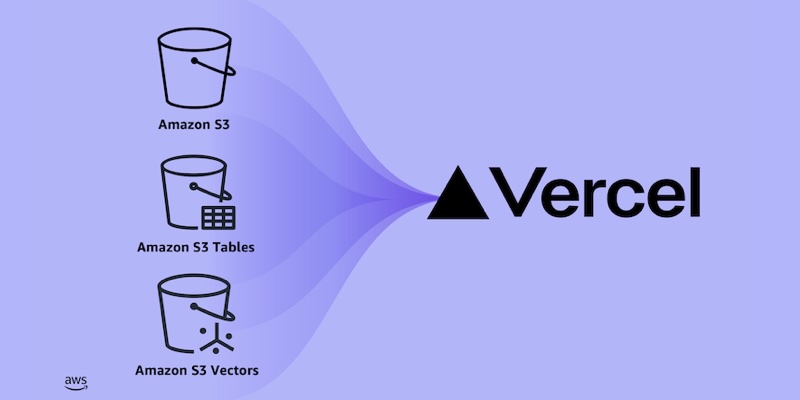
In a significant move to bridge the gap between frontend development and backend infrastructure, Vercel has announced a new integration that brings Amazon Simple Storage Service (Amazon S3) directly into its platform. Developers building web and AI-driven applications on Vercel can now provision and manage S3 storage resources—including specialized S3 Tables and S3 Vectors—without ever leaving the Vercel ecosystem. By embedding the durability, scalability, and performance of AWS storage directly into the Vercel Marketplace and the v0 generative AI interface, the integration aims to drastically reduce the complexity of cloud infrastructure management for modern development teams.
This development marks a shift in how developers interact with AWS services. Previously, even those leveraging Vercel for deployment often had to navigate the AWS Management Console separately to configure storage policies, manage credentials, and handle IAM roles. This friction often acted as a bottleneck for developers looking to move quickly from ideation to production. With this update, resource provisioning and connection configuration are handled automatically, allowing developers to maintain a unified application stack within a single interface, all under one AWS account and a consolidated billing structure.
The integration complements existing Vercel capabilities for Amazon Aurora, Amazon DynamoDB, and Amazon OpenSearch Serverless. By centralizing these services, Vercel is effectively providing a comprehensive environment where the database layer, object storage, and AI-ready vector capabilities coexist seamlessly, enabling developers to build sophisticated architectures without the traditional administrative overhead.
Streamlined Provisioning and Enhanced Security
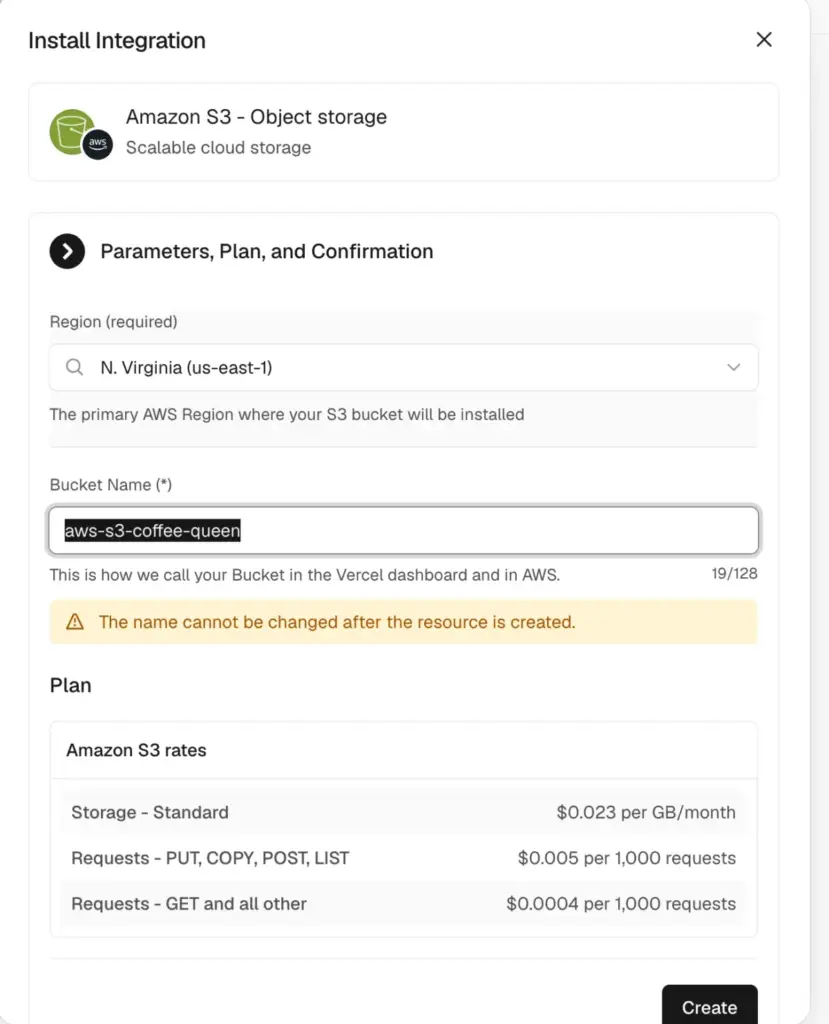
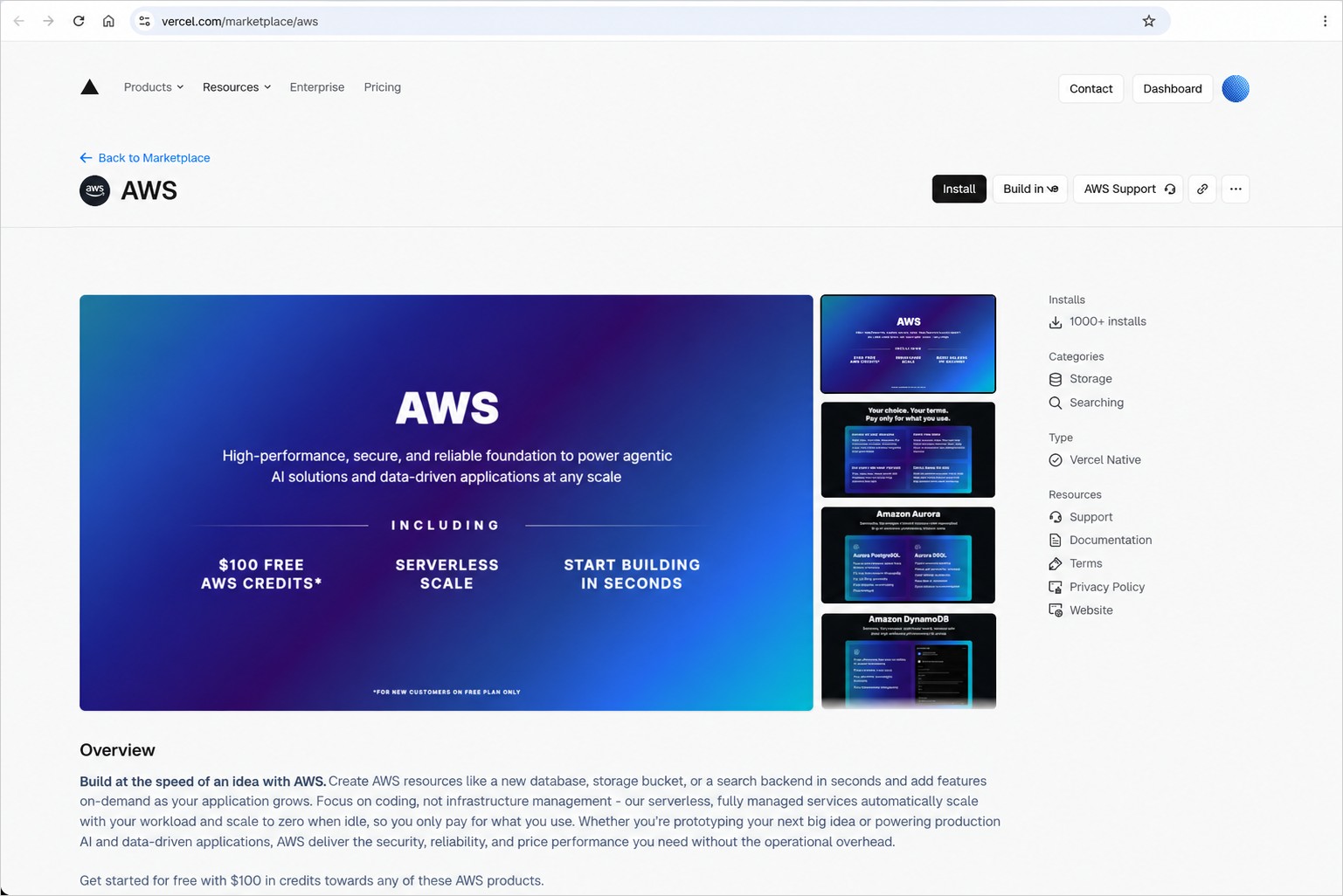
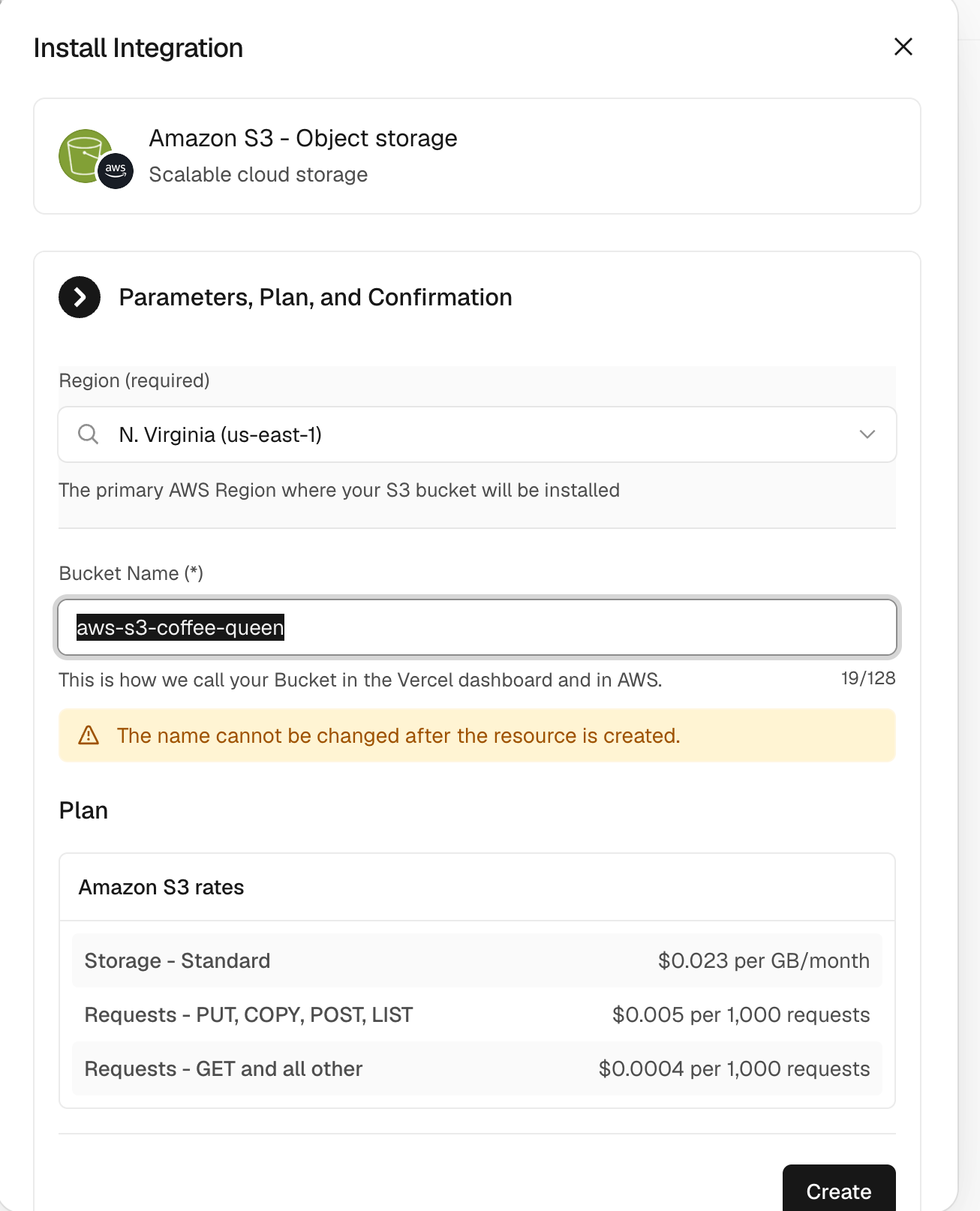
The process of integrating storage has been simplified to a few intuitive steps. From the Vercel dashboard, developers can navigate to the Storage tab to initiate a new resource creation. By selecting AWS as the provider and choosing the specific S3 bucket type—whether for general-purpose storage, analytics, or vector-based AI workloads—the system handles the underlying infrastructure provisioning in seconds.
Security remains a primary focus of this integration. The system utilizes the @vercel/functions/oidc library, which leverages OpenID Connect (OIDC) to facilitate communication between Vercel and AWS. Instead of requiring developers to manage and store static access keys, the integration exchanges a short-lived OIDC token with the AWS Security Token Service (AWS STS). This provides temporary, highly scoped credentials that are specific to the requested resource. This "zero-static-key" approach significantly reduces the risk of credential leakage and simplifies the maintenance of security best practices, as the platform handles the rotation and lifecycle of the tokens automatically. Once the bucket is linked to a project, developers can pull the necessary environment variables via the Vercel CLI, enabling a local development experience that mirrors the production environment.
Specialized Storage for Modern Workloads
The integration is not limited to standard object storage. It includes native support for Amazon S3 Tables and Amazon S3 Vectors, reflecting the evolving needs of developers who are increasingly building data-intensive and AI-forward applications.

Amazon S3 Tables are designed specifically for analytics, offering a fully managed implementation of Apache Iceberg. This allows developers to handle large volumes of data while benefiting from automated table maintenance and compaction. Because these tables are compatible with any Apache Iceberg REST Catalog-compliant engine, developers can, for example, use DuckDB within a Vercel Function to perform lightweight, high-performance analytics queries directly on their data. This approach is particularly powerful for applications that require real-time reporting or complex data aggregation without the need to stand up a separate, dedicated data warehouse.
Meanwhile, the inclusion of Amazon S3 Vectors addresses the growing demand for AI-driven features. As developers build RAG (Retrieval-Augmented Generation) applications and semantic search tools, they need an efficient way to manage vector embeddings. S3 Vectors provides a cost-optimized solution for storing and querying these embeddings. While the service does not generate the embeddings themselves, it provides a robust infrastructure for storing them and performing similarity searches, allowing developers to integrate AI inference and semantic search capabilities into their applications with minimal friction.
AI-Assisted Infrastructure with v0
Perhaps the most innovative aspect of this integration is its availability within v0, Vercel’s generative AI interface. By describing a project in natural language, developers can now trigger the provisioning of the exact AWS resources required for their specific use case. For instance, a prompt requesting "a photo gallery where users can upload images" will automatically provision a general-purpose S3 bucket, configure the necessary connections, and generate the corresponding code to handle file uploads.
Similarly, a request for a "support bot that answers questions from PDFs" will trigger the setup of S3 Vectors, while a prompt for an "analytics dashboard for clickstream data" will result in the provisioning of S3 Tables. This capability effectively lowers the barrier to entry for complex cloud architectures, as v0 handles the boilerplate configuration and connection logic that would otherwise require manual intervention. The platform provides a preview of the application, allowing developers to see their infrastructure and code working in tandem before moving to deployment.
Unified AWS Ecosystem
A key advantage of this integration is its adherence to the existing AWS ecosystem. Every service provisioned through Vercel remains part of the user’s own AWS account. Developers have the option to link an existing AWS account, ensuring that they retain full control over their billing and AWS-native tooling. This is particularly important for enterprise users who need to maintain compliance and governance standards while taking advantage of the efficiency gains offered by the Vercel platform.
Because the data and resources reside within the user’s AWS environment, they can be easily combined with other AWS services. For instance, a developer could store file metadata in an Aurora database while keeping the files themselves in S3, or store document text in DynamoDB while keeping the associated vector embeddings in S3 Vectors for retrieval. This interoperability ensures that developers are not locked into a proprietary silo but are instead using Vercel as a management layer that enhances their existing cloud footprint.
Availability and Getting Started
There is no additional charge for the integration itself; users simply pay the standard, transparent pricing for the AWS resources they consume. To encourage adoption, new AWS accounts created through the Vercel platform are eligible for $100 in AWS credits, valid for six months, providing a low-risk environment for developers to experiment with S3, S3 Tables, and S3 Vectors.
The service is currently available in all commercial AWS Regions supported by Vercel. For developers seeking to deepen their understanding of the integration, the AWS MCP Server and various plugins are available to help with searching documentation, querying API information, and troubleshooting. As the development landscape continues to favor more integrated, high-velocity workflows, this collaboration between Vercel and AWS represents a significant step forward in simplifying the intersection of web development and robust cloud infrastructure. Whether building a simple file repository or a complex, AI-powered analytics engine, developers now have a more cohesive and efficient path to deploying their applications on the cloud.