For decades, the professional life of a software engineer has been defined by a familiar, almost ritualistic environment: the mechanical clatter of a keyboard, the constant movement of a mouse, and the glowing rows of editors, terminals, and a sprawling, ever-expanding graveyard of browser tabs. Throughout the evolution of computing—from the early days of terminal-based development to the rise of complex integrated development environments (IDEs)—the fundamental relationship between the developer and the machine remained static. We learned the syntax, we memorized the shortcuts, and we painstakingly adapted our human cognitive processes to match the rigid requirements of the hardware. We spent our careers speaking "computer," translating high-level architectural visions into the granular, error-prone commands that machines could actually execute.
Today, that paradigm is shifting. Artificial intelligence is not merely acting as a faster autocomplete or a more efficient search engine; it is fundamentally altering the developer’s relationship with the codebase. The transition is moving away from the manual operation of tools and toward the expression of intent.
The Rise of Agentic Development
The true power of modern AI in the development lifecycle lies in its ability to transcend basic text generation. An AI agent does not just offer a snippet of code to be copy-pasted; it possesses the capacity to understand the entirety of a repository, intelligently select the appropriate model for a specific task, plan a multi-step workflow, execute file edits, trigger commands, inspect the inevitable failures that arise during compilation or testing, and iterate until the objective is met—all within strict, developer-defined boundaries.
This evolution allows a developer to describe a desired outcome rather than dictating the mechanics of how to achieve it. GitHub Copilot, for instance, has matured into a system capable of gathering context from across an entire project, inspecting symbols and dependency trees, revising implementations, and running tests. Within the IDE, this "agent mode" creates a loop where the developer remains the orchestrator, guiding the AI through a series of interactive steps. In more advanced scenarios, a coding agent can take a specific issue, work within an isolated, GitHub Actions-powered environment, and return a fully formed pull request ready for human review.
This shift represents a profound transition from issuing commands to making intent executable. While the developer retains full accountability for the outcome, the day-to-day labor of programming is changing. The cognitive load is shifting away from navigating toolchains and syntax toward the higher-level tasks of setting direction, defining constraints, and critically reviewing evidence. Modern development is becoming less about the struggle of implementation and more about the nuances of codebase structure, the needs of the customer, and the aesthetic and functional "feel" of a solution.
The Value of Human Judgment
As the mechanics of coding are delegated to intelligent agents, the intrinsic value of the human developer is not diminished; rather, it is elevated. In an era where an AI agent can generate three distinct architectural implementations in the time it takes for a developer to pour a cup of coffee, the ability to discern which solution is actually correct becomes the most important skill in the trade.
Judgment, taste, and experience are becoming the primary currencies of software engineering. An agent can write code, but it cannot inherently understand if a specific abstraction is premature, if a database migration is truly safe in a production context, or if a suite of tests actually proves anything of value regarding the system’s reliability. The developer remains the final arbiter of quality, accountable for the integrity of the software. The craft has moved from "writing" code to "curating" it.
This emerging workflow demands that AI be embedded into the development process rather than existing as a disjointed, external tool. The industry is moving toward a model of "ambient intelligence," where the AI is aware of the developer’s context and ready to act at a moment’s notice. This requires a new infrastructure of portability: tools like the Model Context Protocol (MCP) are connecting agents to services, while repository-specific instructions and coding conventions help ensure the AI operates within the standards of a given organization.
Integrating Physical Controls into the Digital Loop
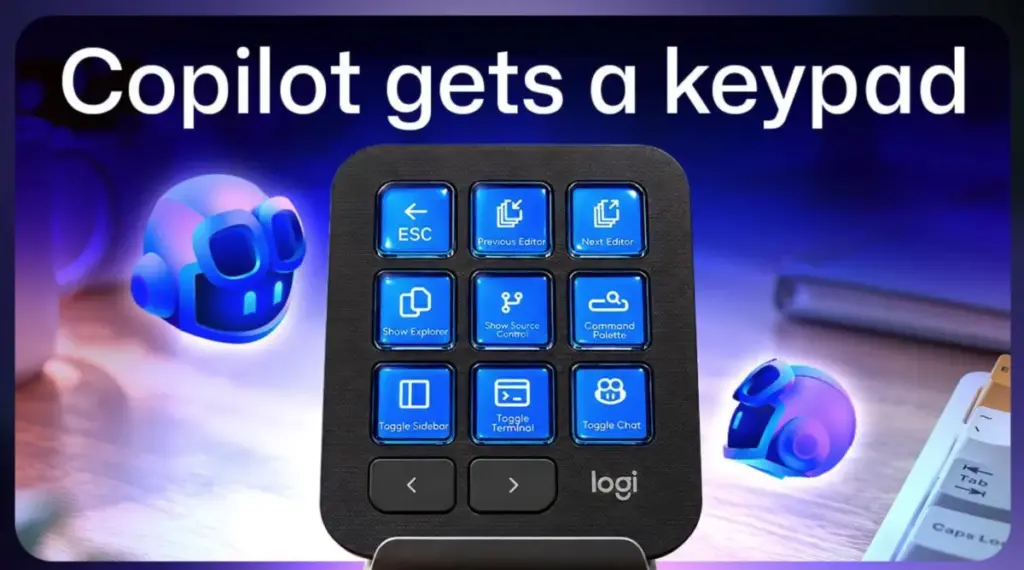
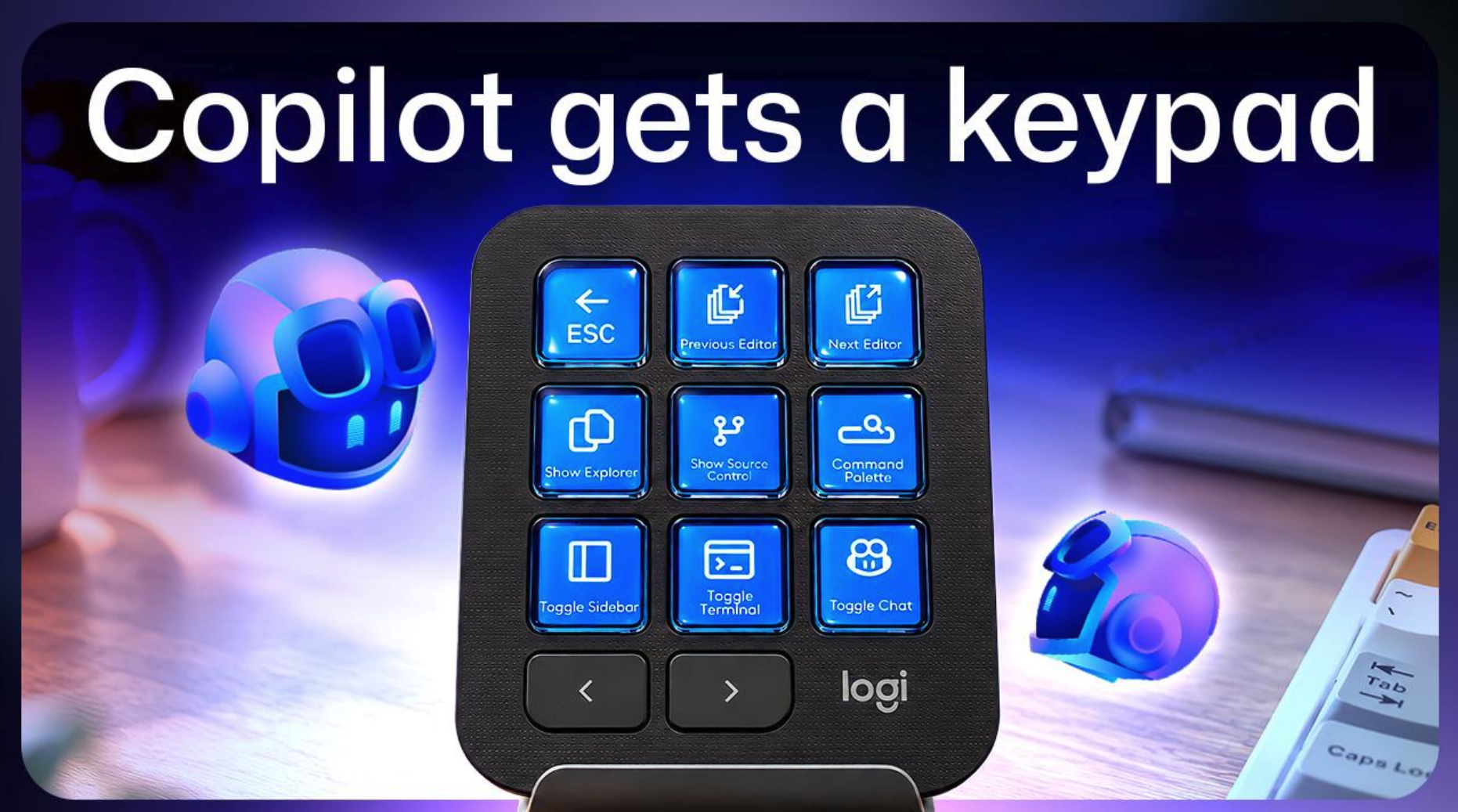
As agentic coding moves beyond the traditional boundaries of the keyboard and terminal, the developer community is beginning to explore alternative interfaces. There is a growing interest in ambient control devices—hardware that can act as a bridge between human intent and machine execution. This interest has led to a collaboration between GitHub and Logitech, focusing on the MX Keypad.
The goal of this partnership is to transform familiar developer actions into programmable, physical inputs that accelerate workflows. By allowing developers to map repeated, context-heavy tasks to physical buttons, the MX Keypad seeks to remove the friction that often interrupts a programmer’s "flow state." In the GitHub Copilot app, a single key press can submit a parameterized prompt, resume a stalled session, invoke a complex IDE command, or trigger a multi-step sequence that would otherwise require multiple clicks and navigation steps.
Physical controls are most effective when an action is repeated often enough that removing a few seconds of manual navigation preserves the developer’s concentration. While not every task warrants a dedicated physical shortcut, the ability to decide which actions earn that space on the desk is a significant step toward a more personalized, fluid development experience. It represents a return to the tactile, where the interface adapts to the developer, rather than the other way around.
The Future of the Background Interface
The long-term vision is an interface that effectively moves into the background. For decades, developers have been forced to act as the bridge between human language and machine logic. Now, computers are increasingly meeting us halfway. The ultimate goal is not to remove the developer from the work, but to remove the friction that surrounds it.
As these systems continue to evolve, the industry faces significant engineering challenges: How much context should an agent retain? How do we safely manage credentials and network access for autonomous systems? How can multiple agents collaborate without creating conflicting changes? The integration of physical hardware like the MX Keypad serves as a practical experiment in these questions, exploring how developers can steer, supervise, and interact with agentic work without losing their focus.
The best interface of the future will not be the one with the most panels, settings, or AI buttons. It will be the one that understands enough context to be useful, preserves the developer’s control, and eventually gets out of the way. By leveraging tools that align with this philosophy, developers can focus on what truly matters: building software that solves real-world problems. For those interested in experimenting with this new workflow, the combination of the Logitech MX Keypad and GitHub Copilot Pro+ is currently being positioned as a starting point for developers looking to optimize their personal productivity and reclaim the time once lost to the friction of traditional tooling.