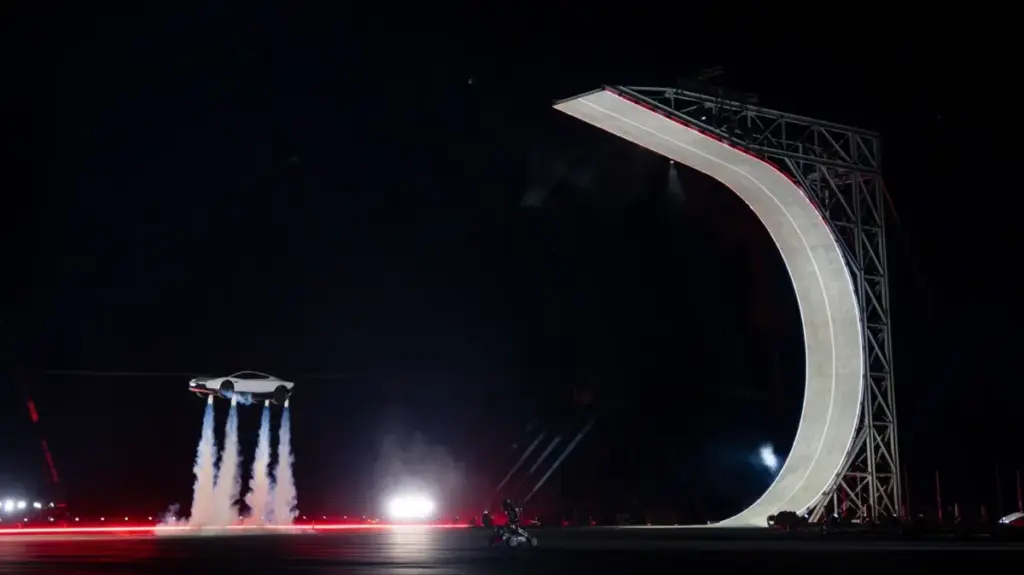
When Tesla formally reintroduced its long-awaited, next-generation Roadster on October 15, the automotive world was treated to a spectacle that felt more like science fiction than a traditional vehicle launch. Boasting an aggressive, angular design reminiscent of the Cybertruck and performance metrics that promise a 0-60 mph acceleration in under one second, the vehicle captured headlines for its sheer speed. Yet, the most startling revelation was the claim that the Roadster could, in a sense, fly.
To clarify, the Tesla Roadster is not a VTOL aircraft in the vein of Back to the Future Part II. It does not possess wings, nor does it sustain true aerodynamic flight. Instead, the vehicle utilizes a sophisticated array of thrusters to perform controlled jumps, flips, and stabilization maneuvers. While this capability is undeniably impressive for a consumer vehicle, the underlying engineering principles are far from new. In fact, the technology bears a striking resemblance to systems developed for military defense applications decades ago—specifically, the Multiple Kill Vehicle (MKV) program pioneered by Lockheed Martin.
Engineering the "Flying" Car
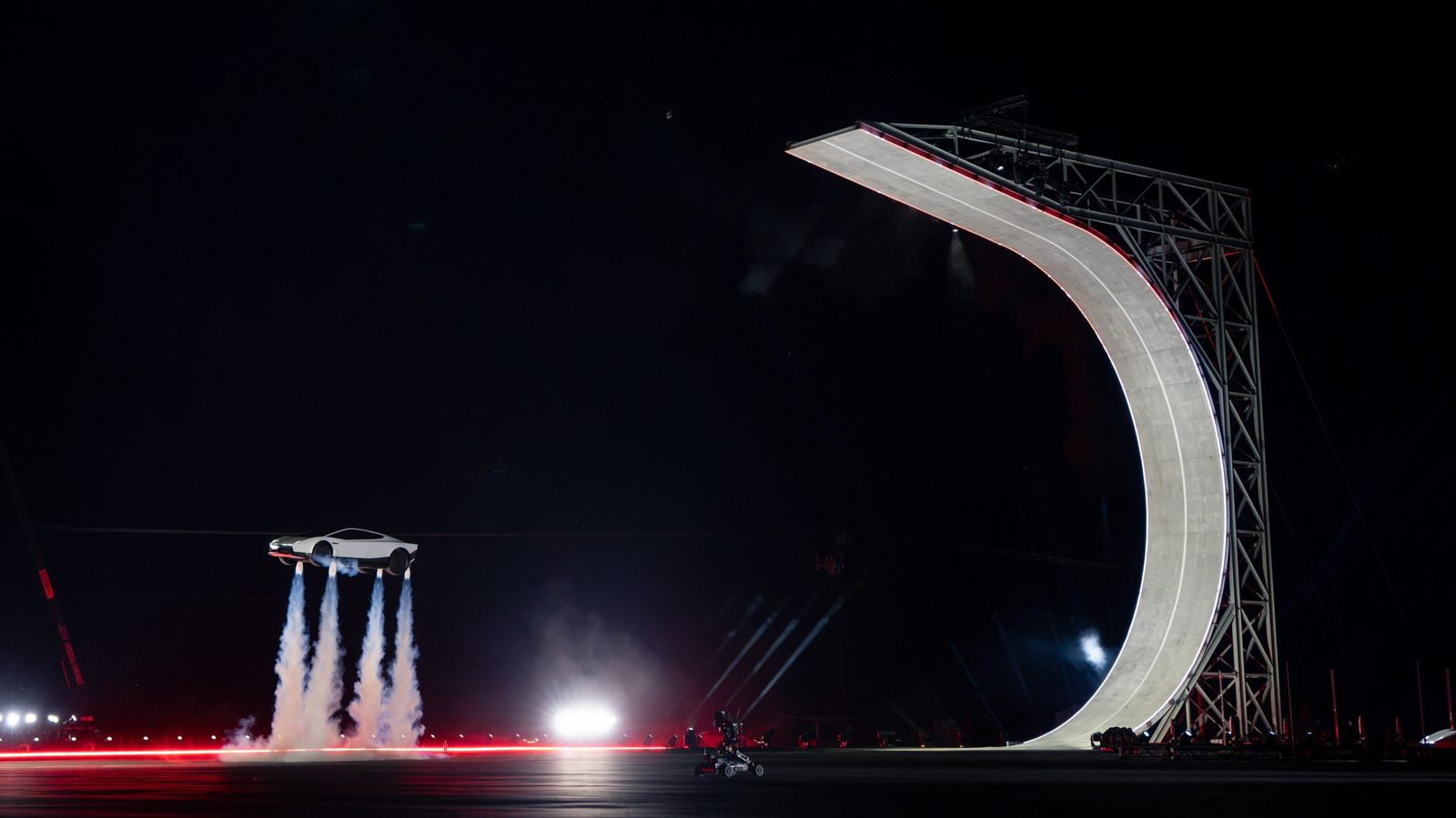
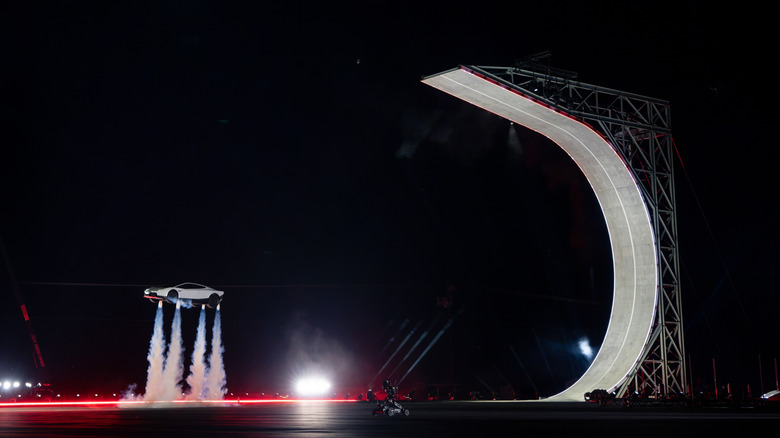
The Roadster’s ability to perform high-precision physical feats, such as a kickflip, is made possible by a complex integration of high-pressure air tanks and ten strategically placed nozzles. These nozzles, positioned throughout the vehicle’s chassis, fire bursts of compressed air to generate force, allowing the car to change its orientation, stabilize itself mid-air, or execute rapid maneuvers that would otherwise be impossible for a standard automobile.

Tesla has clarified that this system is not a universal feature across all iterations of the vehicle. The full thruster suite is exclusive to the "Rocket" trim level, while the "Thruster" trim features a more limited configuration focused on the rear of the car. The base Performance trim, conversely, does not include this hardware at all. Furthermore, Tesla has explicitly noted that these thrusters are not approved for use on public roads, marking them as a specialized feature for private tracks or demonstration environments. Another key detail is the self-sustaining nature of the system; Tesla asserts that the vehicle is capable of refilling its own compressed air tanks, ensuring the thruster system remains operational over time without the need for constant external service.
Historical Parallels: The Multiple Kill Vehicle
The concept of using rapid-fire thrusters to manipulate the orientation and trajectory of a high-speed object is a hallmark of aerospace engineering, particularly within the realm of missile defense. Beginning in 2004, Lockheed Martin secured a $760 million contract from the U.S. Missile Defense Agency to develop the Multiple Kill Vehicle. The objective was ambitious: to create a system capable of intercepting and neutralizing multiple incoming ballistic missile threats and decoys with a single launch.
The MKV system was designed to carry several smaller interceptor vehicles. Once deployed, these units needed to be incredibly agile to track, intercept, and smash into incoming threats at hypersonic speeds. To achieve this, the vehicles relied on a network of thrusters that could fire in rapid succession, allowing the interceptor to pivot, rotate, and adjust its flight path instantly. This is essentially the same mission profile as the Tesla Roadster’s thrusters, albeit at a significantly different scale and for a vastly different purpose—the former intended for national defense, the latter for the performance enthusiasts of the ultra-luxury market.
The lineage of this technology traces back even further, to the Reagan-era Strategic Defense Initiative (SDI), popularly dubbed the "Star Wars" program. While the MKV program itself was officially retired in 2009 as part of broader shifts in military budget priorities, the underlying research into small-scale, high-maneuverability thrusters became a foundational element of modern kinetic interceptor technology. Though historical footage of these systems is often shrouded in confusion due to the overlap of various classified or experimental programs from the 1990s and 2000s, the engineering trajectory remains clear: the ability to move a vehicle in space or through the air using compressed gas or propellant is a well-understood, albeit highly complex, discipline.
Cold-Gas vs. Hot-Fire Propulsion
While the mechanical goal of the Roadster and the MKV is similar—manipulating movement through gas displacement—the fundamental chemistry behind their propulsion systems differs significantly.
Tesla’s implementation utilizes "cold-gas" thrusters. By using compressed air, the system avoids the need for combustion. There is no ignition, no explosion, and no burning of volatile fuel to generate thrust. This makes the system relatively clean and theoretically safer for a consumer-facing product, as it removes the risks associated with high-temperature exhaust or fuel leakage. The thruster system simply releases stored energy in the form of compressed air, which expands rapidly through the nozzles to provide the necessary force.
In contrast, the Lockheed Martin MKV, as documented in 2008, underwent "hot-fire" testing. This implies that the system relied on the combustion of chemical propellants to generate thrust. Hot-fire systems are generally more powerful and capable of sustained high-energy maneuvers, which is essential for intercepting ballistic missiles that are moving at thousands of miles per hour. While this provides the necessary power for military applications, it also introduces significant thermal management challenges and safety considerations that would be impractical for an automobile.
The Intersection of Luxury and Defense
The juxtaposition of a luxury supercar and a missile defense system highlights a fascinating evolution in material science and aerospace engineering. The fact that the same physical principles governing the destruction of intercontinental ballistic missiles can now be adapted for the entertainment of automotive enthusiasts is a testament to how far these technologies have migrated from the laboratory to the commercial sector.
However, the differences remain stark. The MKV was designed for a single, terminal mission where the vehicle is destroyed upon impact. The Tesla Roadster, by design, is meant to survive its "jumps" and continue operating as a road-going vehicle. The engineering challenge for Tesla was not just the power of the thrusters, but the durability of the vehicle’s chassis and the precision of the software required to manage these forces without compromising the integrity of the car.
As Tesla continues to navigate the hurdles of bringing the redesigned Roadster to market, the comparison to the MKV serves as a reminder of the sheer complexity of the vehicle’s "Rocket" trim. While the public may be focused on the spectacle of a car performing a kickflip, the aerospace industry views it through the lens of decades of advancement in stabilization and directional control. Whether this technology will define a new era of automotive performance or remain a high-cost, limited-use novelty is yet to be seen, but the bridge between military-grade aerospace engineering and consumer luxury has never been more visible.